Garden design · Dewsbury · WF12-13
Dewsbury garden design for Calder Valley conditions.
Dewsbury gardens divide between lower floodplain plots that need flood-resilient thinking and higher ground with Coal Measures clay. Both types can become beautiful, practical outdoor spaces with the right design. We connect you with local designers who understand WF12-13 conditions and quote you directly. Design from £500.
- Free initial estimates
- Local designers who quote directly
- Design from £500
- No call centres
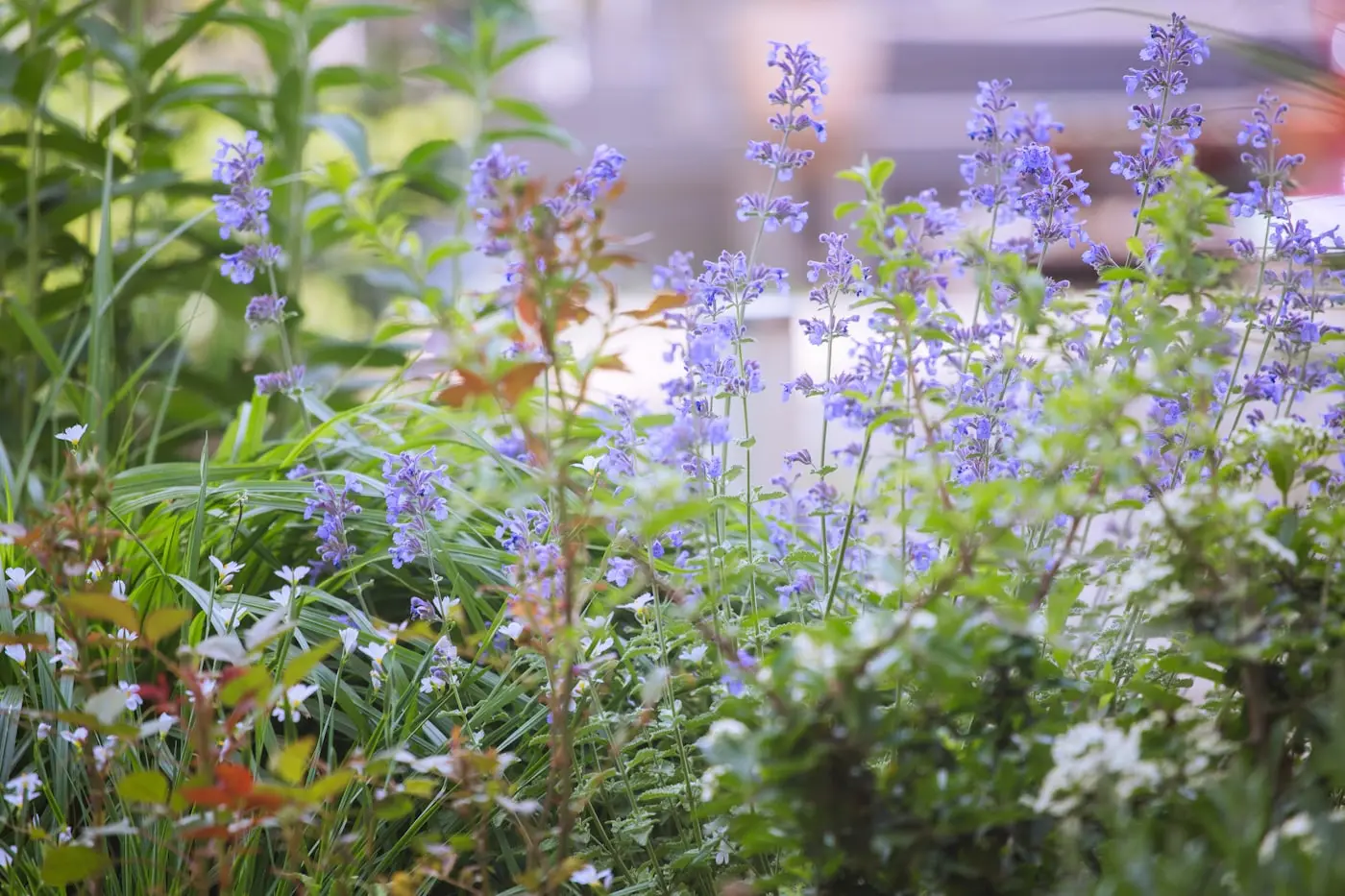
Garden design in Dewsbury
Dewsbury is a Calder Valley market town with a distinct geography that matters enormously for garden design. The lower parts of town, along the River Calder and its tributaries, carry genuine flood risk. The Boxing Day floods of 2015 affected significant numbers of properties in the WF12 and WF13 postcodes, and any garden design for lower-lying Dewsbury properties needs to take that risk seriously rather than hoping it will not recur.
Higher ground in Dewsbury uses Coal Measures clay similar to neighbouring Batley and Heckmondwike: dense, slow-draining, nutrient-rich and workable once you understand it. Period properties around Dewsbury Minster and on the better residential streets sometimes have substantial walled or semi-enclosed plots that reward proper design attention.
Garden design services across Yorkshire start from £500 and include a proper site assessment as the foundation of any scheme. For Dewsbury, that assessment must include a drainage and flood-risk review for lower-lying properties. Getting that right at the outset saves significant money compared to discovering the problem after planting.
Cost guide for garden design in Dewsbury
| Service | Typical cost | What it includes |
|---|---|---|
| Initial consultation | Free to £75 | Site visit, flood-risk and drainage assessment, brief discussion. |
| Planting plan only | £300-700 | Scaled scheme, plant list, spacings. You implement. |
| Full design and project management | £700-2,500 | Design, contractor coordination, planting oversight. |
| Raised bed installation (2-3 beds) | £500-1,200 | Constructed beds, quality soil mix, initial planting. |
| Permeable paving (20-40 sqm) | £2,000-6,000 | Sub-base, permeable surface supply and lay. |
| Full garden makeover (40-80 sqm) | £4,000-13,000 | Clearance, hard landscaping, planting, establishment. |
Flood-resilient hard landscaping typically costs more than standard garden work because of the engineering involved in sub-base design and raised-bed construction. For a full breakdown of what affects design costs in Yorkshire, see our garden designer cost guide.
Get your Dewsbury garden designed this season.
Describe your plot, your flood risk concerns and your budget. A local designer comes back with a real figure. No call centres. Design from £500.
Start your free estimateThe full local guide
The Calder Valley garden challenge
If your garden is within a few hundred metres of the River Calder, you need a designer who has thought about flood resilience in a Yorkshire context. This is not about building a flood defence; it is about making design choices that mean your garden survives a flood event and recovers quickly rather than losing every plant and every hard-landscaped element.
The key principles for flood-affected Dewsbury gardens are:
- Use permeable surfaces wherever possible - paving that allows water to pass through rather than pooling or run off
- Raise your main growing areas above flood level in raised beds with good-quality imported soil
- Choose plants at ground level that are flood-tolerant: they may be submerged for 48-72 hours and need to survive it
- Store valuable items (pots, tools, moveable furniture) so they can be relocated quickly if warning is given
- Design paths and steps that drain naturally toward the garden boundary rather than toward the house
A designer who works across the Calder Valley - Dewsbury, Mirfield, Brighouse - will have direct experience of this brief and can produce a scheme that accounts for the risk without making the garden feel defensive or compromised.
Higher ground: Coal Measures clay
For Dewsbury gardens on higher ground - the streets climbing toward Batley, the residential areas away from the floodplain - the challenge is different. Heavy clay soil that waterlogs but is not at flood risk requires clay management: organic matter incorporation to improve structure, consideration of drainage slopes in bed layout, and a plant palette chosen for tolerance of wet winters and dry summers.
The soil on higher Dewsbury ground is the same geological formation as Batley and Heckmondwike: Coal Measures clay that has been farmed and built on for generations. It is workable, it is nutrient-rich, and with the right approach it grows plants well. It is not inherently hostile; it just needs to be managed rather than ignored.
Common design briefs in Dewsbury
Flood-resilient garden redesign
The most specific brief in lower Dewsbury is designing a garden that can absorb and recover from flood events. This typically means: raising the primary garden beds on constructed raised beds or retaining walls; using permeable paving for seating and path areas; selecting plant species at ground level from a flood-tolerant palette; and ensuring no valuable or vulnerable planting sits below the flood-risk threshold identified in the local Environment Agency mapping.
A raised-bed system in a flood-risk garden is not just a vegetable growing solution. It is a structural response to the soil and water conditions of the site. Getting the height right and the drainage from the beds right - so they do not themselves waterlog after rain - is part of the design work. See our Yorkshire garden design ideas guide for raised bed integration approaches.
Victorian terrace garden transformation
Dewsbury has a substantial stock of Victorian terraced properties, particularly in the streets around the Minster and the older residential areas of the town. These gardens are typically enclosed, modestly sized and often neglected. A transformation brief for these spaces usually involves: clearance of overgrown vegetation, assessing what structural plants are worth keeping, improving the soil in any retained planting areas, and designing a scheme that is beautiful and low-maintenance within the constraints of a smaller plot.
The built character of Victorian Dewsbury - stone, brick, period detail - suggests a design approach that complements rather than contradicts the house. Yorkstone paths, traditional materials, a plant palette with some heritage character (roses, clematis, hardy perennials) rather than a modern minimalist approach that sits awkwardly against period architecture.
Walled garden or enclosed period plot
Some Dewsbury properties, particularly around the Minster area and on the better residential streets developed by Dewsbury's textile-industry prosperity, have enclosed gardens with original stone walls. These plots are architecturally interesting and reward careful design. A walled garden context implies: working with the microclimate created by the walls (warmer, more sheltered), using the wall faces for climbing plants or trained fruit, and creating a design that acknowledges the heritage setting without becoming a museum piece.
If your property has a walled or enclosed garden, it is worth commissioning a designer who has worked in similar settings. The possibilities are different from an open suburban plot and so is the appropriate plant palette.
Modern estate garden drainage and redesign
Dewsbury's post-war and more recent housing estates have standard suburban garden profiles: builder's lawn, minimal planting, variable drainage. The brief for these gardens is usually practical: sort the drainage, improve or replace the lawn, create a usable seating area, and establish some planting that gives the garden character. This is a straightforward design brief that a local designer can address efficiently, and it does not need a large budget to achieve a significant improvement.
Design styles that suit Dewsbury gardens
Heritage and period-appropriate
For Dewsbury's Victorian and Edwardian properties, a design that references the age of the building creates the most coherent result. Traditional materials - Yorkstone, brick edging, wrought iron - sit better against period architecture than modern porcelain or composite decking. The plant palette can be traditional cottage perennials with structure provided by clipped box or yew, or it can be a more contemporary perennial-based scheme that borrows the form of traditional planting without being historically literal. The Minster context of the town gives this approach real resonance.
Flood-resilient contemporary
For lower-lying properties, a contemporary design with flood resilience built in is the honest and practical approach. Raised beds in Corten steel or sleeper timber, permeable paving in natural stone or quality aggregate, and a plant palette that divides between flood-tolerant ground-level planting and more conventional plants in the raised areas. This design style acknowledges the reality of the site rather than pretending it away.
Productive and ornamental combined
Raised beds for vegetables and cut flowers combine well with ornamental borders in a Dewsbury garden, particularly on higher ground where the soil risk is manageable. A kitchen-garden integration does not require a large plot: two or three raised beds alongside a border planting and a defined seating area creates a garden that is both productive and attractive. For ideas on how these elements combine, see our Yorkshire garden design ideas guide.
Plants for Dewsbury gardens
The plant palette divides by your flood risk and soil type.
For flood-risk ground-level planting (tolerates temporary submersion):
- Cornus (dogwood species and cultivars) - vigorous, multi-stemmed shrub for winter stem colour
- Astilbe - plumes from white to deep red, thrives in wet and partially shaded conditions
- Iris pseudacorus (Yellow flag iris) - native species for wet margins
- Gunnera manicata - giant architectural leaves for a large wet spot
- Rodgersia - bold, bronze-tinted foliage in moist ground
- Filipendula (meadowsweet) - tall feathery plumes in moist to wet soil
- Primula candelabra hybrids - tiered whorls of colour in damp, partially shaded spots
For raised beds and improved higher ground:
- Hardy geraniums (Rozanne, Patricia) - reliable perennial ground cover
- Persicaria amplexicaulis - tough, long-flowering on heavy improved ground
- Hemerocallis (daylilies) - flood-tolerant once established
- Alchemilla mollis - self-seeds freely on clay, charming froth of yellow-green in June
- Salvia nemorosa (Caradonna, Ostfriesland) - in well-drained raised bed conditions only
For ongoing maintenance once your garden is established, see our Dewsbury garden maintenance service.
How the design process works in Dewsbury
- Brief and flood-risk check. You describe your garden and your concerns about drainage or flood risk. For lower-lying WF12 properties, the designer checks Environment Agency flood-risk mapping before the site visit.
- Site visit. The designer assesses soil, drainage, sun patterns, flood-risk indicators and any existing planting worth keeping. This is particularly important in Dewsbury given the range of site conditions across the town.
- Proposal with risk-appropriate design. The plan specifies flood-tolerant approaches for lower ground and standard clay-management approaches for higher plots. You receive a plant list, quantities and indicative build costs.
- Phasing the work. Structural work (drainage, raised beds, paving) is sequenced before planting. Autumn and spring are optimal planting windows.
- Installation and establishment. Designer sources plants at trade prices, oversees the build and advises on aftercare.
Frequently asked questions about garden design in Dewsbury
What soil and flood risk does my Dewsbury garden have?
Lower gardens near the Calder sit on heavy floodplain clay with significant flood risk. Higher ground uses Coal Measures clay - dense and slow-draining but not flood-prone. Knowing your elevation and proximity to the Calder is the starting point. A site visit determines your risk level and the appropriate design approach.
How much does garden design cost in Dewsbury?
A planting plan only costs £300-700. Full design with project management runs £700-2,500. A complete makeover costs £4,000-13,000. Flood-resilient landscaping adds cost but is worthwhile for lower-lying gardens. See our garden designer cost guide for detail.
What plants are flood-resilient for a Dewsbury garden?
For flood-risk areas: Cornus, Astilbe, Yellow flag iris, Gunnera, Rodgersia, Filipendula and Primula candelabra hybrids. For raised beds and higher ground: hardy geraniums, Persicaria, Hemerocallis, Alchemilla mollis and Salvia in well-drained conditions.
Can I create a walled garden design for a period Dewsbury property?
Yes. Some Dewsbury properties near the Minster have original walled sections or stone boundary walls that anchor a heritage-style design. Walled context implies warmer microclimate, climbing plant opportunities and a design language that complements the heritage setting. A designer with period-property experience is the right fit for this brief.
Related services
Once your design is planted, regular garden maintenance keeps it in good shape. For overgrown or flood-damaged Dewsbury gardens that need clearing first, see our garden clearance service. For a full overview of Yorkshire garden design, see our garden design page.
Areas near Dewsbury we also cover
We cover garden design across the Calder Valley and surrounding Kirklees towns. We also work in Mirfield, Batley, Ossett and Heckmondwike. For a full list of Yorkshire areas, see our garden design service page.
Garden design in nearby areas
- Garden design in Batley
- Garden design in Mirfield
- Garden design in Ossett
- Garden design in Heckmondwike
- Garden design in Morley
For gardeners and general garden maintenance, see gardeners in Dewsbury.
Related: Find a gardener in Dewsbury