Garden design · Hessle
Hessle garden design and landscaping.
Hessle's chalk-loam Wold ground and the Humber clay near the foreshore are two very different growing conditions. Getting the design right for your specific HU13 plot makes the difference between a garden that thrives and one that struggles year after year. We connect you with local designers who quote directly. Design from £500.
- Free initial estimates
- Local designers who quote directly
- Design from £500
- No call centres
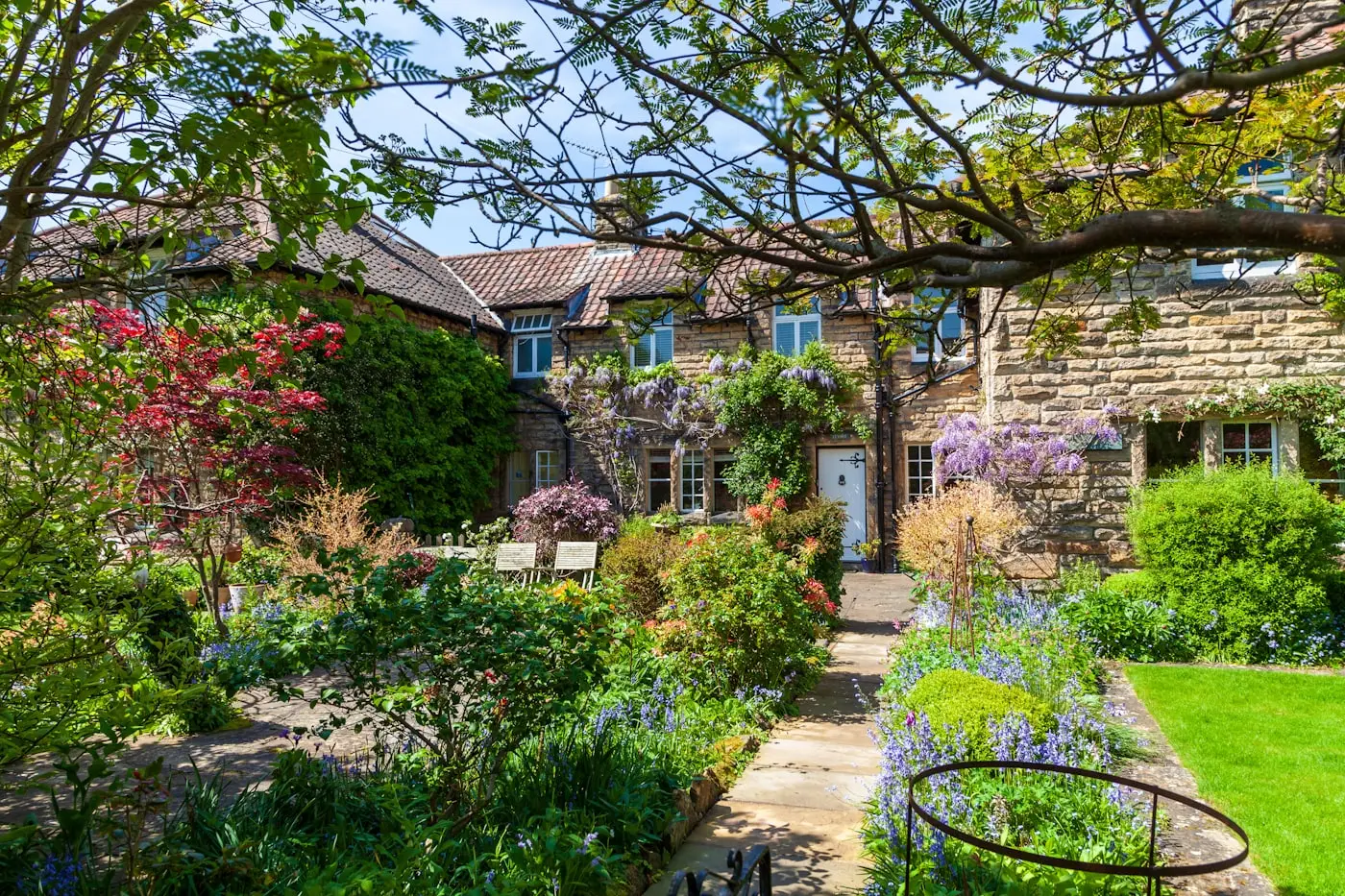
What garden design looks like in Hessle
Hessle occupies a distinctive position in East Yorkshire: a Hull commuter suburb with genuine affluence, a dramatic estuary backdrop provided by the Humber Bridge, and soil that varies more sharply across a short distance than almost anywhere else in the county. Understanding which part of that transition your garden sits on is the starting point for any design worth the investment.
Higher ground on Hessle Wold and toward the Kirk Ella boundary has calcareous chalk-loam: free-draining, naturally alkaline, and actually some of the most productive garden soil in East Yorkshire once you work with it rather than against it. Roses, clematis, lavender, catmint and most hardy perennials thrive in these conditions. The main challenge is moisture retention in July and August, when chalk-loam dries quickly and plants under-perform unless mulched generously at planting time.
Lower ground toward the Humber foreshore carries a different story. Humber clay is heavy, slow to drain after rain, and can become waterlogged in winter. It is also highly fertile when managed. Raised beds, French drains and the right plant selection make these plots highly productive gardens; a design that ignores the drainage challenge on clay-dominated ground will fail within a season or two regardless of how attractive the planting scheme looks on paper.
Hessle's housing stock runs from Victorian and Edwardian properties near the town centre through 1960s-80s estates on Hessle Wold to newer executive developments toward the western edge. Plot sizes are larger than inner Hull, and the household profile here supports proper investment in garden design. It is not unusual to see front gardens redesigned to complement significant kerb appeal, and rear gardens that need to work for families with children as well as look good for entertaining.
The Humber Bridge is a genuine anchor for local identity, and gardens with a view of the bridge from upper floors or elevated rear terraces often want a design that works with that backdrop. A designer will consider sightlines, whether to create a view through the planting or frame it, and how seasonal structure changes the relationship between garden and river across the year.
Cost ranges for garden design in Hessle
These are realistic ranges for garden design work in Hessle and the HU13 postcode. Designers quote you directly with no fees added on your side.
| Service | Typical cost | What it includes |
|---|---|---|
| Initial consultation | Free to £75-150 | Site visit, brief discussion, outline proposal. |
| Planting plan only | £300-800 | Scaled scheme, chalk-soil plant list, spacings. You implement. |
| Full design and project management | £800-3,000+ | Design, contractor coordination, planting oversight. |
| Drainage assessment and design | £200-600 | Clay-ground drainage solution for lower Hessle plots. |
| Front garden redesign | £1,500-5,000 | Hard surface, planting, boundary treatment. |
| Full rear garden makeover (50-120 sqm) | £6,000-18,000+ | Clearance, hard landscaping, planting, establishment. |
On Hessle Wold plots, chalk-loam drains freely and hard landscaping installation is straightforward. On clay-heavy ground nearer the Humber, drainage preparation adds to build costs. A designer quotes accurately after a site visit. For a broader picture of what garden design investment involves, see our Yorkshire garden designer cost guide.
Get your Hessle garden sorted this season.
Tell us about your plot and a local designer comes back with a real figure. No call centres, no subscriptions. Design work from £500.
Start your free estimateThe full local guide
Common project types in Hessle
Executive rear garden redesign
The most common brief across Hessle Wold: a 1980s or 1990s garden that has been laid to lawn with a patio and a few conifers, and needs a complete rethink. The redesign typically involves removing tired conifers, regrading the lawn area if it has developed uneven drainage, laying a proper patio or terrace (Indian sandstone or porcelain on Hessle's chalk-loam drains well), and planting borders with structure, seasonal interest and low maintenance in mind.
Waterfront and lower-ground drainage design
Gardens near the Humber foreshore often need drainage addressed before planting can succeed. French drains, soakaways or raised beds on a permeable base are the standard toolkit. A designer who understands clay soil engineering and can specify appropriate surface drainage will save you significant money compared to planting into unprepared ground and watching it fail.
Front garden redesign for kerb appeal
Hessle has a high proportion of owner-occupied homes where first impressions matter. Front gardens converted from lawn to low-maintenance gravel with structural planting, block paving or a mix of hard and soft surfaces are a consistent project type. Chalk-loam ground at the front of most Hessle properties drains freely, which makes gravel gardens practical and virtually self-maintaining once established.
Formal hedge installation and structure
Beech, yew and hornbeam all grow well on Hessle's chalk-loam, and formal hedging is a popular choice for boundary definition on the larger plots toward Kirk Ella and the Wold escarpment. A designer specifies the right species for your boundary, soil pH and how much structure and privacy you need by what date.
Design styles that suit Hessle gardens
Classic formal with chalk-loam planting
Clipped structure (yew, box, Ilex crenata as a box alternative), roses, lavender, catmint and clematis on walls take full advantage of Hessle's naturally alkaline soil. This style suits the executive housing stock and the period properties near Hessle town centre. It ages well and responds to regular maintenance rather than requiring wholesale replanting every five years.
Contemporary low-maintenance
Porcelain or stone paving, architectural evergreens (Pittosporum, Fatsia, phormium), ornamental grasses and a gravel mulch. Clean lines, minimal intervention once established, and designed to look good year-round from the house as well as outside in it. Particularly effective on the larger Hessle Wold plots where a formal lawn is genuinely impractical to maintain to a high standard.
Naturalistic Wolds-inspired
Calcareous grassland planting references the chalk landscape above Hessle: scabious, verbascum, erysimum, wild marjoram, alliums and ornamental grasses in a loose structure that moves in the wind. Lower-maintenance than traditional borders once established, and increasingly popular as a considered alternative to conventional perennial planting on chalk ground.
What plants suit Hessle's chalk-loam
On higher chalk-loam ground, Hessle gardens suit: clematis (Montana, Jackmanii, viticella cultivars all thrive at alkaline pH), roses (most hybrid teas and shrub roses prefer neutral to slightly alkaline ground), lavender, rosemary, catmint (Six Hills Giant for a generous June show), salvias, scabious, verbascum, erysimum, dianthus and alliums. Tulips and narcissus bulbs establish quickly in well-drained chalk-loam and naturalise reliably.
Avoid acid-loving plants on chalk ground unless you are prepared to maintain a separate ericaceous bed. Rhododendron, camellia and pieris need pH below 6.0 to thrive; attempting them in alkaline Hessle soil without significant amendment wastes money and produces disappointing plants. A designer familiar with HU13 soil conditions will specify around this limitation rather than into it.
For lower-ground clay plots near the Humber, moisture-tolerant plants including astilbe, hostas, ligularia, Iris sibirica, and candelabra primulas perform well once drainage is improved. These plants take advantage of the clay's fertility and moisture-holding capacity in ways that chalk-loam plants cannot match on those wetter soils.
Once your design is established, regular garden maintenance keeps it performing season to season. If your Hessle garden needs clearing before design work can start, ask about our clearance service when you submit your estimate.
Process: what to expect from a Hessle garden designer
- Initial brief. You describe your garden, budget, how you use the space and what outcome you want. Photos of your current plot and of any other gardens you admire are useful context.
- Site visit. The designer assesses soil type and pH (chalk-loam vs clay varies significantly in Hessle), drainage, aspect, sun and shade, existing plants worth keeping, and boundary conditions. For lower-ground plots a drainage assessment is included.
- Proposal and costings. You receive a planting plan or full layout with a plant list, quantities, spacings and indicative costs. For chalk-loam plots, the list is calibrated to alkaline conditions. For clay plots, drainage solutions are incorporated. This is your decision point.
- Phasing. If proceeding, the designer sequences the work: clearance first, drainage and hard landscaping before soft, planting timed for autumn or spring establishment.
- Installation and establishment. Plants are sourced at trade prices and the designer oversees planting and advises on first-season aftercare. Mulching at planting time is essential on chalk-loam to retain moisture through the summer.
Frequently asked questions about garden design in Hessle
What soil does my Hessle garden have?
Higher ground on Hessle Wold and toward Kirk Ella has calcareous chalk-loam: free-draining, naturally alkaline, excellent for clematis, roses and most perennials. Lower ground near the Humber foreshore carries heavier Humber clay: slower-draining and fertile but needing drainage management. The transition happens over a relatively short distance.
How much does garden design cost in Hessle?
A planting plan costs £300-800. Full design with project management runs £800-3,000+. A complete design-and-build for a typical HU13 executive garden typically costs £6,000-18,000+ depending on size and specification. See our Yorkshire garden designer cost guide for fuller breakdowns.
Do gardens near the Humber in Hessle need special planting?
Yes. Gardens close to the Humber foreshore face tidal estuary influence, heavier clay soil and occasional waterlogging risk. Salt-tolerant plants perform well near the water; on clay ground, raised beds and French drains make more plants viable. A site visit confirms your specific conditions before any specification is made.
What plants thrive in Hessle's chalky soil?
Clematis, roses, lavender, catmint, salvias, scabious, verbascum, erysimum, dianthus and alliums all thrive in chalk-loam. Avoid acid-lovers like rhododendron, camellia and pieris without ericaceous beds. A designer familiar with HU13 conditions specifies around the alkaline pH rather than into it.
Related services
Once your design is planted up, regular garden maintenance keeps it performing through the seasons. For gardens that need clearing before design can start, ask about clearance when you submit your estimate. For established hedge care on boundary planting, see our garden care service.
Related: Find a gardener in Hessle
Areas around Hessle we also cover
We cover garden design across the Hull commuter belt: Swanland, North Cave, Beverley, and Anlaby. For the full list of areas, see our garden design service page.
For general gardening, lawn care and seasonal maintenance in Hessle, visit our local gardeners in Hessle page. For ideas suited to East Yorkshire gardens, see our Yorkshire garden design ideas guide.