Garden design · North Cave
North Cave garden design and landscaping.
North Cave's chalk-loam Wolds fringe produces some of the best-growing garden soil in East Yorkshire. Large plots, open rural character, and a commuter profile that expects quality. We connect you with local designers who understand HU15 conditions and quote you directly. Design from £500.
- Free initial estimates
- Local designers who quote directly
- Design from £500
- No call centres
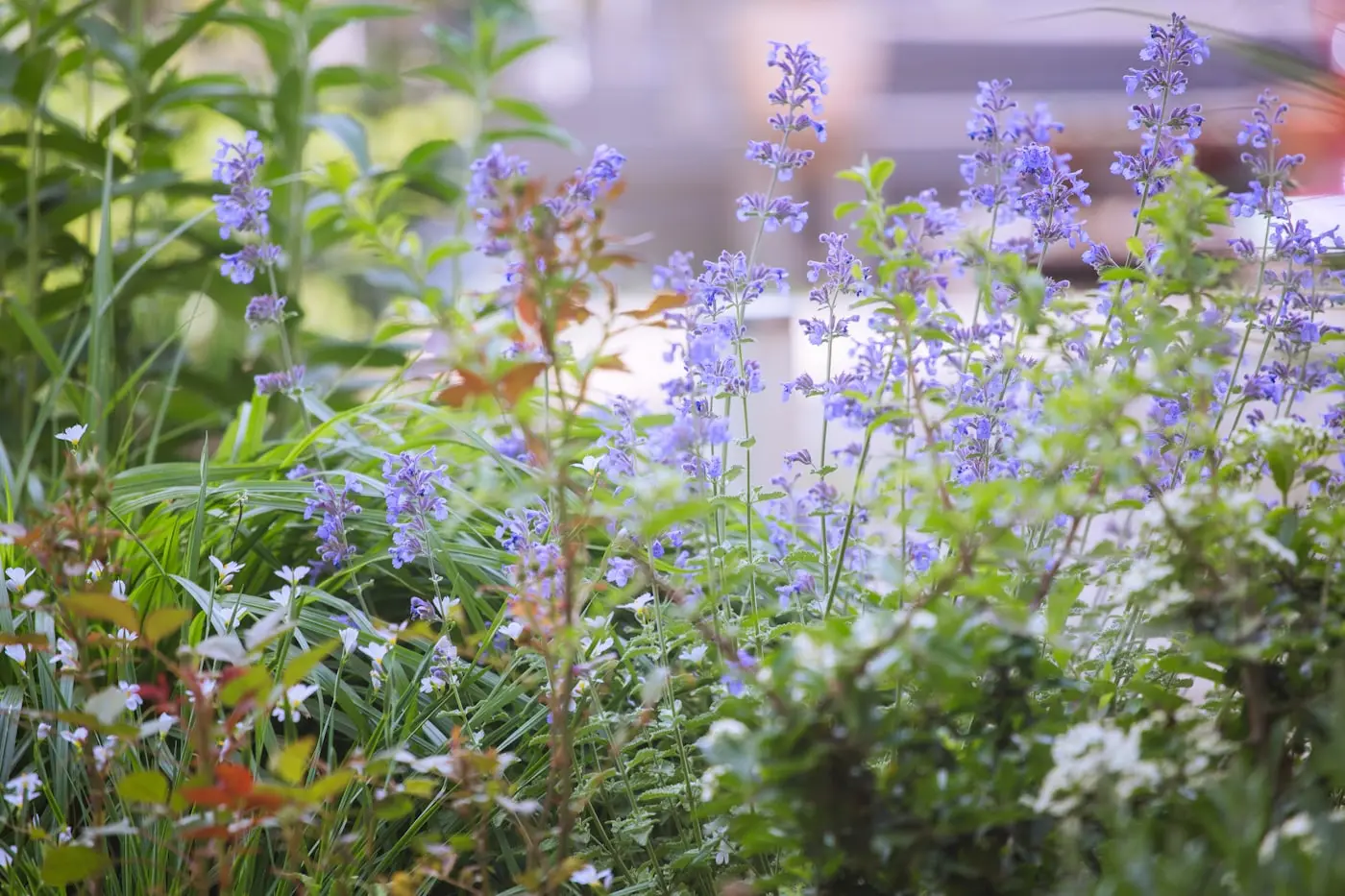
What garden design looks like in North Cave
North Cave is a village on the chalk-Wolds fringe of the East Riding, sitting in the Cave Beck valley between Brough to the south and Market Weighton to the north. The York-Hull rail corridor runs through Brough, making the broader HU15 area a practical commuter location for both cities. The household profile this creates, combined with generous plot sizes typical of established East Riding villages, means North Cave gardens often have both the scale and the budget for quality designed work.
The soil here is the defining advantage. Calcareous chalk-loam across most of North Cave village is free-draining, well-aerated, and naturally alkaline at around pH 7.0-7.8. This is the same soil type that makes gardens in the chalk Wolds valleys so productive: it retains enough moisture for good plant establishment while draining quickly enough to prevent waterlogging after rain. Roses, clematis, lavender, catmint, alliums and most hardy perennials perform exceptionally well. The primary management challenge is summer dryness: chalk-loam gives up its moisture quickly in July and August, and generous mulching at planting time significantly reduces the drought stress plants experience in their first season.
Plot sizes in North Cave are typically generous by East Yorkshire village standards. Detached properties with rear gardens of 200-500 square metres are common, and a number of properties have larger plots that include paddocks, outbuildings or orchard areas. The design challenge on a larger plot is creating distinct zones that feel intentional and connected rather than simply subdividing a big space into smaller ones. A designer thinks about movement through the garden, where to create enclosure and where to open it up, and how the planted areas change character across the seasons.
Privacy is a recurring need. Open rural character around North Cave means many gardens have long views across fields and open countryside, which is attractive but also means they feel exposed rather than enclosed. Hedging and structural tree planting are the most effective and appropriate response: native mixed hedging (hawthorn, field maple, hazel, blackthorn), beech for a denser formal boundary, or yew for the darkest and most substantial backdrop. Solid fencing on this scale looks urban and out of character; a structured planted boundary is the design response that works with the landscape rather than against it.
Cost ranges for garden design in North Cave
| Service | Typical cost | What it includes |
|---|---|---|
| Initial consultation | Free to £75-150 | Site visit, brief, outline design approach for larger plots. |
| Planting plan only | £350-800 | Scaled scheme, chalk-soil plant list, spacings. You implement. |
| Full design and project management | £800-3,000+ | Design for larger plot, contractor coordination, planting oversight. |
| Hedging and privacy planting design | £300-700 | Species selection, spacing, establishment protocol for boundary planting. |
| Rose and clematis garden | £600-2,000 | Full rose design, climbing plant training plan, underplanting scheme. |
| Full rural garden makeover (100-300 sqm) | £6,000-20,000+ | Clearance, hard landscaping, structural planting, establishment. |
Larger North Cave plots require more design time and more comprehensive proposals. Designers quote accurately after seeing the full extent of your garden. For fuller cost context across Yorkshire, see our garden designer cost guide.
Get your North Cave garden sorted this season.
Tell us about your plot and a local designer comes back with a real figure. No call centres, no subscriptions. Design from £500.
Start your free estimateThe full local guide
Common project types in North Cave
Large plot rural garden design
The defining brief for North Cave: a generous plot that needs structure, defined zones, and planting that works across the seasons. The design typically creates a formal area closest to the house (terrace, lawn, main borders), a transition zone through a hedge or path feature, and a more naturalistic or productive area at the far end of the garden. The chalk-loam soil supports a wide palette through all three zones.
Structural hedging and privacy planting
Open rural plots need boundary definition that suits the character of the village. Beech, hornbeam, yew or native mixed hedging on a chalk-loam plot will establish vigorously: chalk-loam is well-suited to hedging plants, which often outperform their expected growth rates in these conditions. A designer specifies the right species and density for your boundary, the direction of overlooked views, and the height you need by a realistic date.
Rose and clematis garden
North Cave's alkaline chalk-loam is close to ideal for both. A full rose garden design with David Austin shrub roses, climbing roses on the house and outbuilding walls, and clematis trained through them for extended season colour is one of the most rewarding designs available on chalk-loam. Underplanted with catmint, lavender and alliums, a rose garden on chalk-loam produces extraordinary seasonal interest from May through September with relatively modest maintenance input.
Orchard and kitchen garden establishment
Chalk soils grow excellent tree fruit. Apples, pears, plums and damsons on dwarfing or semi-dwarfing rootstocks establish quickly in well-drained chalky ground and produce earlier than on heavier soils. A designer integrates an orchard and kitchen garden with the wider ornamental design, creating a productive section that contributes to the overall garden character rather than sitting in a purely utilitarian corner.
Design styles that suit North Cave gardens
Formal country house
Clipped yew or beech hedges creating rooms and backdrops, rose borders, lavender-edged paths, a formal lawn with clear proportions, and a terrace with appropriate stone or York stone paving. This style suits the scale of North Cave's larger plots and the quality of chalk-loam growing conditions. It ages extremely well and rewards ongoing maintenance rather than requiring wholesale replanting.
Naturalistic chalk garden
Loose, movement-led planting referencing the chalk grassland landscape: scabious, verbascum, erysimum, alliums, wild marjoram, Knautia macedonica, and ornamental grasses (Stipa tenuissima, Sesleria autumnalis) in drifts across large borders. Lower maintenance than traditional cottage borders once established, and visually distinctive against a North Cave backdrop. Particularly effective on the more open, exposed areas of larger plots.
Contemporary rural
Clean lines, natural materials (limestone, hardwood, corten steel), bold planting in simple masses rather than complex mixed borders. Contemporary design on a rural plot works when the materials reference the landscape and the planting is appropriate to the soil. Chalk-loam suits a contemporary bold planting of grasses, salvias and architectural perennials very well.
What plants work in North Cave's chalk-loam
The alkaline chalk-loam of North Cave is some of East Yorkshire's most forgiving garden soil. Plants that thrive here include: roses (most varieties, especially David Austin shrub roses bred for chalk tolerance), clematis (Montana, viticella cultivars, Jackmanii), lavender (Hidcote, Munstead, Grosso), catmint (Nepeta 'Six Hills Giant' for a generous June display), salvias (Caradonna, Amistad, Hot Lips), scabious, verbascum, erysimum, alliums (Purple Sensation, Gladiator, Schubertii, Mount Everest for a layered sequence), dianthus, and ornamental grasses (Stipa tenuissima, Calamagrostis x acutiflora 'Karl Foerster', Pennisetum).
Tree fruit performs very well on chalk: apple (Cox, Bramley, Discovery on M26 or M106 rootstock), pear (Conference, Concorde), damson (Shropshire Prune is excellent on chalk) and plum (Opal, Marjorie's Seedling). Soft fruit including gooseberries, redcurrants and whitecurrants also grow extremely well in chalk-loam.
Acid-loving plants (rhododendron, camellia, pieris, heather) are not suited to the natural soil pH. If you want these plants, a raised bed with ericaceous compost is the right approach. A designer who knows HU15 conditions specifies around the alkaline pH, saving you money on plants that will fail.
For established North Cave gardens, regular garden maintenance keeps the design performing through the seasons. For design ideas suited to East Yorkshire Wolds gardens, see our Yorkshire garden design ideas guide.
Process: what to expect from a North Cave garden designer
- Initial brief. Describe your garden, budget and what you want from the space. For larger North Cave plots, noting the approximate size and any existing features worth retaining saves time at the site visit.
- Site visit. The designer walks the full extent of your garden: soil type and pH, drainage, aspect and sun patterns across the day, existing plants and trees worth keeping, boundary conditions and any structural issues. A larger plot takes longer to assess properly, which is reflected in the quality of the proposal.
- Proposal and zoning. For larger plots, the proposal typically includes a zone plan showing how the garden is divided and connected, alongside the planting scheme for each area. Hedging and structural planting timelines are included. This is your decision point.
- Phasing. Larger garden projects are often phased across two to three seasons: structural planting and hard landscaping in season one, main border planting in season two, and infill and refinement in season three. This spreads costs and allows earlier-planted areas to establish before the garden is finished.
- Installation and establishment. Plants sourced at trade prices, planting overseen, mulching at installation time to protect chalk-loam from summer dryness. Hedging plants specified and planted at the right time for best establishment.
Frequently asked questions about garden design in North Cave
What soil does my North Cave garden have?
Most North Cave gardens have calcareous chalk-loam: free-draining, well-aerated, naturally alkaline at pH 7.0-7.8. This is excellent growing soil for roses, clematis, lavender and most perennials. The main challenge is summer dryness; generous mulching at planting time is essential. A site visit confirms your specific conditions.
How much does garden design cost in North Cave?
A planting plan costs £350-800. Full design with project management runs £800-3,000+. A complete design-and-build for a larger North Cave rural plot typically costs £6,000-20,000+ depending on size and specification. See our garden designer cost guide for fuller breakdowns.
How do I create privacy in my North Cave garden without losing the rural feel?
Structured hedging is the right response on open rural plots: native mixed hedging, beech, hornbeam or yew all create privacy without the urban character of solid fencing. Chalk-loam grows hedging plants vigorously, often outperforming their expected growth rates. A designer specifies species, density and height for your specific boundary needs.
What can I plant on chalk soil in North Cave to add structure year-round?
Yew, box (or its alternatives Ilex crenata, Lonicera nitida), Viburnum tinus, and beech hedging for evergreen structure. Roses, clematis and ornamental grasses for seasonal structure. Alliums (Schubertii, Christophii) for late spring architectural interest. Verbascum spires for summer height. Chalk-loam supports genuine year-round structural interest with the right design.
Related services
Once your design is established, regular garden maintenance keeps it performing season after season. For design ideas suited to East Yorkshire Wolds gardens, see our Yorkshire garden design ideas guide. For an overview of what a garden design project involves, see our garden design service page.
Related: Find a gardener in North Cave
Areas around North Cave we also cover
We cover garden design across the HU15 area and the wider East Riding: Hessle, Swanland, Market Weighton, and Beverley. For the full list, see our garden design service page.
For general gardening, lawn care and seasonal maintenance in North Cave, visit our local gardeners in North Cave page. For design ideas suited to chalk Wolds gardens, see our Yorkshire garden design ideas guide.