Garden design · Linthwaite, Colne Valley
Linthwaite sits on the hillside above the Colne Valley in HD7, slightly higher and more exposed than its neighbour Slaithwaite below. The gritstone character is the same - stone boundaries, acid soil, steep gradients - but the elevation brings exceptional valley views and more exposure to south-westerly weather. Getting the design right here means terracing for usability, robust planting for the exposure, and using the views as a design asset rather than losing them behind inappropriate fencing.
Gardens in Linthwaite are predominantly hillside plots on Millstone Grit, sitting above the valley floor with gradients that can be significant. The soil is acid throughout - pH 5.5-6.2 on most plots - and the thin topsoil over gritstone means that raised beds and imported organic matter are often needed to create genuine growing depth. Stone retaining walls, whether historic dry-stone or more recent built boundaries, define most of the garden structure here.
The views from Linthwaite hillside gardens are a defining asset. Looking across the Colne Valley from a terrace at 150-200m elevation, with Slaithwaite below and the opposite valley side rising to the moor, is something you want your garden design to capitalise on. Too many hillside gardens in this part of West Yorkshire have their views blocked by overheight fencing, poorly positioned sheds, or planting that grew faster than anticipated. Designing to retain and frame the outlook is a specific skill that pays dividends for every year you use the garden.
Exposure is the other characteristic that defines Linthwaite gardens. Being higher than the valley floor means more direct wind exposure, particularly from the south-west and west. Tender plants that would survive a sheltered Bradford suburb struggle here through a typical Pennine winter. A designer who has worked on Colne Valley hillside plots knows to specify proven wind-tolerant structural planting before adding the more ornamental and potentially tender subjects behind it.
Garden design in Linthwaite typically runs from £1,500 for a small redesign to £8,000-15,000 for a full garden transformation. Hillside plots requiring terrace construction, stone retaining walls, and steps are at the higher end of this range. The skilled stone work on Colne Valley hillside plots commands appropriate rates - it's a specific competency that not all landscaping contractors offer.
| Service | Typical range |
|---|---|
| Initial consultation | Free to £75-150 |
| Planting plan only | £300-800 |
| Full design and project management | £800-3,000+ |
| Stone terracing and retaining walls | £3,000-12,000 |
| Full hillside garden transformation | £10,000-20,000+ |
Phasing the work over multiple seasons manages cost without compromising the end result. See our garden designer cost guide for detailed breakdown of what different scopes typically involve.
Free initial estimate from a designer who knows Colne Valley hillside conditions. We connect you with local professionals who quote directly for your project.
The full local guide
The primary design challenge on Linthwaite hillside plots is creating level usable space without blocking the views that make the location valuable. Terracing at low wall heights - 600mm to 900mm retaining - creates level areas while maintaining sight lines from higher parts of the garden across to the terrace below and beyond. Seating areas positioned to maximise the outlook, with lower boundary treatments (open-railed metal fencing, loose hawthorn hedging, or simply a designed drop) on the view side, preserve what makes these gardens special.
At Linthwaite's elevation, structural planting that anchors the design needs to be genuinely tough. Proven performers in this zone: native rowan (elegant, reliable, good berries for wildlife), hawthorn as windbreak hedging, viburnum opulus, rugged ornamental grasses (molinia caerulea and its cultivars), hardy geraniums, persicaria amplexicaulis, and established heather. Behind this wind-filtering backbone, you gain shelter for slightly more sheltered plants - shrub roses, penstemons, and some of the hardier perennials that would struggle fully exposed.
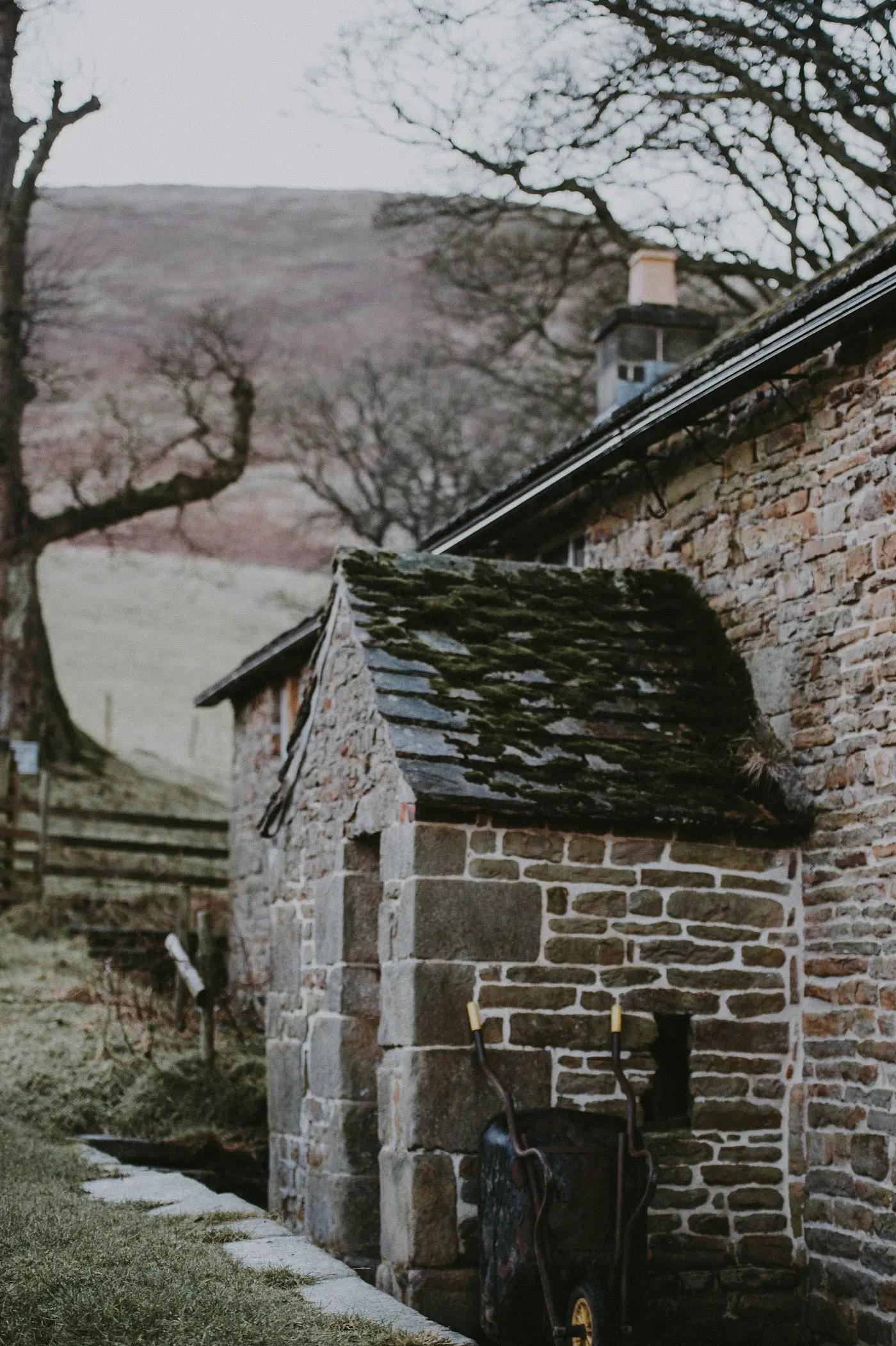
Linthwaite's gardens are gritstone country and the hard landscaping should reflect that. Reclaimed Yorkshire gritstone for steps, terrace edging, retaining walls, and paving works because it weathers to match the existing stone character of the houses, walls, and landscape. It's a harder material than many imported sandstones and suffers less frost damage at this elevation - a relevant consideration when temperatures regularly drop well below freezing through a Pennine winter.
For larger Linthwaite plots, particularly those with existing trees or with room to create a more naturalistic zone at the garden's upper boundary, a woodland-edge planting scheme using acid-tolerant native and ornamental species creates a low-maintenance area with excellent seasonal interest. Amelanchier (June berry), native rowans, birches, rhododendrons at the shrub layer, and shade-tolerant perennials beneath create a layered planting that improves year on year with minimal intervention.
The Millstone Grit soil of Linthwaite is free-draining and acid. Free-draining is usually welcome - waterlogging is less of a problem than on valley floor clay sites - but it also means drought stress in dry summers is a genuine risk, particularly for newly planted subjects in their first season. Mulching with organic matter (bark, leaf mould, or compost) on all newly planted areas after installation is not an optional extra here; it's what determines whether the planting establishes or fails through the first summer dry spell.
Soil depth is the limiting factor on rocky gritstone plots. Where the topsoil thins to less than 200mm over bedrock, raised beds built from reclaimed gritstone or heavy timber give plants the root run they need. A raised bed garden design on a Linthwaite plot with shallow native soil creates growing conditions that actually work rather than a planting scheme that struggles in 150mm of topsoil.
The acid pH (5.5-6.2) rules out lime-loving plants without significant and ongoing amendment. Rather than fighting the chemistry, working with it produces far better results: ericaceous shrubs for spring colour, woodland perennials, ferns, and grasses that genuinely belong in these conditions. The garden ends up looking rooted in its landscape rather than imported from somewhere with different soil chemistry.
How do I keep the valley views from my Linthwaite garden?
Design boundary treatments on the downhill side to be low or open - metal railing, open hit-and-miss fencing, or loose hedging plants below 1.2m. Choose terrace wall heights that create usable level areas without obscuring the view from higher up the garden. Select trees and shrubs that are positioned to frame the view rather than block it - a carefully placed rowan or birch at the edge of the garden can enhance the outlook rather than screen it.
What is the best structural planting for an exposed Linthwaite garden?
Native rowan, hawthorn, field maple, and viburnum opulus are reliably tough at this elevation. Ornamental grasses - particularly molinia and deschampsia - add movement and structure without bulk that blocks views. For flowering shrubs behind a windbreak, hardy shrub roses (rugosas in particular), spiraea, and ribes handle the exposure well. Avoid tender subjects in a fully exposed position - they can be added in sheltered pockets once the backbone planting has established after two or three seasons.
What soil preparation does a Linthwaite garden need?
Check the soil depth before planning - on rocky gritstone plots it can be 150-200mm or less. Add organic matter to improve moisture retention for the first establishment seasons. Consider raised beds where the native depth is genuinely limiting. For ericaceous planting, the native acid pH is an asset that needs no amendment. For other plants, work in compost to improve the soil structure and nutrient levels that thin gritstone soil lacks.
How much does a hillside garden design cost in Linthwaite?
Garden design in Linthwaite typically runs from £1,500 for a small redesign to £8,000-15,000 for a full garden transformation. Stone terrace work on a hillside plot adds cost - retaining walls and steps in reclaimed gritstone typically add £3,000-12,000 to the project depending on scale. Get a site visit and estimate before committing to a scope.
Can I have a productive garden on a steep Linthwaite hillside?
Yes, with terracing. Raised beds on a level terrace area produce excellent crops - the elevation and good air drainage actually help reduce some fungal diseases that affect brassicas and tomatoes in more sheltered, humid positions. Fruit trees trained against a south-facing wall or boundary make the most of the aspect. The short season (last frost typically mid to late April at this elevation) means starting tender crops under cover in March for planting out in late May.
Which designer or contractor should I use for Linthwaite garden work?
Look for designers and contractors with specific experience on steep valley-side plots in HD7 and the Colne Valley area. Ask for examples of similar projects with stone terracing or hillside planting work. A designer who has only worked on flat suburban gardens will not have encountered the specific challenges that Linthwaite hillside plots present. We connect homeowners with local professionals who know these conditions - use our quote form for a free initial consultation.
For general garden maintenance in Linthwaite, see our local gardeners in Linthwaite page. For an overview of what garden design involves, visit our garden design service page.