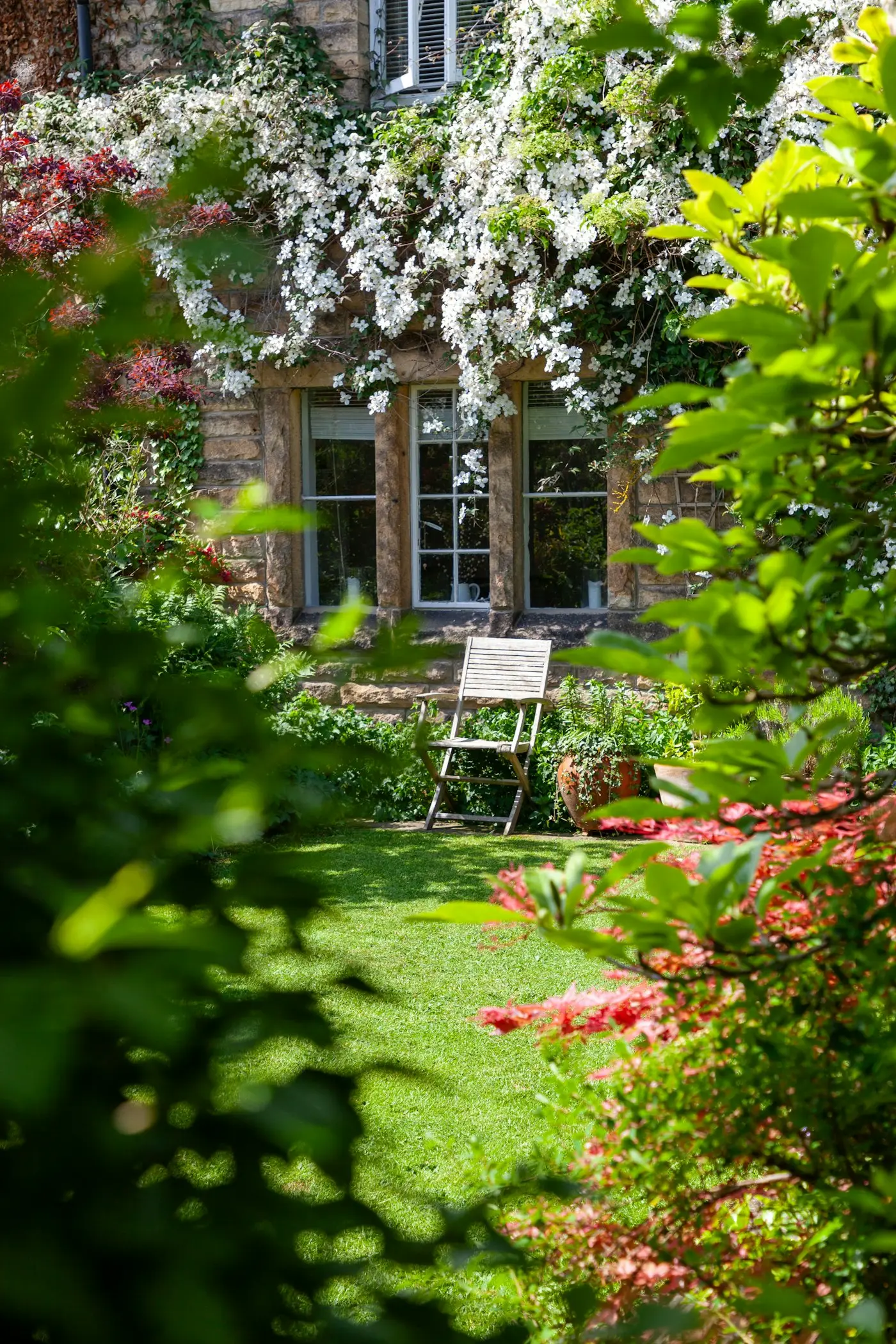
Leeds is not one type of garden city. At one end of the spectrum there are the Victorian back-to-back yards in Headingley, Hyde Park, and Armley where the "garden" is 15 to 30 square metres of concrete and brick, surrounded by terraces on three sides, with access only through the house. At the other end are the large detached properties in Alwoodley, Moortown, Adel, and Bramhope - gardens of 400 to 800 square metres with mature trees, good aspect, and enough space for formal structure, kitchen gardens, and everything else. In between sit the interwar and postwar semis in Horsforth, Chapel Allerton, and Roundhay, the new-build estates in Garforth, Morley, and Rothwell, and the converted warehouse apartments with no external space at all. If you are planning a garden design project in Leeds, the starting point is being honest about which of these worlds you are actually in, because the brief, the budget, and the right approach are completely different for each.
Leeds Soils: More Varied Than Most Cities
Leeds sits at a geological crossroads that creates genuinely different soil conditions across relatively short distances. Understanding the soil in your particular area of Leeds is not a horticultural abstraction - it determines what plants will perform, what soil preparation is necessary, and whether drainage is a structural problem that needs solving or simply a matter of plant selection.
Millstone Grit (Bramhope, Adel, Cookridge, Rawdon)
The north-western arc of Leeds - from Bramhope and Pool-in-Wharfedale down through Adel and Cookridge toward Rawdon - sits on Millstone Grit, a coarse sandstone that weathers to produce thin, acid, free-draining soil. pH typically 5 to 6.5. Low in nutrients, quick to drain, and prone to drying out in summer. This is genuinely different from the rest of Leeds, and if you live in this zone you can grow acid-loving plants that are impossible elsewhere in the city: Rhododendron, Camellia, Pieris, Leucothoe, Enkianthus. Lawns on grit soil tend to be more free-draining but faster to turn brown in a dry summer. Organic matter - compost, leaf mould - is the key soil improver on grit.
Coal Measures clay (Garforth, Rothwell, Morley, Beeston, Batley fringes)
The southern and eastern parts of greater Leeds sit on the Coal Measures - sedimentary strata associated with the former coalfield that produce a heavy, dense clay not dissimilar to York's glacial clay in character. Slow-draining, prone to compaction, waterlogged in wet winters and cracked in dry summers. Design response is similar to York: drainage assessment, raised beds where practical, robust clay-tolerant plant selection. Persicaria, Astilbe, ornamental Molinia grasses, Geranium, Astrantia, and structural shrubs like Physocarpus and Viburnum perform reliably.
Inner-city made-up ground (Headingley, Hyde Park, Meanwood, Chapeltown, Kirkstall)
Inner Leeds has been intensively occupied for centuries. The soil in inner-city gardens is often not natural soil at all but a complex accumulation of rubble, ash, clinker, and various urban fill materials over a clay or grit substratum, depending on location. Historical contamination - from lead paint, coal ash, industrial activity - is a genuine risk in some of the oldest inner-urban areas. If you are planning to grow food in an inner-Leeds garden where the ground history is unclear, raised beds with clean imported compost are not optional; they are the responsible approach.
Inner-city Leeds: soil testing before planting
If your garden is in an area with a heavy industrial or Victorian residential history - Kirkstall, Armley, Wortley, Beeston, Hunslet - and you want to grow vegetables, request a soil test that includes heavy metal analysis before planting anything you intend to eat. Basic pH and nutrient tests cost £20 to £30; a heavy metals screen costs £60 to £100 but gives you certainty. A good designer working in inner Leeds will raise this with you in the initial consultation without prompting.
What Garden Design Costs in Leeds
| Garden Type and Location | Typical Cost | Key Notes |
|---|---|---|
| Small urban back yard (under 50 sqm) - inner Leeds | £4,000-£8,000 | Headingley, Hyde Park, Burley, Kirkstall. Limited access often affects cost. Design focus: paving, vertical planting, lighting, raised beds. Ground improvement essential if growing food. |
| Victorian semi rear garden (50-100 sqm) | £6,000-£11,000 | Horsforth, Chapel Allerton, Roundhay, Meanwood. Good scope for a designed garden. Patio, lawn or alternative, planted borders, possibly raised vegetable beds. Typical suburban brief. |
| New-build garden (60-120 sqm) | £5,000-£10,000 | Garforth, Rothwell, Morley, Tingley. Budget should include soil improvement - new-build compaction is the norm. Blank-canvas brief with clay soil constraints. |
| Large suburban garden (120-300 sqm) | £10,000-£16,000 | Moortown, Roundhay, Horsforth, Cookridge. Full design including structural planting, good hard landscaping, possibly kitchen garden, lighting. Higher at the Alwoodley end of this bracket. |
| Large detached (300 sqm+) - Alwoodley, Adel, Bramhope | £14,000-£25,000+ | Full design and build on a large property. Structural planting, extensive hard landscaping, kitchen garden, formal areas, lighting, possibly irrigation. Soil is grit/acid at Bramhope end. |
| Design only (no build) | £500-£2,000 | Site survey, planting plan, hard landscaping layout, materials specification. You manage contractors separately. Lower end of the range for simpler, smaller sites. |
Small-Space Urban Garden Design in Leeds
The Victorian back yard is its own design discipline. The constraints are real: the space is small (often under 40 square metres), the aspect is typically problematic (north-facing or hemmed in by high walls and surrounding terraces), access through the house means all materials arrive through the kitchen and living room, and ground conditions can be poor. These are not obstacles to a good garden - they are the parameters within which a good designer works.
The most successful small urban gardens in Leeds tend to share a few characteristics. First, a clear decision about what the space is primarily for: outdoor sitting and cooking, a low-maintenance green space to look at from inside, or a productive kitchen garden. Trying to do all three in 30 square metres usually means doing none of them well. Second, a paving treatment that makes the space feel larger rather than smaller - pale natural sandstone, large-format porcelain, or a continuous material run with no fussy changes of surface. Third, vertical interest: climbers on walls and fences, wall-mounted planters, trained shrubs. In a small Leeds yard, the vertical surfaces are the majority of the garden area and are wasted if left bare. Climbing hydrangea, roses, Trachelospermum jasminoides (star jasmine - surprisingly hardy on a sheltered south or west-facing wall), Clematis in variety, and trained Pyracantha are all good choices on the typically alkaline-to-neutral mortar-lime soil of old brick walls.
Lighting is worth discussing at the design stage for small urban gardens. An evening-use outdoor space in Leeds needs good lighting to function through most of the year. Wall-mounted directional lighting, uplighters for plants and walls, and possibly a string-light overhead plane for the eating area can transform a small space into a genuinely usable evening room. The wiring is best put in during the hard landscaping phase rather than retrofitted later.
Larger Suburban Gardens: Alwoodley, Moortown, Adel
The large detached gardens in north Leeds's affluent suburbs have a different set of opportunities. These properties often have plots of 400 to 800 square metres, with enough space for a proper formal lawn, substantial planting borders, a kitchen garden, and structural trees. The challenge is the opposite of the small urban garden: with this much space, the design question is what gives the garden coherence and prevents it from feeling like a series of disconnected elements.
Structure is the answer. Hedges that define outdoor rooms, a primary axis that creates a clear sight line from the house, specimen trees at key focal points, and a consistent materials palette for hard landscaping that ties everything together. On the Millstone Grit soils of Bramhope, Adel, and the Cookridge/Pool-in-Wharfedale corridor, the acid soil is a genuine opportunity: Rhododendrons and Azaleas in variety, Camellia, Pieris, Enkianthus campanulatus, and Kalmia all perform here and would require raised beds of ericaceous compost to survive on the more neutral Leeds suburban clay further east.
Kitchen gardens are a strong design feature at this property type. A well-structured kitchen garden on a large Alwoodley or Moortown plot - raised beds in timber or stone, a fruit cage, trained fruit trees on a south-facing wall, a composting area, and a tool store - is a significant project in itself, with budgets ranging from £4,000 for a simple setup to £15,000 for a designed kitchen garden with good materials and structure. The grit-acid soil in Bramhope and Adel is also excellent for soft fruits and brassicas, which prefer slightly acid conditions.
Sustainable and Wildlife Garden Design in Leeds
Leeds has a strong sustainable gardening community and correspondingly strong demand for wildlife-friendly garden design. This is partly a values preference and partly practical: Leeds City Council has active biodiversity commitments, the city has significant green corridors through the Aire valley and surrounding parks, and there is a growing awareness that domestic gardens collectively represent a meaningful proportion of urban green space.
What wildlife-friendly garden design actually means in practice for a Leeds garden: planting schemes based on RHS Plants for Pollinators selection, with an emphasis on single rather than double flowers that pollinators can access; a reduction or elimination of pesticide use in the planting specification; inclusion of a wildlife pond if space allows (even a small 1 to 2 square metre pond is more valuable to local wildlife than almost any other single garden feature); log piles and leaf litter areas for overwintering invertebrates; and native or near-native hedging (Hawthorn, Blackthorn, Guelder rose) in place of purely ornamental formal hedges where appropriate.
The no-dig approach - leaving soil undisturbed rather than rotavating and digging - is increasingly popular in Leeds garden design for both practical and ecological reasons. It preserves soil structure, fungal networks, and worm populations, and produces better long-term planting results particularly on the grit soils of north-west Leeds. A designer who works in this way should be able to show you completed projects using the approach.
Ready to start your Leeds garden design?
Tell us what you are planning and we put your enquiry in front of designers and gardeners who cover your area of Leeds.
Start the assessmentFinding a Designer in Leeds: What to Ask
Leeds has a good pool of garden designers but significant variation in experience, approach, and specialisation. The interview stage - before you commit to a designer or a design fee - is worth taking seriously.
What to ask in the first meeting
- Have you worked on gardens in this part of Leeds before? The soil and design context in Bramhope is meaningfully different from Garforth. A designer who knows the Millstone Grit area of Leeds should say so; one who treats all Leeds gardens as broadly the same probably has not worked across the city's range.
- Can I see three completed local projects? Not renders or mood boards - actual built gardens. If possible, visit one. You want to see how a design looks after a season or two of establishment, not just on installation day.
- Do you have professional indemnity insurance? Essential if the project involves drainage, level changes, or any structural elements. Most established designers have it; some smaller practitioners do not.
- How do you handle plant failure? If the designer is supplying and planting, what is the guarantee? Twelve months is standard for supplied plants installed correctly; less than that is below par.
- What is your plant markup? If they are sourcing plants on your behalf, 15 to 25% over trade cost is reasonable. Over that needs justification.
What to look at in their portfolio
Look for projects where the planting is shown at two stages - newly planted and after one or two seasons. This tells you whether the plant selection actually works over time or just photographs well on day one. Look for consistency between the design concept and the built result; gaps suggest either poor contractor management or an over-ambitious concept that could not be executed. Look for appropriate plant selection for the site conditions: a designer who puts Cistus into a north-facing Leeds garden or Rhododendrons into an alkaline Clay soil has not matched plants to conditions.
Warning signs
A designer who quotes without visiting the site. One who cannot explain why they have specified particular plants or materials. A portfolio that shows only newly installed gardens with no evidence of how they perform over time. Pressure to sign quickly or commit to a full project before seeing concept work. No clear explanation of what is and is not included in the fee.
Frequently Asked Questions
How much does garden design cost in Leeds?
Leeds garden design costs vary by location and garden type. A small inner-city back yard or terrace garden typically costs £4,000 to £8,000 for design and build. A medium suburban garden in Headingley, Chapel Allerton, or Horsforth costs £8,000 to £14,000. Large gardens in Alwoodley, Moortown, Adel, and Bramhope run from £14,000 to £20,000 or more depending on the scope of hard landscaping. The designer's fee separately is usually £500 to £2,500. For more detail on how fees break down, see our Yorkshire garden designer cost guide.
What soil type does Leeds have?
Leeds has extremely varied soils. The Millstone Grit upland fringes in Bramhope, Adel, and the Cookridge corridor have thin, acid, free-draining soil. The lower-lying eastern and southern areas in Garforth, Rothwell, Morley, and Beeston sit on Coal Measures clay - dense and slow-draining. Inner Leeds - Headingley, Hyde Park, Meanwood, Chapel Allerton - frequently has made-up ground over centuries of urban fill, which can include rubble, ash, and historically contaminated material. A soil test before any planting is strongly recommended for inner-city gardens where the ground history is unclear.
How do I find a good garden designer in Leeds?
Look for designers who can demonstrate experience in the specific part of Leeds you are in. Ask to see three or four completed local projects (not renders - built gardens). Check SGD membership or RHS qualifications. For sustainable and wildlife-friendly design, ask specifically whether the designer is familiar with no-dig methods and RHS Plants for Pollinators selection. Yorkshire Lawn and Garden can put your enquiry in front of designers who cover your area of Leeds.
What is involved in transforming a Victorian terraced back yard in Leeds?
The typical inner-Leeds Victorian back yard is 20 to 50 square metres, often with limited natural light, poor or contaminated ground, and access only through the house. A good small-space design focuses on: good paving that makes the space feel larger, vertical interest through climbing plants and wall-mounted planters, a lighting scheme that makes the space usable in the evening, and a limited but well-chosen plant palette suited to the actual light conditions. Raised beds allow you to bypass the ground quality issue entirely. Budget £4,000 to £8,000 for a properly resolved small urban garden in Leeds.
What is the typical budget for an Alwoodley or Adel garden design project?
Large detached gardens in Alwoodley, Moortown, Adel, and Bramhope typically run from £14,000 to £20,000 for a full design-and-build project. Properties with significant hard landscaping - terracing, extensive paving, formal water features, kitchen garden, lighting, irrigation - can exceed £25,000. The Millstone Grit soil at the Bramhope and Adel end is significantly different from Leeds suburban clay further east, and the design and plant selection should reflect that. Acid-loving plants including Rhododendron, Camellia, and Pieris are viable here in a way that they are not in much of the rest of Leeds.
What warning signs should I look for when choosing a Leeds garden designer?
Red flags: they do not ask about your soil type or drainage before quoting; they cannot show you completed local projects; their plant list ignores the actual light and soil conditions of your garden; they quote a fixed price without visiting the site; they cannot explain why they have specified particular materials; they have no professional indemnity insurance for projects involving drainage or structural elements; or their references are all from a different part of the city. A good designer will ask as many questions as you do in the first meeting.
For regular garden upkeep after your design is complete, see our guide to finding gardeners in Leeds - what maintenance costs, how Leeds soil types affect the work, and what to ask before booking.
Related Reading
- Garden Design Service
- Garden Makeover Service
- Garden Maintenance Service
- Gardeners in Leeds: regular upkeep after your design is complete
- Garden Designer Cost Yorkshire
- Low Maintenance Garden Yorkshire
- Garden Lighting Yorkshire
- Patio Laying Cost Yorkshire
- Artificial Turf vs Real Lawn Yorkshire
- Garden Fencing Yorkshire