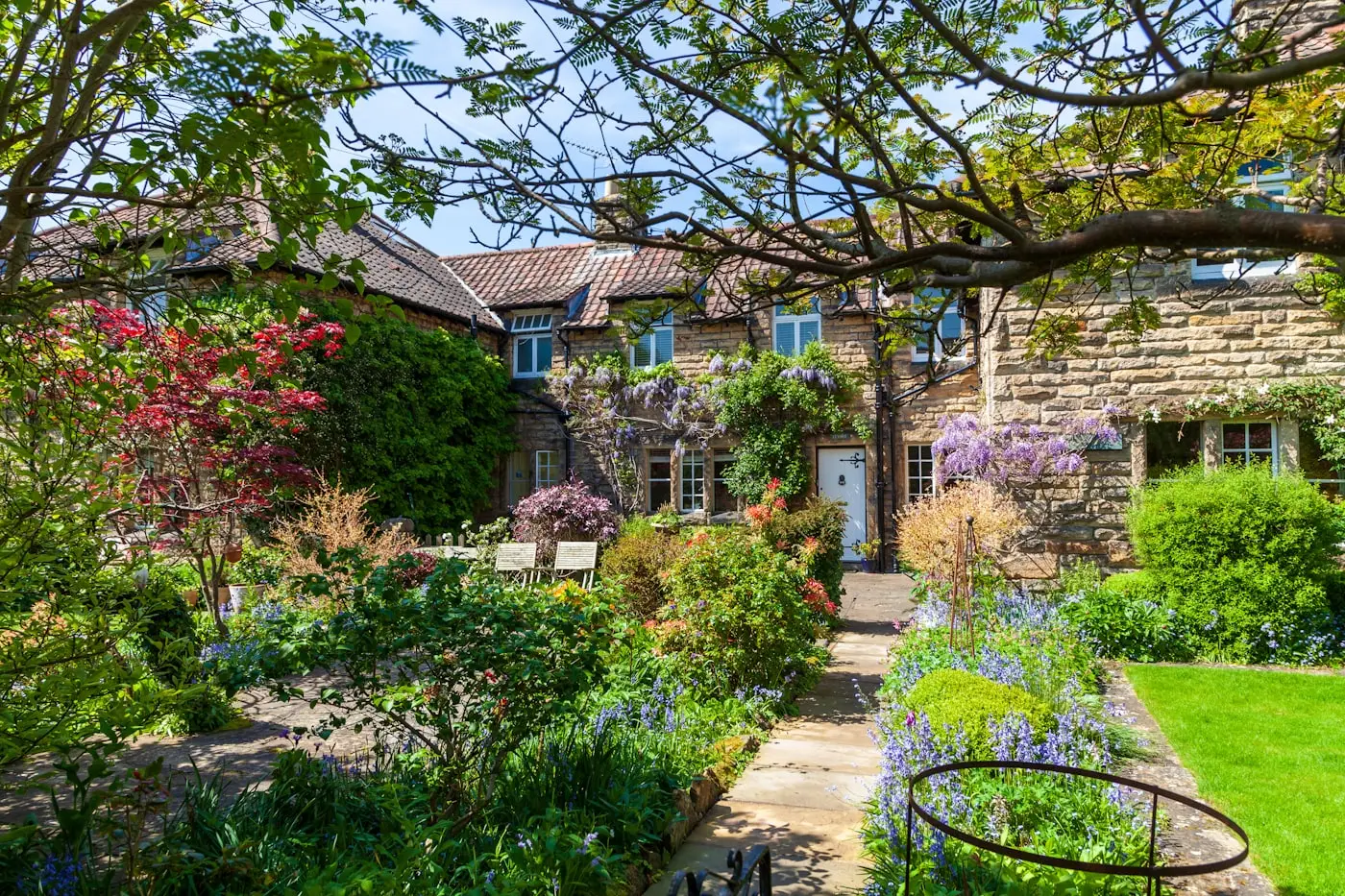
York's garden character is genuinely distinct. The medieval city centre has walled gardens - some barely 30 square metres of enclosed space where centuries of overlapping ownership have produced idiosyncratic layouts that require a different approach entirely to an open suburban garden. Further out, the Edwardian housing stock in Acomb, Rawcliffe, Holgate, and Dringhouses has the familiar generous back gardens of that era: manageable in size, often with mature trees, and enough space to do something properly interesting. Then there are the newer estates - Poppleton, Skelton, Stockton-on-the-Forest, Clifton Moor - where gardens are essentially blank canvases created when the houses went up, often without topsoil management and invariably on compacted clay. Each requires a different design brief. A designer who knows York understands that these are not generic Yorkshire suburban gardens; they are shaped by specific local geography and history.
York's Soil Reality: Understanding the Clay Before Anything Else
The Vale of York sits on thick glacial lake sediments - essentially clays and silts left behind when meltwater lakes drained at the end of the last ice age. This creates some of the most challenging domestic garden soil in the north of England. York clay is not just heavy; it is slow-draining, prone to waterlogging in wet winters, prone to drought-cracking in dry summers, and extremely susceptible to compaction under foot or machinery traffic. If a builder's team has been through your garden - which is universal in new-build properties and common after any extension or renovation work - the clay beneath the surface may be compacted to the point where water moves through it at almost zero rate.
This is not a problem you can solve entirely with plant selection, though plant selection matters. It is primarily a drainage problem. Good garden design on York clay starts with an honest assessment of what the drainage situation actually is. Standing water that persists more than 48 hours after heavy rain, dead patches in lawns that stay wet, and soil that smells of sulfur when you dig it are all signs of serious drainage issues that need structural solutions - land drains, soakaway systems, raised beds - before you think about what to plant.
A realistic starting point for new-build York gardens
Many new-build gardens in Poppleton, Skelton, and surrounding developments were created by spreading a thin layer of topsoil over construction rubble and compacted subsoil clay. If your new lawn turns yellow in summer and waterlogged in winter, the issue is almost certainly compaction and inadequate topsoil depth. A soil probe to check topsoil depth (it should be at least 200mm for lawn, 300mm for borders) is worth doing before any planting work begins. Bringing in additional topsoil and breaking up compaction with a fork or subsoiler where accessible is often the first job on a new-build York garden, not the last.
The practical implication for garden design is that drainage improvement and raised beds are often standard components of a York garden project, not optional extras. A good York-based designer will include drainage assessment in the initial survey rather than treating it as an add-on. If you are getting quotes and no one is asking about drainage, that is a question you should raise yourself.
What York Garden Design Projects Typically Cost
| Garden Type | Typical Cost | Notes |
|---|---|---|
| City-centre walled garden (under 50 sqm) | £5,000-£10,000 | High complexity relative to size. Narrow access, historic constraints, intensive vertical planting opportunities. Hard landscaping and drainage often require specialist approach. |
| Edwardian semi rear garden (60-120 sqm) | £7,000-£14,000 | Acomb, Rawcliffe, Holgate, Dringhouses. Includes patio or terrace, lawn or alternative, planted borders, possibly raised beds. Standard access; good scope for creative design. |
| New-build garden (80-150 sqm) | £6,000-£12,000 | Poppleton, Skelton, Stockton-on-the-Forest. Budget needs to include soil improvement and drainage work that existing gardens do not need. Design scope is excellent: blank canvas. |
| Large suburban or rural fringe garden (150-400 sqm) | £12,000-£20,000+ | Dunnington, Strensall, Holtby, Copmanthorpe. Full design including structural planting, hard landscaping, possible kitchen garden, lighting. Multiple phases common. |
| Design-only fee (plan without build) | £600-£2,500 | Site survey, planting plan, hard landscaping layout, materials specification. You manage contractors separately. |
| Planting refresh (existing structure kept) | £1,500-£5,000 | New planting scheme for existing borders. No structural changes. Good option if your layout works but planting is tired or poorly matched to the clay conditions. |
Hard landscaping typically makes up 60 to 70% of the total project cost. On York clay, drainage work can add 10 to 15% on top of that if the site needs it - which many do. See the Yorkshire garden designer cost guide for a full breakdown of how designer fees and build costs relate to each other.
What York-Based Designers Focus On
Drainage as a design component, not an afterthought
The best York garden designers include drainage as a structural design element from the start. This means thinking about where water goes, how hard surfaces drain, whether the lawn needs aeration and drainage pipe below it, and whether raised beds can be designed as a feature rather than a remediation measure. A garden where the drainage is resolved at the design stage looks better and functions better than one where drainage was retrofitted as a problem arose. Our dedicated Yorkshire garden drainage guide covers the technical options in detail.
Year-round structure with clay-tolerant plants
A common mistake in York gardens is planting based on summer catalogue appeal without considering the wet-winter performance of the plants chosen. Many ornamental plants that look good in summer will sit in waterlogged clay in November and fail by February. A designer who knows York will build the planting around a core of structurally reliable plants that handle the full York year: Persicaria amplexicaulis and its cultivars (robust on clay, long-flowering), Astilbe (embraces the wet), ornamental Molinia grasses (handle wet/dry extremes remarkably well), Astrantia, Geranium, and dependable shrubs like Physocarpus, Viburnum davidii, and Sambucus cultivars.
Raised beds as both function and feature
Where the clay is genuinely difficult, raised beds are not a compromise - they are a legitimate design move. A well-built raised bed in York stone or reclaimed brick fits the city's aesthetic, puts the growing medium above the clay profile, allows you to choose the right compost and drainage, and creates an instant 3D structure in a garden that might otherwise be flat and uninteresting. Many York garden designs incorporate raised beds as a first-phase element that you plant into immediately and that improves while the rest of the garden develops.
Garden Style Preferences in York
Wildlife gardens
York has a strong environmental community and a correspondingly strong interest in wildlife-friendly garden design. This is not just aesthetic preference; York sits on the River Ouse floodplain and has significant biodiversity connectivity through the river corridor, the Ings wetlands, and Strensall Common. A garden designed with wildlife in mind - native hedging, plant species that support pollinators, a wildlife pond, log piles, and reduced pesticide input - genuinely connects to that wider ecological network. RHS Plants for Pollinators lists are a common starting point; York designers often go further with native wildflower areas and pond design.
Kitchen gardens
York's allotment culture is long-established (there are 1,800 allotment plots within the city), and that interest in productive growing translates into domestic kitchen garden demand. Raised vegetable beds, soft fruit cages, trained fruit trees on walls and fences, and cutting flower areas are all common requests in York garden design briefs. On clay soil, raised beds for vegetables are almost the only sensible approach - growing direct into clay gives poor yields and a very short growing season.
Formal urban walled gardens
The city-centre walled gardens are a design challenge and an opportunity. Small enclosed spaces respond well to strong, simple ideas: a single focal point, good paving, careful use of vertical surfaces for climbing plants, and a restrained plant palette that does not fight itself. Climbing roses, Wisteria, Hydrangea petiolaris, and the range of Clematis all perform well on York's city walls. The enclosure creates a microclimate noticeably warmer than the open garden, which means you can push the limits of what is theoretically borderline-hardy.
Contemporary low-maintenance
Particularly popular in the newer areas of the city and with owners who want a good-looking garden they do not have to spend every weekend in. Typically combines a small number of structural shrubs and grasses with good hard landscaping (the dominant cost driver), minimal lawn or none at all, and an approach to maintenance that can be handled in a few visits per year once the garden is established.
The Design Process: Phase 1 and Phase 2 in Practice
Many York garden projects run in two phases, and not just for budget reasons. The first phase - hard landscaping, drainage, structural planting including hedges and trees - creates the framework. The second phase - ornamental planting, kitchen garden installation, finer detail - comes a season later, once the hard landscaping has settled and you can see how the space actually works and feels. On clay soil this has an additional logic: significant hard landscaping work disturbs and potentially compacts the surrounding soil. Waiting a season for the soil to recover and settle before doing detailed planting in the borders gives genuinely better results.
The phased approach also gives you time to live with the Phase 1 garden and adjust the brief for Phase 2 if your priorities have shifted. That is a meaningful advantage over doing everything at once, particularly on a garden where the scope is large or the design is complex. A good designer will produce the complete plan upfront so that Phase 1 and Phase 2 are coherent together, with Phase 2 simply waiting for its turn.
Ready to start your York garden design?
Tell us what you are planning and we put your enquiry in front of local designers and gardeners who cover York and the surrounding villages.
Start the assessmentFrequently Asked Questions
How much does garden design cost in York?
A typical York garden design project costs £5,000 to £12,000 for a medium-sized suburban garden. Larger plots on the rural fringe in Dunnington, Strensall, or Stockton-on-the-Forest can reach £15,000 to £20,000 or more depending on the extent of hard landscaping. The designer's fee separately is typically £600 to £2,500 depending on scope. Walled city-centre gardens with historic constraints may cost more due to the complexity of materials choices and any consultation required with the local planning authority.
How do you garden on York's heavy clay soil?
York's glacial clay is dense, slow-draining, and prone to compaction when wet and cracking when dry. Good garden design on York clay starts with honest assessment of drainage: is water pooling in winter? If so, that needs solving structurally, not just by plant selection. Raised beds are often part of the solution. Where planting goes into the existing clay, the best performers are plants that can handle both the wet winter and the dry summer that often follows: Persicaria, Astilbe, Molinia grasses, Astrantia, and dependable shrubs like Viburnum and Physocarpus. See our York clay soil guide for more detail.
Do I need planning permission for garden works in York?
Most residential garden landscaping does not require planning permission. York has significant areas of historic importance though - listed buildings, conservation areas, and the medieval city centre - so if your property is within a conservation area or is listed, additional constraints apply. The city walls and their setting are protected; any garden works near them should be discussed with City of York Council at the outset. Front garden hard-standing using non-permeable surfaces over 5 square metres requires permitted development approval.
How long does a garden design project take in York?
From initial site visit to completed garden: 3 to 8 months for a typical project. The design phase takes 4 to 8 weeks. Hard landscaping installation takes 1 to 3 weeks for a medium garden. Most York designers recommend phasing the project - hard landscaping in spring or autumn, planting in autumn for best establishment. If you are planning on York clay, schedule hard landscaping when the ground is firm and not saturated, which typically means April to October. See our garden design timeline guide for a month-by-month breakdown.
What garden styles work well in York?
York's garden character is diverse. Georgian and Victorian city-centre terraces suit formal or cottage styles with strong structure - walled gardens respond well to espaliered fruit, pleached screens, and climbing plants used to maximum effect on the available vertical surfaces. Edwardian semis in Acomb, Rawcliffe, and Holgate suit relaxed cottage planting or contemporary low-maintenance designs. New-build estates need designs that create structure from scratch, typically with structural planting as a priority. Wildlife and naturalistic gardens have strong local appeal, reflecting York's environmental community and the ecological connectivity of the river corridor.
What plants work well in York's gardens?
On York's neutral to slightly alkaline clay, the best performers are plants that tolerate both wet winters and dry summers. Structural shrubs: Viburnum (davidii and opulus), Physocarpus, Sambucus cultivars, Cornus. Perennials: Geranium (most species), Persicaria amplexicaulis, Astrantia, Hemerocallis, Salvia nemorosa hybrids, Thalictrum, Actaea. Ornamental grasses: Molinia (particularly suited to clay), Deschampsia. Trees: Malus, Prunus, Betula, Sorbus - all handle the clay well once established. Avoid plants that need free-draining or acid conditions without structural soil improvement.
Should I phase my York garden design project?
Phasing is very common in York and often makes both practical and financial sense. Phase 1 typically covers hard landscaping - patio, paths, fencing, drainage work, and structural planting such as hedges and trees. Phase 2 adds ornamental planting and finer detail. This approach has a practical advantage on York clay: hard landscaping disturbs the soil significantly, and waiting until the ground has resettled before doing detailed planting gives better results. A good designer will produce the complete plan upfront so both phases are coherent together.
For regular garden upkeep after your design is complete, see our guide to finding gardeners in York - what maintenance costs, how York's clay soil affects the work, and what to ask before booking.
Related Reading
- Garden Design Service
- Garden Makeover Service
- Garden Maintenance Service
- Gardeners in York: regular upkeep after your design is complete
- Garden Designer Cost Yorkshire
- Garden Design Timeline Yorkshire
- Clay Soil Garden Yorkshire
- Garden Drainage Yorkshire
- Garden Lighting Yorkshire
- Yorkshire Garden Design Ideas