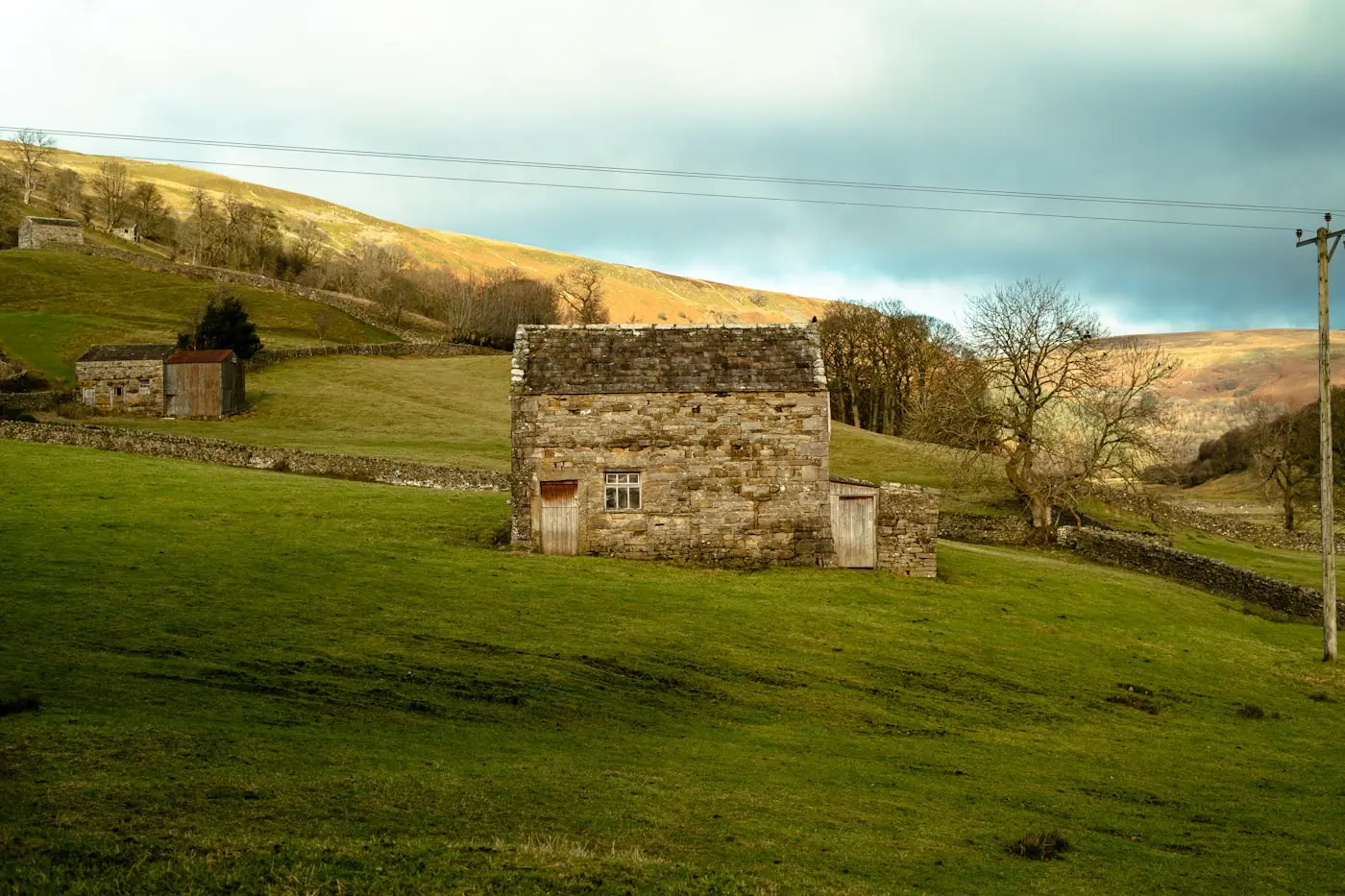
Conisbrough is the kind of town that surprises visitors: the Norman castle - Conisbrough Castle, managed by English Heritage and the inspiration for Sir Walter Scott's Ivanhoe - stands dramatically above the River Don on the valley's limestone rim, giving the whole town a more characterful skyline than most of its South Yorkshire neighbours. But below the castle, the town drops sharply into the Don valley, and that change in elevation represents a genuine and significant change in what lies underneath every garden in S64.
If your garden is in the upper parts of Conisbrough - on the valley slopes near the castle, or on the higher residential streets that look across the Don valley - your soil is shaped by the limestone and sandstone of the valley rim geology. These soils drain better, have a less acid pH, and in dry summers can become drought-stressed in a way that the valley-floor clay soils never do. If your garden is in the lower town, close to the Don and the valley floor, you are on deep alluvial clay that floods periodically and stays wet long into spring. The distance between these two conditions is sometimes no more than a few streets, but the practical gardening implications are substantial.
Conisbrough's Two Soil Zones
The geology of the Don valley at Conisbrough creates two distinct growing environments within the same postcode. Understanding which one applies to your garden is the most useful thing you can do before planning any significant maintenance or renovation work.
Valley-side and upper town soils sit on the limestone and Magnesian limestone band that runs along the valley rim. This geology produces a thinner, better-structured soil than the valley floor - typically a loamy clay that retains some moisture but drains far better than the deep alluvial clay below. The pH on these soils is less acid than the Coal Measures clay typical elsewhere in South Yorkshire, often running between 6.5 and 7.5 on the valley sides. This is actually favourable territory for a wider range of plants than the acid clay soils of Barnsley or Rotherham, and lawns on the valley-side gardens of Conisbrough can be maintained more easily once the correct management approach is established. The main challenge in dry summers is moisture retention on the thinner soils - mulching borders and raising mowing height prevents drought stress on slopes that face south or south-west toward the valley.
Valley-floor and lower town soils are a different proposition entirely. The River Don has deposited alluvial clay across the lower valley floor over thousands of years, and the gardens in this zone sit on deep, heavy, silty clay that holds water exceptionally well. In wet winters, these gardens can flood when the Don rises, and the flood risk here is genuine enough that it is a material consideration for any significant garden investment. Between flood events, the alluvial clay dries slowly and can stay soggy into May in a wet spring. Moss is a significant problem in valley-floor lawns, driven by the combination of waterlogging and modest light levels on north-facing and sheltered lower-town plots.
Check the Don flood risk before investing in the lower garden
The River Don at Conisbrough carries a genuine flood risk for properties in the valley bottom. The Environment Agency Flood Map for Planning is the definitive source for your specific address. If your postcode falls in Flood Zone 2 or 3, any significant investment in permanent garden features - paving, raised structures, expensive planting - should be made with flood tolerance as a design consideration. Grass lawn on the flood plain is a pragmatic choice precisely because it can recover from inundation in a way that border plantings and hardscaping cannot always do. A gardener who knows S64 will be aware of which streets carry the higher risk and can factor this into any renovation or design recommendations.
What Conisbrough Gardens Look Like
The housing in Conisbrough reflects several distinct waves of development. The older terraces in the town centre and on the streets immediately around the castle area represent the Victorian and Edwardian residential development of the mining era. These properties have compact gardens - rear yards with varying amounts of open soil, front plots that are often partly paved. The soil in these older plots has typically been heavily compacted over generations of use.
The interwar semis and the 1960s and 70s council estates that make up the majority of Conisbrough's housing stock have more garden space - proper rear gardens with room for a lawn, borders, and some productive growing if desired. These are the gardens where the distinction between valley-side and valley-floor position matters most: the same design on a sloping valley-side plot and a flat valley-floor plot will need completely different management approaches to succeed.
The streets around the castle and on the higher ground toward Old Denaby show more variety in garden character - some of the older and more established private residences here have gardens with more mature planting and more considered layout than the standard estate garden. The valley-side soil conditions support a wider range of planting than the acid Clay Measures soils of Barnsley or the waterlogged alluvial clay of the lower Don.
What Gets Booked in Conisbrough
Regular lawn maintenance is the core service across S64. Fortnightly mowing from April through October, adjusted for the significant difference in growth rates between valley-side and valley-floor gardens. On valley-side limestone soils, grass grows well in spring and early summer but can slow down in a dry July. On valley-floor alluvial clay, growth is consistently vigorous through summer but the lawn may stay too wet to mow until late April in a wet spring. Garden maintenance on a schedule that adapts to the actual ground conditions - not just the calendar - produces consistently better results in a garden with Conisbrough's topographic variation.
Lawn renovation on the valley-floor alluvial clay follows the same September programme that works across the rest of South Yorkshire's heavy-clay gardens: hollow-tine aeration to relieve compaction and open drainage channels, scarification to remove moss, overseeding with a moisture-tolerant grass mix, and lime if the pH is below 6.5. Valley-side gardens on the limestone may not need the same degree of renovation management - if the soil is naturally better-draining and less acid, the moss problem is less severe. The overseeding guide for Yorkshire covers the renovation process in full.
Hedge trimming is a consistent requirement across both the older and newer parts of Conisbrough. Privet and hawthorn hedges on the estate properties and the interwar semis have been in place for decades and need annual trimming to maintain their shape. Where hedges have widened or grown significantly, an initial reduction visit before routine annual maintenance is worth the additional cost - attempting to maintain an oversized hedge on an annual trim schedule simply slows the spread rather than reversing it. Hedge trimming in S64 runs £38-£90 per visit depending on length, height, and condition.
Garden clearance comes up on properties where the garden has accumulated a backlog through a change of occupancy or a period of neglect. Clearance on valley-floor alluvial clay is demanding work - roots grip the heavy soil and couch grass rhizomes spread widely through the damp ground. Clearance on valley-side limestone soils is easier by comparison, with better-draining soil that makes root extraction cleaner. Always get a fixed price after an in-person assessment. Garden clearance in Conisbrough runs £165-£350 for a medium plot.
Weed management on the valley-floor gardens is persistent work. The damp alluvial clay supports vigorous weed growth and couch grass, bindweed, and dock are all regularly encountered in S64 lower-town borders. The weed control guide for Yorkshire covers the approach to each persistent weed type on heavy clay soils.
What Does a Gardener Cost in Conisbrough?
Conisbrough rates are consistent with the wider Doncaster district and South Yorkshire Don valley - slightly above the cheapest ex-mining district rates and slightly below Rotherham and Sheffield city rates. The geological variation across S64 means that the same job type (lawn renovation, for example) can take meaningfully different amounts of time on a valley-side limestone plot versus a waterlogged valley-floor clay plot, and a fixed quote after assessment reflects this more accurately than a standardised price.
| Job type | Conisbrough (S64), 2026 | Notes |
|---|---|---|
| Hourly rate (maintenance) | £25-£34/hr | Regular schedule at lower end; one-off visits higher |
| Day rate | £125-£175 | 7-8 hr day for clearance or renovation |
| Fortnightly maintenance visit | £36-£64 | Medium garden; lawn, borders, edges included |
| One-off lawn cut | £28-£55 | Overgrown or first-of-season cuts at higher end |
| Lawn renovation (aeration, scarification, overseed) | £100-£215 | Valley-floor clay gardens at higher end; valley-side lower |
| Hedge trimming | £38-£90 | Initial reduction visits on overgrown hedges at higher end |
| Garden clearance (medium plot) | £165-£350 | Valley-floor alluvial clay clearance harder than valley-side |
Seasonal Guide for Conisbrough Gardens
Spring (March to May)
Valley-floor gardens stay wet into April in a typical year - hold off lawn work and heavy border digging until the ground has drained and firmed. Valley-side gardens on the limestone drain faster and can be ready for lawn work in late March in a dry spring. Fortnightly mowing from mid-April across S64. May is the best planting month on both soil types - the limestone soils warm faster and are workable earlier than the alluvial clay.
Summer (June to August)
Core mowing season. Valley-side gardens on limestone may need supplementary watering on south-facing slopes in dry July spells - the thinner, better-draining soil has less moisture retention than the alluvial clay. Valley-floor gardens benefit from raised mowing height in summer to reduce stress on heavy clay. Book autumn renovation in August - September fills across S64 faster than most homeowners expect.
Autumn (September to November)
September is the critical renovation month for valley-floor alluvial clay lawns. Aeration, scarification, overseeding, and lime application while soil temperature is above 10 degrees Celsius produces the best results. Valley-side gardens may need a lighter renovation programme depending on their moss burden. See the autumn garden care guide for Yorkshire for the full checklist. October: clear leaves and assess drainage ahead of winter.
Winter (December to February)
Valley-floor gardens are at flood risk in significant winter rain events. Plan for the coming season and book maintenance from February. Check the Environment Agency flood risk alerts for your address before any significant garden investment if you are in the lower Don valley.
Frequently Asked Questions
How much does a gardener cost in Conisbrough S64?
Hourly rates run £25-£34 for general garden maintenance. Fortnightly visits for a medium S64 garden run £36-£64. Lawn renovation runs £100-£215. Clearance day rates run £175-£300. See the UK gardener cost guide for full context.
What soil do Conisbrough gardens have?
Two zones: valley-side limestone and sandstone soils (thinner, better-draining, less acid, pH 6.5-7.5) and valley-floor alluvial clay (deep, heavy, slow-draining, flood risk on lowest ground). Valley position determines which applies to your garden and what management approach is needed.
Is my Conisbrough garden in the Don flood risk zone?
Check the Environment Agency Flood Map for your specific postcode. The lower Don valley carries a genuine flood risk for some S64 addresses. If your garden is in the risk zone, design choices and investment decisions should account for periodic inundation. A garden clearance or renovation quote should include a drainage assessment on any lower-town plot.
What garden jobs are most common in Conisbrough?
Regular lawn maintenance, September renovation on valley-floor clay lawns with moss problems, hedge trimming on older residential streets, garden clearance on properties with accumulated backlogs, and weed management in borders on the heavy alluvial clay of the lower town. Valley-side gardens on limestone need less renovation management but benefit from consistent maintenance through the season.
Can I visit Conisbrough Castle from the town?
Conisbrough Castle (English Heritage) is accessible on foot from the town centre and well worth a visit. It stands on the limestone valley rim and is one of the finest Norman keeps in England - and the inspiration for Scott's Ivanhoe. Its position on the valley side is a useful reminder that the upper town's soil drains very differently from the valley floor below.
Further reading
- Lawn overseeding in Yorkshire - the full renovation guide
- Weed control in Yorkshire gardens
- Autumn garden care in Yorkshire
- Gardeners in Doncaster
- Gardeners in Mexborough
- Gardeners in Rotherham
Gardeners near Conisbrough
We cover Conisbrough and the surrounding S64 area. Gardeners working Conisbrough typically also cover Mexborough, Swinton, Doncaster, and the Don valley corridor.
Find a gardener in Conisbrough.
Tell us what you need and we put your enquiry in front of a local gardener covering S64. No call centres, no national franchise - one local gardener, direct contact.
Get a free assessment