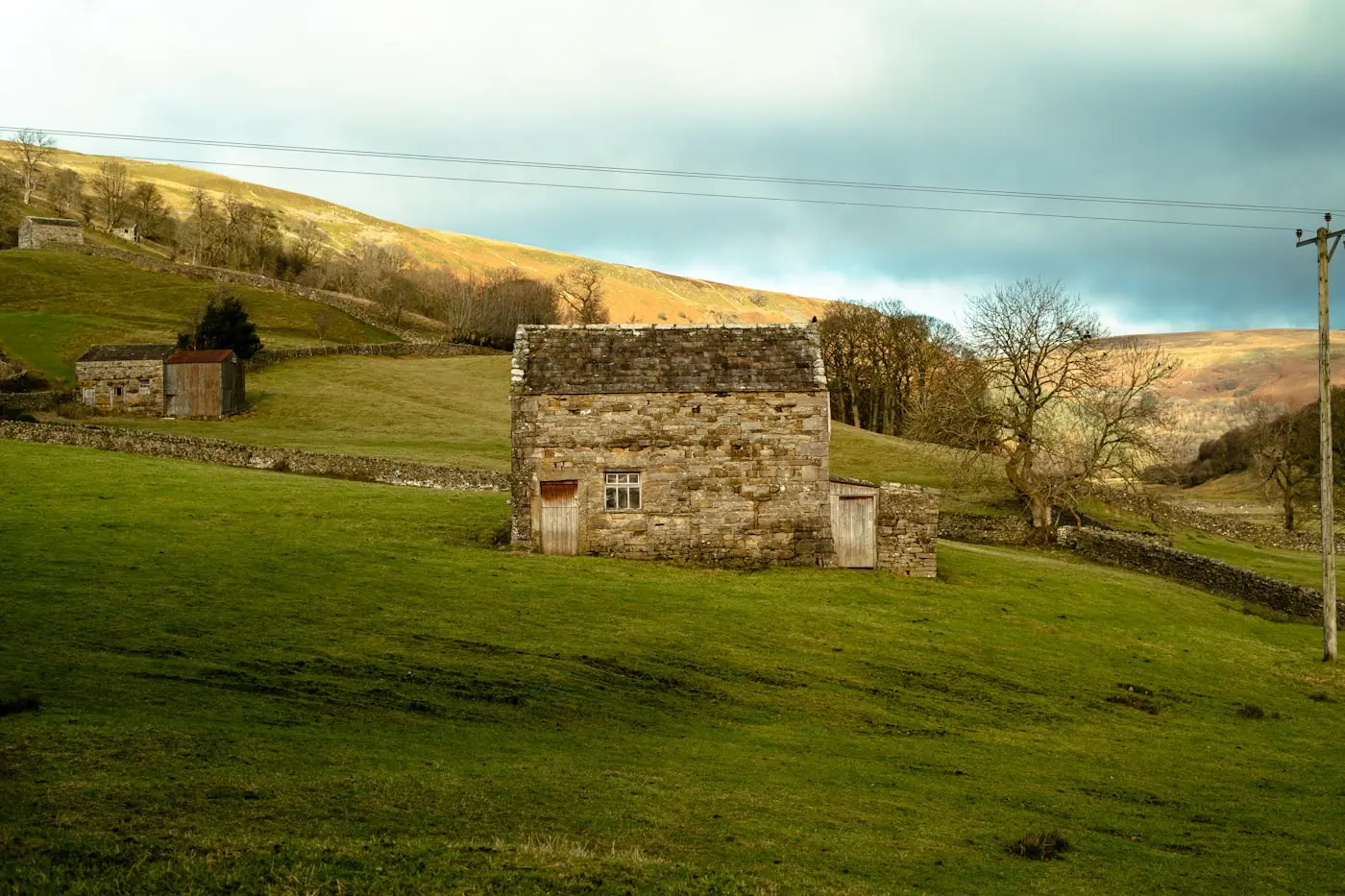
Swinton occupies a distinctive position in the South Yorkshire landscape: at the point where the River Don and the River Dearne come together, flat valley terrain in every direction, and a history that mixes Victorian terrace housing with the glassware and pottery industries that once defined the town - the Old Hall Works and Swinton Pottery were significant local operations before their closure. That industrial and residential history has produced a housing stock and garden character that is shaped fundamentally by the valley floor beneath it. The flat terrain and the double-clay profile - alluvial clay from the rivers over Carboniferous Coal Measures shale-derived clay beneath - means Swinton gardens have some of the most challenging drainage conditions in the Dearne Valley corridor.
This guide is for Swinton homeowners who want to understand why their garden is the way it is, what work makes the most real difference in this specific soil and terrain, what it costs in 2026, and how to find a gardener who actually knows the S64 conditions rather than someone who will treat your flat, waterlogged valley clay like any other garden they have visited this week.
What Kind of Gardens Are in Swinton?
Swinton's housing follows the pattern of a South Yorkshire industrial town that grew through the Victorian and interwar periods. The older Victorian terrace streets in the central areas of town have the compact, enclosed rear yards that characterise this era of housing - small to medium-sized plots, partially or fully paved in many cases, where decades of foot traffic and limited organic matter input have produced the kind of compacted clay soil that is very difficult to improve quickly. The flat terrain means there is no slope to assist drainage, and the valley floor position means the water table is often close to the surface in winter and spring.
The 1930s to 1950s housing that constitutes a significant proportion of Swinton's residential streets represents a more workable proposition. These semis and terraces typically have larger rear gardens - more space for a proper lawn and border planting - and the gardens that have been consistently maintained over decades have accumulated some organic matter that partially improves on the raw clay. But the underlying valley-floor drainage conditions remain. A garden on these streets with a lawn that goes mossy every winter and turns concrete in August is not suffering from neglect - it is experiencing the natural behaviour of flat Don Valley clay, and treating it requires understanding that behaviour rather than applying generic lawn care advice.
Higher ground toward Wath Road and the rising terrain on the eastern side of Swinton offers better drainage than the flat valley floor. Gardens here have some gradient to assist water movement, warm earlier in spring, and give grass a more realistic chance of competing with moss on a reasonably managed schedule. The clay character remains throughout, but the drainage improvement is significant enough to change what is achievable without major sub-surface work.
There is also newer development on the edges of Swinton, some of it on land with an industrial history. Properties on former industrial land may have variable sub-surface conditions - thin topsoil over compacted fill, variable drainage, or chemical legacy from former industrial use that affects plant establishment. If your garden on a newer development site has always been difficult despite reasonable care, sub-surface investigation before investing in further surface renovation is a sensible step rather than throwing good money at surface problems that have underground causes.
The confluence drainage problem
Swinton's position at the Don and Dearne confluence creates a specific drainage challenge that affects lower-lying gardens most acutely. During periods of high river flow, the water table across the valley floor can rise to within half a metre or less of the surface. This is not just a surface drainage problem - it is a groundwater table problem that surface aeration addresses only partially. If your Swinton garden holds puddles for three or more days after heavy rain despite regular aeration, a groundwater assessment is worth getting before committing to further renovation work. The garden drainage guide for Yorkshire covers what to look for and what the intervention options are.
What Gardeners Do in Swinton
The work that comes up most consistently in S64 Swinton gardens reflects the flat valley terrain, the heavy clay, and the moisture conditions that come with both. These are the jobs that gardeners cover most regularly in this part of the Don-Dearne confluence area.
Drainage assessment and lawn renovation is the starting point for most Swinton lawn improvement conversations, and the two are connected. In a flat valley town with heavy clay and a high groundwater table in winter, improving lawn drainage is not just about surface aeration - though that is the most accessible annual intervention. A proper renovation sequence for a Swinton lawn begins with a realistic assessment of what is causing the drainage failure. If it is surface compaction only, hollow-tine aeration in early September, combined with scarification, overseeding, and top-dressing with grit-amended compost, will produce visible improvement over two to three seasons. If the problem is in the subsoil or groundwater table, surface renovation alone will not deliver the result, and a different approach is needed before the renovation investment makes sense. See the garden drainage guide for Yorkshire for the diagnostic approach, and the lawn overseeding guide for the renovation sequence once drainage is addressed.
Regular garden maintenance on a scheduled basis is what prevents Swinton's clay-soil gardens from accumulating the backlog that turns a maintenance visit into a clearance job. Garden maintenance at fortnightly intervals from April to October, with monthly visits in the shoulder months, keeps moss from establishing faster than it can be addressed, couch grass from spreading beyond borders, and hedges and edges from requiring emergency rather than routine intervention. In a garden on flat valley clay, staying ahead of the maintenance cycle is more valuable than on lighter-soil gardens - the ground here does not allow for much grace period between neglect and serious problems.
Weed control in Swinton's flat valley clay is among the most demanding in the Dearne Valley area. Weed control in flat, heavy, often-wet clay is harder than in any other garden soil type in this region. Roots grip the clay tenaciously, hand-pulling leaves fragments behind, and the flat, moist conditions that slow grass and garden plants also create near-ideal conditions for moss, couch grass, bindweed, and dock. Couch grass rhizomes spread further and faster in flat, undisturbed valley clay than they do on slopes or lighter soils where the gardener has more mechanical options for cultivation. The Yorkshire weed control guide is the starting point for understanding what is manageable in this soil type and what timescales are realistic.
Hedge trimming is relevant across a large proportion of Swinton's Victorian and interwar residential properties. Established privet and hawthorn boundary hedges are common, and many have not been properly reduced in several seasons. Hedge trimming after a period of neglect on flat Swinton clay is more of an initial reduction job than a maintenance trim, and the price for that initial work should reflect what it actually involves. An overgrown privet on a flat, open valley-floor garden can be a substantial day's work before it is back to a size that can be maintained annually.
Garden clearance on flat Swinton terrain is physically demanding because the soil is dense and wet, roots anchor firmly in the clay, and the flat plots tend to accumulate water and organic matter that together create a particularly resistant environment for clearance work. Garden clearance in this part of the Don-Dearne confluence area is priced to reflect the extra physical effort relative to a sloped or lighter-soil plot of the same size. Access through back lanes to terrace properties adds further complexity for equipment. See the garden clearance near me guide for what to expect from a professional clearance visit and how to get a realistic price.
Pressure washing is a significant regular requirement in Swinton's damp, flat gardens. The valley-floor moisture and limited air movement in more enclosed plots means paved surfaces colonise with algae and moss faster than on exposed or elevated sites. Pressure washing combined with algicide treatment is the effective solution. Lawn edging is another finishing detail that consistently improves how a maintained garden looks - on flat clay soil that can spread and merge at the lawn margin, crisp edging along borders and paths is part of what makes the difference between a garden that looks tended and one that looks merely mowed.
What Does a Gardener Cost in Swinton?
Swinton rates are consistent with the wider S64 South Yorkshire pattern - slightly below West Yorkshire rates for general maintenance, with renovation and drainage work reflecting the additional effort that flat Don Valley clay requires. The flat, compact character of the town means gardeners covering S64 can work efficiently between visits, which keeps routine maintenance pricing reasonable.
For the full picture on UK gardener pricing, see the how much does a gardener cost guide and the gardener hourly rate UK guide.
| Rate type | Swinton (S64), 2026 | Notes |
|---|---|---|
| Hourly rate (maintenance) | £25-£38/hr | Regular schedule at lower end; one-off visits higher |
| Day rate (7-8 hrs) | £130-£180 | Full working day for clearance or renovation |
| Fortnightly maintenance visit | £38-£65 per visit | Medium garden; lawn, borders, edges included |
| One-off lawn cut | £28-£50 | Size and condition dependent; overgrown plots higher |
| Lawn renovation (aeration, scarification, overseed) | £100-£220 | Flat valley clay adds significant labour time vs sloped plots |
| Hedge trimming (standard domestic) | £40-£90 per visit | Neglected or overgrown hedges at the higher end |
| Garden clearance (medium plot) | £180-£380 | Flat heavy clay, restricted access: up to £650 |
| Pressure washing (patio/path) | £55-£140 | Area dependent; algicide treatment extra |
One point worth specific emphasis for Swinton: lawn renovation on flat valley clay where the drainage problem may be more than surface compaction should be quoted only after a drainage assessment visit. A gardener who quotes for a full renovation without assessing whether the drainage failure is surface or sub-surface is at risk of delivering renovation work that produces limited results because the underlying drainage problem was not addressed first. Ask whether the quote includes a drainage assessment before renovation work begins.
Finding a Reliable Gardener in Swinton
Swinton's community character - a town with deep roots in the Don Valley's industrial and residential history - means the personal recommendation route works well for finding reliable tradespeople. A neighbour in your street whose lawn and borders are clearly and consistently well kept is a strong endorsement of their gardener - it tells you that person shows up when they say they will, that the work is done to a standard the homeowner values, and that the price is one a local household is willing to sustain over time.
If recommendation is not immediately available, a local introduction service that has local gardeners covering S64 gives you access to someone who knows the Don-Dearne valley terrain and has worked with Swinton's specific soil conditions. National platforms give you access to anyone who has registered in the area, which may include people with no knowledge of flat valley clay drainage or the access constraints of older terrace back lanes.
Before committing to any gardener in S64, ask these six questions:
- Can you show me your public liability insurance certificate?
- Do you hold a current Waste Carrier's Licence for removing garden waste?
- Have you worked in S64 before, and specifically with gardens on flat valley terrain and heavy alluvial clay?
- Do you assess the site before quoting for clearance or renovation work?
- Can you show examples of lawn renovation or clearance work in Swinton or the neighbouring Don Valley towns?
- Is waste removal included in the price, or priced separately?
Clear, direct answers to all six is the baseline for shortlisting. Vagueness about insurance or dismissiveness about local soil conditions are both worth treating as warning signals. See the how to find a gardener in Yorkshire guide for a complete vetting framework.
Seasonal Guide for Swinton Gardens
Swinton's South Yorkshire inland climate is moderate, with frost risk into April and a growing season that extends usefully into October. The flat valley terrain and heavy clay add their own seasonal constraints on top of the weather, and the combination shapes what is and is not realistic to do in each month of the year.
Spring (March to May)
Swinton's flat valley clay is the last soil in this part of South Yorkshire to drain and warm after winter. The groundwater table in lower plots can remain elevated well into April, and working on saturated clay - either mowing a wet lawn or digging in waterlogged borders - causes compaction damage that takes months to recover from. March is the time for planning, booking, and very light work: structural pruning of deciduous shrubs, clearing winter debris from beds on dry days, assessing what the winter has revealed about drainage and lawn condition. Mowing and heavier border work wait until the ground has genuinely firmed, typically mid-April on most Swinton plots.
Late April and May bring the main spring activity: fortnightly mowing established, edges defined, weed control on paved areas, border planting on dry days when the clay is workable. Tender bedding plants go out in late May. The clay soil in Swinton's flat gardens can transition quickly in May from very wet to very workable as spring temperatures arrive - the window for soil improvement and planting work in this window is worth using because the summer dry period can arrive faster than expected. See the clay soil guide for how to time soil work through the South Yorkshire season.
Summer (June to August)
Fortnightly mowing runs through the summer. Hedge trimming for most domestic hedges is best done in late June, with a secondary trim in September if growth has been vigorous. The flat valley terrain in Swinton means summer dryness is more dramatic in its effect on the garden than on sloped sites - the clay that held water tenaciously in April can crack hard at the surface in a dry July, creating the conditions where an inadvertently scalped lawn or a missed watering in a shallow border can cause visible setback. Mulching borders in late May extends the moisture-retaining window and reduces the watering needed through July and August.
August is the time to book autumn renovation. September lawn renovation slots across S64 fill in advance. Gardeners who do this work well in Swinton and the Don Valley are not waiting for September calls - they are working from bookings made in July and August. Making contact now rather than in six weeks is the practical action.
Autumn (September to November)
This is the most important seasonal window for Swinton gardens. Hollow-tine aeration in early September, while soil temperature is above ten degrees, is the single most effective annual intervention for flat valley clay lawn drainage. Combined with scarification, overseeding with a moisture-tolerant grass mix appropriate for flat clay-soil conditions, and top-dressing with grit-amended compost, it is the treatment sequence that produces durable improvement in Swinton lawns over two to three seasons. See the autumn garden care guide for Yorkshire for the full seasonal checklist.
October: leaf clearance and final mowing before winter. On flat Swinton plots where leaves sit in standing water rather than blowing away, prompt collection is especially important for maintaining what grass is present through the dormant season. Check drainage performance after October rain - if puddles are persisting for three or more days after heavy rainfall, the drainage guide is the starting point for deciding whether surface or sub-surface intervention is needed.
November: bulb planting, structural pruning, path and boundary repairs before the ground hardens. Garden clearance of spent border material is worth doing in November to remove the winter pest and slug habitat from the garden before the cold sets in.
Winter (December to February)
The practical gardening months in Swinton are April to November. February is the time to plan and book. Reliable gardeners covering S64 fill their schedules before the season opens. Waiting until April to make contact means competing for limited availability in the most active booking period of the year. An enquiry in February - for fortnightly maintenance, for autumn renovation, for a clearance or replanting project - is the planning action that keeps the rest of the year running smoothly rather than reactively.
The Three Garden Problems That Define Swinton
Drainage failure on flat valley terrain
This is the most specific challenge for Swinton gardens compared to the other Dearne Valley towns. The flat Don-Dearne confluence terrain means there is no slope gradient to help water move away from the garden surface. On sloped ground, even a gentle gradient assists drainage; on Swinton's flat valley floor, every inch of improvement in drainage has to come from the soil's own percolation capacity, and alluvial clay over shale-derived clay is an exceptionally poor percolator. Annual hollow-tine aeration in early September is the most accessible maintenance intervention. For gardens where surface water persists for more than 48 hours after heavy rain despite annual aeration, sub-surface drainage work is the next step. The drainage guide covers the diagnostic approach and the intervention options.
Moss dominance in lawns
The combination of flat terrain, heavy alluvial clay, naturally acid pH, and the high groundwater table during winter and spring creates conditions where moss is the genuinely dominant plant in any Swinton lawn that is not actively managed. Surface moss treatment without addressing compaction, drainage, and pH produces a lawn that looks better for one season and returns to its previous state the following year. The renovation sequence - aeration, scarification, overseeding, top-dressing, lime application - done in September is the correct approach. The clay soil guide explains the soil science behind why this is so consistently the case in flat valley gardens.
Couch grass and bindweed in borders
Both thrive in Swinton's flat, heavy, often-wet clay conditions. Couch grass spreads by rhizome through the dense clay, interweaving with established border plants and regrowing from fragments. Bindweed on disturbed Don Valley ground is persistent and can climb through established shrubs if not managed systematically. Neither is a single-visit fix in this soil. The Yorkshire weed control guide covers the realistic multi-season approach to both.
Frequently Asked Questions
How do I find a reliable gardener in Swinton?
Personal recommendation from a neighbour is the strongest route. A local introduction service connecting you to a local gardener covering S64 is the next best option. Ask for public liability insurance, a Waste Carrier's Licence, and specific experience with flat Don Valley clay terrain before booking. See the how to find a gardener in Yorkshire guide.
How much does a gardener in Swinton charge?
Hourly rates run £25-£38 for general garden maintenance in 2026. Fortnightly visits for a medium S64 garden run £38-£65. Lawn renovation runs £100-£220 depending on size and condition. Day rates for clearance run £175-£300. See the UK gardener cost guide for broader context.
What soil do Swinton gardens have?
Alluvial clay from the Don and Dearne confluence over Carboniferous Coal Measures shale-derived clay: flat, heavy, acid pH, very slow drainage. Among the most drainage-challenging soil conditions in the Dearne Valley corridor. The clay soil guide for Yorkshire covers how to work with this soil type through the seasons.
Why does my Swinton garden stay wet so long after rain?
Flat terrain with no drainage gradient, alluvial clay topsoil, shale clay subsoil, and a high groundwater table combine to slow drainage significantly. Annual hollow-tine aeration in September addresses surface compaction. Persistent ponding beyond 48 hours after rain indicates a sub-surface drainage problem. See the drainage guide.
When is the best time for lawn renovation in Swinton?
September and early October. Soil temperature still supports seed establishment, aeration works through winter, and new grass has time to root before spring. Book in August - September fills quickly across S64 and the Don Valley.
Can I get a garden clearance in Swinton?
Yes. Garden clearance runs £180-£380 for a medium S64 garden. Flat heavy clay, restricted terrace access, or established couch grass roots: up to £650 for a two-person team on a demanding site. Get a fixed quote after an in-person visit.
What garden problems are most common in Swinton?
Drainage failure on flat valley terrain, moss in lawns, and couch grass and bindweed in borders - all driven by the flat Don-Dearne clay and the valley-floor groundwater regime. The drainage guide and weed control guide cover the approaches in detail.
Do Swinton gardeners cover Mexborough, Kilnhurst, and Rawmarsh?
Most gardeners covering Swinton also work in Mexborough, Kilnhurst, Rawmarsh, and Wath-upon-Dearne. Give your full postcode when enquiring to confirm coverage. The flat valley clay character is consistent across this stretch of the Don-Dearne corridor, so local experience transfers directly.
Related reading
- How much does a gardener cost in the UK? (2026 prices)
- Gardener hourly rate UK
- Gardening on clay soil in Yorkshire
- Garden drainage in Yorkshire
- Lawn overseeding in Yorkshire
- Weed control in Yorkshire gardens
- Garden clearance near me - Yorkshire
- Autumn garden care in Yorkshire
- Garden maintenance across Yorkshire
- Pressure washing across Yorkshire
Gardeners in other Don Valley and Dearne Valley areas
We cover Swinton and the surrounding S64 area:
Is Swinton's former glassware industry relevant to garden soil conditions?
Swinton's former glassware and pottery heritage - the Old Hall Works and Swinton Pottery were significant local industries - is a piece of industrial history rather than a current soil factor in most domestic gardens. The relevant legacy for garden soil is the underlying geology and the flat valley terrain, which produces the heavy clay and drainage challenges that affect all Swinton gardens. Some older properties on former industrial land may have variable sub-surface conditions, but for most residential gardens in S64, the clay soil and valley position are the defining influences.
Find a gardener in Swinton.
Tell us what you need and we put your enquiry in front of a local gardener covering S64. No call centres, no national franchise - one local gardener, direct contact.
Get a free assessment