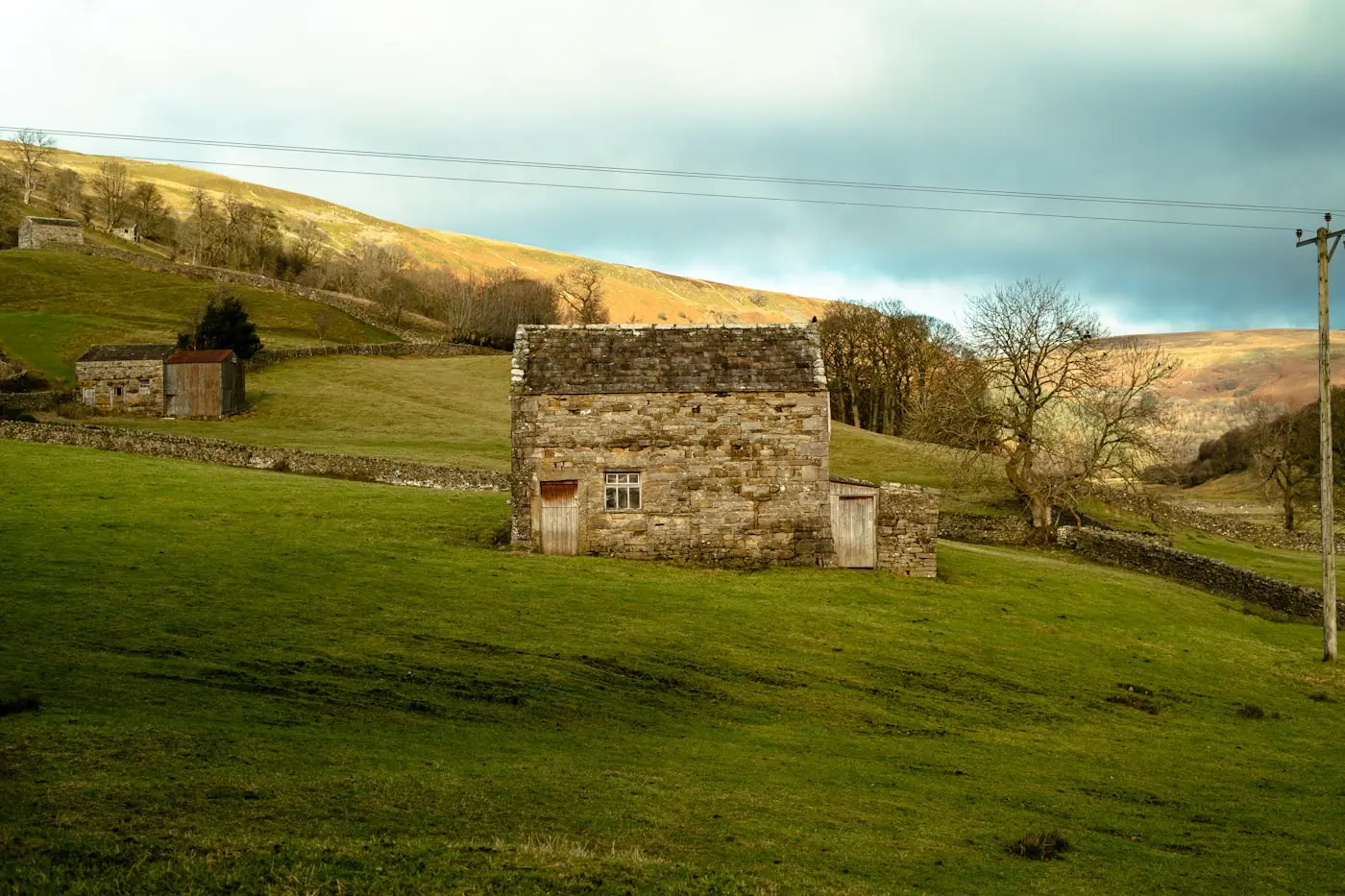
Wath-upon-Dearne sits on the north bank of the River Dearne in a position that makes it one of the more central of the Dearne Valley communities - well connected to Mexborough to the east, Swinton to the south, Brampton to the west, and Bolton-upon-Dearne to the north. With around 25,000 people, it is a substantial residential community with a genuine cross-section of housing types: Victorian terrace properties near the old town centre, interwar semis on the residential streets that grew outward during the colliery years, and some more recent development on the periphery. That variety is reflected in the variety of garden types and garden needs across S63.
What every part of Wath's garden stock shares, regardless of property type, is the underlying geology. Carboniferous Coal Measures rock - the same heavy shale-derived clay that characterises the whole Dearne Valley - sits beneath every lawn in Wath. It holds water, compacts easily, maintains an acid pH, and makes moss the natural dominant plant in any lawn that is not actively managed. A gardener who does not know this soil type, or who treats a Wath garden the same as they would a light sandy-loam property in rural North Yorkshire, will produce results that fail to match the effort and money invested. This guide is for Wath homeowners who want to understand what is actually happening in their garden before they pay someone to fix it.
What Kind of Gardens Are in Wath-upon-Dearne?
Wath's housing diversity means the garden character varies considerably from one part of town to another. The Victorian and Edwardian properties toward the old town centre and the streets closest to the Dearne tend to have smaller, more enclosed rear gardens - tight plots where limited natural light and decades of use have produced compacted, acid clay soil that is difficult to improve quickly. These yards often have some paving, some grass or moss, and borders that are predominantly weeds in clay soil. Getting grass to genuinely thrive in the most enclosed of these gardens is a multi-season project, and a good gardener will be honest about this rather than selling you a renovation that will need repeating annually without ever quite delivering the result you imagined.
The interwar semis on the residential streets that make up the bulk of Wath's housing are a more rewarding proposition. These gardens are large enough to have a functioning lawn, border planting, and in many cases an established hedge or two. The clay soil is still the same, but the more open plots have had more air, more organic matter accumulated from years of gardening, and better natural drainage than the enclosed terrace yards. These are the gardens where the annual renovation programme produces the most visible reward - where a well-managed September aeration and overseeding produces a lawn in the following spring that the homeowner can look at with genuine satisfaction.
The Manvers area, east of the town centre, warrants particular mention. The former colliery complex has been redeveloped as a business and retail park, but the surrounding housing retains the mining-era character. Some properties on the edges of the former colliery land may have sub-surface conditions that are less predictable than typical Coal Measures clay - variable fill material, compacted industrial ground, or thin topsoil over disturbed subsoil. If your garden is in this area and has persistent problems that do not respond to normal treatment, sub-surface investigation is warranted before investing further in surface renovation work.
Higher ground toward the Brampton and Wath Wood sides of town offers the best natural drainage in S63. Gardens here warm faster in spring, drain more reliably after rain, and tend to have more established planting accumulated over decades. The clay character is still present, but the drainage conditions allow grass to perform better and borders to recover faster from dry spells than in the valley-floor positions.
The North Dearne bank advantage
Wath's position on the north bank of the Dearne gives its south-facing gardens a meaningful advantage in terms of sun exposure relative to towns on the south bank where gardens face north. A south-facing garden in Wath on a raised plot gets more direct sunlight through the growing season, which both warms the clay soil faster in spring and helps suppress moss by reducing the moisture and shade conditions that moss prefers. If your garden faces south and is on elevated ground, the same clay soil management principles apply, but results often come faster than in more shaded, lower-lying plots.
What Gardeners Do in Wath-upon-Dearne
The work that comes up most consistently across S63 reflects both the coal-measures clay and the practical needs of a residential community with a strong owner-occupier culture. These are the jobs that gardeners cover most regularly in Wath.
Lawn moss treatment and renovation is the dominant request in Wath-upon-Dearne gardens. The Dearne Valley clay, low pH, valley moisture, and the shade from residential housing combine to produce conditions where moss consistently outperforms grass on untreated lawns. The effective treatment is a renovation sequence rather than surface application: hollow-tine aeration in early September relieves compaction and improves drainage; scarification removes the established moss mat and opens the soil surface; overseeding with a moisture-tolerant, clay-appropriate grass mix introduces the right varieties; top-dressing with grit-amended compost improves surface structure; and lime application corrects pH if a soil test shows it below 6.0. This sequence followed by annual maintenance aeration produces durable improvement over two to three seasons. Surface-only moss treatment - iron sulphate, lawn sand - is a one-season fix that leaves the underlying conditions unchanged. See the lawn overseeding guide for Yorkshire for the full programme detail.
Regular garden maintenance on a scheduled visit basis is the foundation that keeps everything else manageable. On Wath's clay soils, problems accumulate faster than on lighter ground when a garden falls behind - couch grass rhizomes spread further, moss thickens more rapidly, and border weeds establish more deeply. Garden maintenance at fortnightly intervals from April to October, with monthly visits in April and the autumn shoulder months, prevents most Wath gardens from ever reaching the point where a clearance visit is needed. For a busy household, the regular maintenance visit is the investment that keeps the garden from becoming the problem it otherwise becomes.
Weed control in Wath's clay soils is the kind of work that requires realism about timescales. Weed control in heavy clay is more difficult than in lighter soils because roots grip the substrate firmly and hand-removal in damp clay often captures only part of the root system. Couch grass is the most persistent border weed in S63: rhizome-spreading, deep-rooting in clay, and aggressive in its regrowth from root fragments. Bindweed is common on disturbed ground near former colliery infrastructure. Managing these weeds is a multi-season task, and any gardener who guarantees complete clearance in a single visit is overpromising. The Yorkshire weed control guide sets out realistic expectations and the right approach for each weed type.
Hedge trimming is relevant across a significant portion of Wath's residential properties. Many semis and Victorian terraces have established boundary hedges - privet in particular - that have been in place for fifty or more years. A hedge that has been left for several seasons widened at the top and weakened at the base. Hedge trimming on a neglected hedge requires a more substantial initial reduction before it can return to a standard annual trim cycle. The initial work should be priced to reflect the extra effort rather than quoted at the same rate as a well-maintained hedge.
Garden clearance is a significant part of the work done in Wath gardens, particularly on properties changing ownership, properties on former colliery-adjacent land with a backlog of establishment failure, and older terrace yards being reclaimed from paving and decades of self-seeded growth. Garden clearance in Wath's clay soil is physically demanding - roots resist extraction, the ground is heavy and slow to dig, and access through back lanes to terrace properties limits the equipment that can be brought in. Get a fixed quote after an in-person assessment. See the garden clearance near me guide for what a professional clearance visit involves.
Pressure washing and lawn edging are regular additions to Wath maintenance visits. The damp clay-soil conditions mean paved surfaces green up quickly with algae, and pressure washing with an algicide follow-up keeps them safe through the year. Lawn edges on clay soil that moves seasonally need redefining more regularly than on stable light soil.
What Does a Gardener Cost in Wath-upon-Dearne?
Wath rates are consistent with the South Yorkshire Dearne Valley pattern - slightly below West Yorkshire rates for routine maintenance, with renovation and drainage work reflecting the additional labour required on heavy clay. As one of the larger Dearne Valley towns, Wath has a reasonable number of gardeners working in and around S63, which keeps routine maintenance pricing competitive.
For the full picture on UK gardener pricing, see the how much does a gardener cost guide and the gardener hourly rate UK guide.
| Rate type | Wath-upon-Dearne (S63), 2026 | Notes |
|---|---|---|
| Hourly rate (maintenance) | £25-£38/hr | Regular schedule at lower end; one-off visits higher |
| Day rate (7-8 hrs) | £130-£180 | Full working day for clearance or renovation |
| Fortnightly maintenance visit | £38-£65 per visit | Medium garden; lawn, borders, edges included |
| One-off lawn cut | £28-£50 | Size and condition dependent; overgrown plots higher |
| Lawn renovation (aeration, scarification, overseed) | £100-£220 | Clay soil adds labour time at every stage |
| Hedge trimming (standard domestic) | £40-£90 per visit | Established or neglected hedges at higher end |
| Garden clearance (medium plot) | £180-£380 | Restricted access or established clay roots: up to £650 |
| Pressure washing (patio/path) | £55-£140 | Area dependent; algicide treatment extra |
The lawn renovation figure deserves specific attention for Wath gardens. A full renovation on heavy Dearne Valley clay - hollow-tine aeration, scarification, overseeding, top-dressing, and lime application - takes longer per square metre than on free-draining ground. A quote that appears very low for this scope of work is either very efficient execution or is missing steps. Always ask what the sequence includes before committing to a price.
Finding a Reliable Gardener in Wath-upon-Dearne
Wath's community character, shaped by the mining era and the strong sense of local identity that persists in Dearne Valley towns, means word of mouth is a genuinely effective route for finding reliable tradespeople. A gardener who has been working in S63 for several seasons is known by their clients' neighbours, and that visibility is accountability that a profile on a national platform does not replicate.
Personal recommendation from someone in your street whose garden looks consistently well-kept is the strongest signal available. If that route is not immediately available to you - you are new to the area, or your immediate neighbours manage their own gardens - a local introduction service that has local gardeners covering Wath is the next most reliable option. The difference between a local service and a national platform is not just the geographic range. It is the incentive structure: a local service has a direct interest in the match being good because their reputation in the area depends on it.
Before committing to any gardener, these six questions should be answered:
- Can you show me your public liability insurance certificate?
- Do you hold a current Waste Carrier's Licence for removing green waste?
- Have you worked in S63 or the wider Dearne Valley with the heavy coal-measures clay soils?
- Do you visit and assess the site before quoting for clearance or renovation work?
- Can you provide references or examples of work in Wath or the neighbouring towns?
- Is waste removal included in the price, or costed separately?
Confident, direct answers to all six is the baseline. Vagueness about insurance, dismissal of questions about soil conditions, or refusal to visit before quoting are all indicators worth heeding. See the how to find a gardener in Yorkshire guide for a full vetting checklist.
Seasonal Guide for Wath-upon-Dearne Gardens
Wath's inland South Yorkshire position gives a climate similar to the rest of the Dearne Valley: frost risk into April, warm summers, moderate annual rainfall of around 700-750mm, and an autumn that extends the growing season usefully into October. The clay soil imposes its own calendar on top of the weather.
Spring (March to May)
Clay soils in S63 are slow to drain and slow to warm after winter. The lower-lying parts of Wath, closer to the Dearne, may hold waterlogged soil well into April. Working the lawn or heavy soil activity on saturated clay causes compaction that takes months to recover from - the soil smears and seals under pressure rather than draining through. March and early April are the months for planning, booking, and light clearance work that does not require crossing a wet lawn. Border tidying and structural pruning can happen from late March.
Fortnightly mowing typically begins from mid-April in most Wath gardens, with the higher, better-draining plots starting a week or so earlier. Edges need defining after winter. Weed control on paved areas is most effective once soil temperature reaches ten degrees consistently - typically late April in Wath. May is when the main growing season opens: fortnightly maintenance established, border planting in progress, and the clay soil workable for soil improvement and planting on dry or partially dry days. See the clay soil guide for Yorkshire for timing guidance on soil work through the season.
Summer (June to August)
The mowing season peaks through June and July. Hedge trimming for privet and hawthorn is best done in late June, with a secondary trim if needed in September. South Yorkshire summers can bring genuine heat in July and August, and Wath's clay soil transitions from holding too much water in spring to cracking hard in dry spells in July. Border mulching in late May - before the dry period arrives - is the most effective way to extend the moisture-retaining period and reduce supplementary watering. Raise the mowing height in dry July conditions to reduce grass stress on clay soil - a scalped clay-soil lawn in hot conditions produces bare patches that moss colonises in autumn.
August: book autumn renovation now. September is the most requested month for lawn renovation work in Wath and the wider Dearne Valley. The gardeners who do this work well fill their September calendars before the month arrives. Making contact in August gives you the best access to dates and time to assess and plan before the window opens.
Autumn (September to November)
September and October are the most consequential months for lawn health in Wath. Hollow-tine aeration in early September, while soil temperature exceeds ten degrees, produces the greatest drainage and root development improvement. Combined with scarification, overseeding with a clay-appropriate grass mix, and top-dressing with grit-amended compost, it is the treatment sequence that produces durable improvement on Coal Measures clay. The autumn garden care guide for Yorkshire covers everything else that belongs in this seasonal window.
October: leaf clearance, final mowing, garden tidying before winter. Leaves on a clay lawn through winter create conditions that compound moss pressure - remove them promptly. Check drainage performance after autumn rain: if surface water is pooling for more than 48 hours, the drainage guide is the starting point for diagnosis and solutions.
November: bulb planting, structural pruning, path and fence repairs before the ground freezes. Garden clearance of spent border material in November leaves a clean starting position for spring and removes winter pest habitat from borders.
Winter (December to February)
Little active work through December and January. February is planning time: booking gardeners for the season ahead, deciding what renovation work is needed, and identifying what border replanting is required after winter losses. Reliable gardeners covering S63 fill their schedules early. An enquiry in February, when you have time to think and compare options, is considerably better than chasing availability in April when the garden is already demanding attention.
Common Garden Problems in Wath-upon-Dearne
Moss in lawns across every garden type
This is the defining garden challenge of S63. Whether you are in a Victorian terrace yard, an interwar semi with a proper back lawn, or a more recent property on the edges of the former colliery land, the underlying conditions are the same: heavy coal-measures clay, acid pH, moderate to high moisture, and residential shade. Moss wins in these conditions unless you actively manage the conditions that allow it to. The management sequence - aeration, scarification, overseeding, pH correction, followed by annual maintenance - is the only approach that produces durable improvement. Surface treatments buy time but do not address the cause. The clay soil guide explains why, and the overseeding guide covers what the renovation sequence involves in practice.
Couch grass and persistent border weeds
Couch grass in borders is the second defining challenge of Wath gardens. Spreading by underground rhizome, regrowing from root fragments, and tolerating heavy clay better than most desirable perennials, it requires a multi-season management approach rather than a single clearance session. On Wath's heavy clay, the rhizomes are harder to trace and extract cleanly than on lighter soil. The Yorkshire weed control guide covers the realistic approach, including when targeted herbicide use is the more practical option than hand removal alone.
Drainage on valley-floor plots
Lower-lying Wath gardens, particularly those on the flat ground toward the Dearne, hold surface water longer than higher plots after significant rainfall. For gardens where the problem is surface compaction, annual aeration produces cumulative improvement over two to three seasons. For gardens where surface water persists for more than two days after rain despite annual aeration, the problem is in the subsoil and a more significant drainage intervention is needed. The garden drainage guide for Yorkshire covers the diagnostic approach and the range of interventions from French drains to raised planting beds.
Frequently Asked Questions
How do I find a reliable gardener in Wath-upon-Dearne?
Personal recommendation in your neighbourhood is the strongest route. A local introduction service connecting you to a local gardener covering S63 is the next best option. Ask for public liability insurance, a Waste Carrier's Licence, and specific experience with Dearne Valley clay soils. See the how to find a gardener in Yorkshire guide for the full vetting process.
How much does a gardener in Wath-upon-Dearne charge?
Hourly rates run £25-£38 for general garden maintenance in 2026. Fortnightly visits run £38-£65 for a medium S63 garden. Lawn renovation runs £100-£220 depending on size and condition. Day rates for clearance run £175-£300. See the UK gardener cost guide for broader context.
What soil do Wath-upon-Dearne gardens have?
Carboniferous Coal Measures shale-derived clay: heavy, acid pH, slow-draining, prone to compaction. Valley-floor plots near the Dearne have an additional alluvial element that compounds the drainage difficulty. The clay soil guide for Yorkshire covers how to manage this soil type through the seasons.
Why is my lawn in Wath-upon-Dearne losing the battle to moss?
Coal-measures clay, acid pH, valley moisture, and residential shade combine to favour moss over grass. Surface treatments produce temporary results. A September renovation - aeration, scarification, overseeding, lime application - produces durable improvement. See the overseeding guide.
When is the best time for lawn renovation in Wath-upon-Dearne?
September and early October. Soil temperature still supports seed establishment, aeration works through winter, new grass roots before spring. Book in August - September fills fast across S63 and the Dearne Valley.
Can I get a garden clearance in Wath-upon-Dearne?
Yes. Garden clearance runs £180-£380 for a medium S63 garden. Restricted access, established clay roots, or high volumes of material: up to £650 for a two-person team. Get a fixed quote after an in-person visit.
What garden problems are most common in Wath-upon-Dearne?
Moss in lawns, couch grass in borders, and drainage failure on valley-floor plots - all driven by the Dearne Valley clay. All three reward consistent management over one-visit fixes. The weed control guide and drainage guide cover the approaches.
Do Wath-upon-Dearne gardeners cover Bolton-upon-Dearne, Swinton, and Brampton?
Most gardeners covering Wath-upon-Dearne also work in Bolton-upon-Dearne, Swinton, Mexborough, and Brampton. Give your full postcode when enquiring to confirm coverage. The soil conditions across this part of S63 are consistent enough that local experience transfers directly between the neighbouring communities.
Related reading
- How much does a gardener cost in the UK? (2026 prices)
- Gardener hourly rate UK
- Gardening on clay soil in Yorkshire
- Lawn overseeding in Yorkshire
- Weed control in Yorkshire gardens
- Garden drainage in Yorkshire
- Garden clearance near me - Yorkshire
- Autumn garden care in Yorkshire
- Garden maintenance across Yorkshire
- Weed control across Yorkshire
Gardeners in other Dearne Valley and South Yorkshire areas
We cover Wath-upon-Dearne and the surrounding S63 area. See the garden clearance cost guide for up-to-date 2026 pricing before booking any clearance work.
What happened to the Manvers colliery site and does it affect nearby gardens?
The Manvers complex, the former colliery site east of the town centre, has been redeveloped as a business and retail park. Residential housing immediately surrounding the Manvers area predates the redevelopment, so most domestic gardens in Wath are on mining-era housing stock rather than the redeveloped colliery land itself. However, some properties on the edges of this area, or on streets built over former colliery infrastructure, may have variable sub-surface conditions. If your garden has persistent problems that do not respond to normal treatment, a soil test and sub-surface assessment is a sensible starting point.
Find a gardener in Wath-upon-Dearne.
Tell us what you need and we put your enquiry in front of a local gardener covering S63. No call centres, no national franchise - one local gardener, direct contact.
Get a free assessment