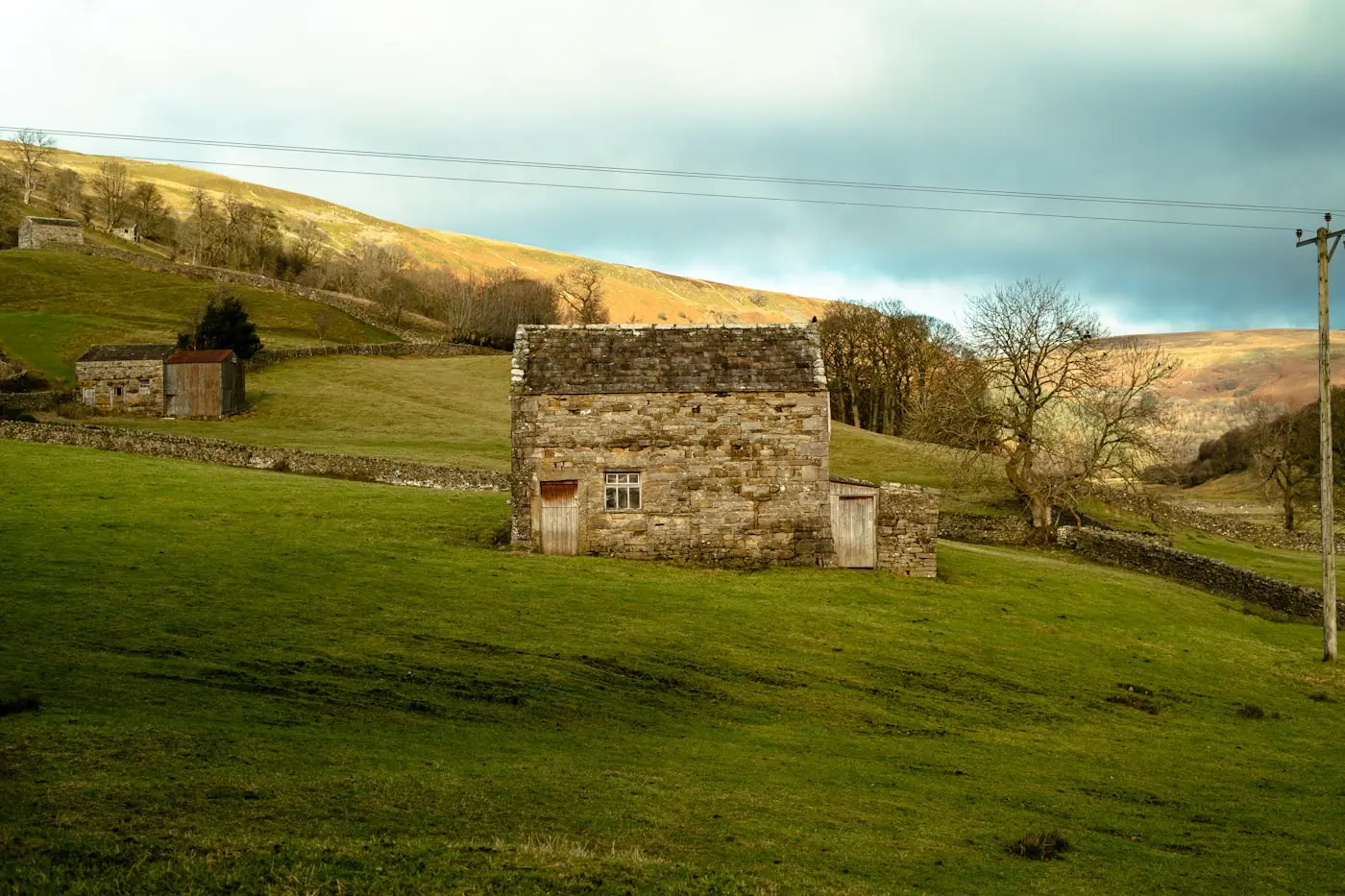
Dunnington sits just east of York's ring road, about four miles from the city centre on the flat ground that spreads east toward the Derwent valley and Pocklington beyond. It is one of those York-edge villages where the garden behind the house tells you more about it than the postcode. The older properties along Main Street and Packer Lane date from the 19th century and before - stone and brick cottages with sometimes irregular garden shapes, mature planting, and soil that has been gardened for generations. The cul-de-sac estates set further back from the main street - built in the 1980s and 1990s - have more standard rear plots, typically 40-60 feet, with the heavy vale clay that is characteristic of this part of the York hinterland. Both housing types produce regular gardening work; the type of work differs more than the volume.
Two types of garden in Dunnington
The character of the gardening work in Dunnington splits fairly clearly between the two housing types. Older cottage properties along the main village streets often have irregular garden shapes - long, narrow plots that back onto other gardens, or wider plots with original stone boundary walls and mature fruit trees - with planting that has accumulated over many years. These gardens typically need more complex maintenance: seasonal cut-back of established shrubs, management of old fruit trees, border work on beds with a mix of original and more recent planting, and lawn care on a space that is not always straightforward to mow. If your Dunnington property is one of these, ask specifically whether a prospective gardener has experience with established cottage-style gardens alongside their standard maintenance work.
The 1980s and 1990s estate properties have more predictable garden formats - rectangular rear plots with a lawn, perhaps a planted border along one or two boundaries, and a patio area. These are very manageable fortnightly maintenance jobs and the most common arrangement is a regular contract from April through October covering mowing, edging, and basic border maintenance. The soil on these estate gardens is the standard flat Vale of York clay that defines the whole east-of-ring-road corridor, and it behaves exactly as you would expect: slow to drain, prone to compaction, and productive of moss and bare patches if left without periodic renovation.
Dunnington's flat vale clay: what it means for your lawn
The soil across Dunnington is the heavy alluvial mix that defines the corridor east toward Pocklington and the Derwent valley. Drainage is slow after a wet winter, and the flat topography means there is nowhere for surface water to run off quickly - it has to go through the clay, and clay's natural permeability is poor. Lawn compaction under foot traffic is a progressive problem on this soil type, and the symptoms are familiar to anyone who has gardened on it for more than a few seasons: bare patches in regularly trafficked areas, moss in lower-lying or shadier spots, and a general thinning of the grass sward that accelerates through summer as the compaction cuts off water and nutrient exchange at root level.
The Yorkshire clay soil guide explains in detail what is happening underground and why standard lawn treatments work the way they do on clay. The practical implications for a Dunnington lawn are: do not rush the first cut in spring - wait until the ground has genuinely firmed, which on flat vale clay may be April rather than March in a wet year. Plan for hollow-tine aeration and overseeding in September as an annual maintenance task rather than a one-off rescue treatment. And if there are persistently wet corners of the lawn, consider whether a drainage channel or French drain is worth addressing before continuing to fight the symptoms with moss treatment. The lawn aeration guide for Yorkshire covers the treatment process, and the overseeding guide covers timing and seed choice. For the full seasonal picture, the Yorkshire lawn care guide is the right reference.
The flat-ground lawn problem: drainage that has nowhere to go
Flat gardens on heavy clay - and Dunnington has both - have a particular drainage challenge. On sloped ground, gravity helps move surface water away from the lawn; on flat ground, water sits until the clay can absorb it, which is slow. If your Dunnington lawn has a consistently wet area in winter that only dries out in May or June, this is likely a structural drainage issue rather than just heavy soil. A good gardener will recognise the difference and may recommend a drainage improvement as part of a lawn restoration plan. Treating surface moss without addressing the underlying wet patch will produce diminishing returns season after season.
What gets booked in Dunnington gardens
Fortnightly garden maintenance from April through October is the standard arrangement for estate-housing households in Dunnington. A typical visit covers lawn mowing front and rear, lawn edging where borders and paths meet the grass, path sweeping, and basic border weeding. On a 1980s or 1990s estate plot, this is a 60-90 minute job that keeps the garden functional without the household needing to spend weekend time on it through the growing season.
Hedge trimming is regularly booked for both housing types. On older cottage properties, hedges may be hawthorn, elder, or mixed native species - old, established, and sometimes poorly shaped from years of DIY management. On estate properties, the dominant boundary treatment is privet or leylandii planted in the 1980s and now mature. A privet boundary that has been growing for 35-40 years is a different job from a newly planted hedge - it is dense, woody, and wide, and cutting it properly requires understanding how much to take and where. The hedge trimming service page and hedge trimming cost guide cover what to expect.
Spring garden clearances are popular in Dunnington for the same reasons they are popular across York's east-corridor villages. A wet Yorkshire winter leaves behind dead growth, slug-damaged foliage, leaf accumulation on clay that has not drained properly, and path or patio moss. A spring tidy in late March or April clears this efficiently and gets the garden into shape for the season. For gardens with established borders - particularly the older cottage properties - the spring tidy may also involve cutting back perennials, lifting and dividing clumps that have outgrown their space, and mulching borders ahead of the growing season. The spring garden tidy guide for Yorkshire covers what is normally included. For one-off clearances on gardens that have become overgrown, the garden clearance service page covers the scope.
What it costs to hire a gardener in Dunnington
Dunnington sits in the York-area rate band - York-based gardeners cover it without a distance premium, and gardeners working the east-of-ring-road corridor naturally include it in their rounds alongside Stamford Bridge and the YO41 villages further east. The UK gardener cost guide gives the national context; rates for Dunnington YO19 in 2026 are below.
| Rate type | Dunnington YO19, 2026 | Notes |
|---|---|---|
| Hourly rate (maintenance) | £25-£40/hr | Regular contracts at the lower end; one-off visits at the higher end |
| Day rate (7-8 hrs) | £150-£210 | Full day; clearances, renovation, or complex cottage garden work |
| Fortnightly maintenance visit | £35-£60 per visit | Standard estate plot on a regular contract; lawn, edges, sweeping |
| One-off lawn cut | £30-£55 | Smaller front lawns at the lower end; larger rear plots at the higher end |
| Spring tidy (one-off) | £90-£220 | Depends on plot size and complexity; more for older cottage gardens |
| Hedge trimming | £50-£160 per visit | Older cottage boundaries and mature estate hedges; depends on height and length |
| Lawn aeration and overseeding | £80-£200 | Annual treatment for clay lawns; hollow-tine aeration plus seed and top-dressing |
For the wider rate context and how Dunnington compares to York city and other nearby areas, the gardener hourly rate guide is the right reference.
How to find a gardener in Dunnington
Dunnington is covered by York-area gardeners as part of their east-of-ring-road rounds. The village sits close enough to York that York-based gardeners include it naturally, and some gardeners working the A166 and A64 east corridors cover Dunnington alongside Stamford Bridge and the Pocklington villages further east. Finding a name is not difficult; securing a preferred slot in an established gardener's fortnightly schedule requires booking two to three months ahead of the season.
The Dunnington village Facebook group and the village noticeboard at the local shop are both effective channels for recommendations - the community is compact enough that first-hand accounts of local gardeners circulate reliably. Word of mouth on the estate streets also works well: the cul-de-sac layout means gardens that are maintained regularly are visible from multiple angles, and asking a neighbour about their gardener is a natural conversation in a small community.
When making first contact, check public liability insurance and ask about a Waste Carrier's Licence if clearance work is in scope. Ask specifically whether the gardener has experience of flat vale clay gardens - the drainage characteristics and the need for regular autumn renovation are specific to this soil type, and a gardener who has worked the east-of-York corridor before will be familiar with them. The Dunnington town page has further local context, and the York gardeners guide covers the broader city catchment that Dunnington sits within.
Frequently Asked Questions
What garden jobs are typical for Dunnington properties?
Fortnightly lawn maintenance from April to October for both estate and cottage properties. Annual autumn lawn renovation - aeration and overseeding - on the flat vale clay. Hedge trimming for mature estate and cottage boundaries. Spring clearances for gardens coming out of a wet winter. Some cottage properties have established border planting that needs more complex seasonal management. See the garden maintenance service page for the standard scope.
What do gardeners charge in Dunnington YO19?
£25-£40 per hour for maintenance, £35-£60 per fortnightly visit on a regular contract. No distance premium from York city. Full pricing context is in the UK gardener cost guide.
Is it easy to find a gardener in Dunnington?
Yes - York gardeners cover the east-of-ring-road corridor and Dunnington sits within their natural range. The village Facebook group and noticeboard are the fastest local routes. Book in February or March for an April start.
When should I book a gardener in Dunnington?
February for a regular contract starting in April. March for spring tidies. June for hedge trimming. August for autumn lawn aeration and overseeding. See the Yorkshire lawn care guide for the full seasonal programme.
Related reading
- Gardeners in York - the main York city guide
- Gardeners in Stamford Bridge
- How much does a gardener cost in the UK? (2026)
- Clay soil gardens in Yorkshire
- Lawn aeration in Yorkshire
- Dunnington town page
- Garden maintenance across Yorkshire
Gardeners in other nearby areas
We cover Dunnington and the surrounding east York corridor:
Get a quote for your Dunnington garden.
60-second assessment. If a local YO19 gardener takes your enquiry, they call you with a price for your specific garden and job.
Start the assessment