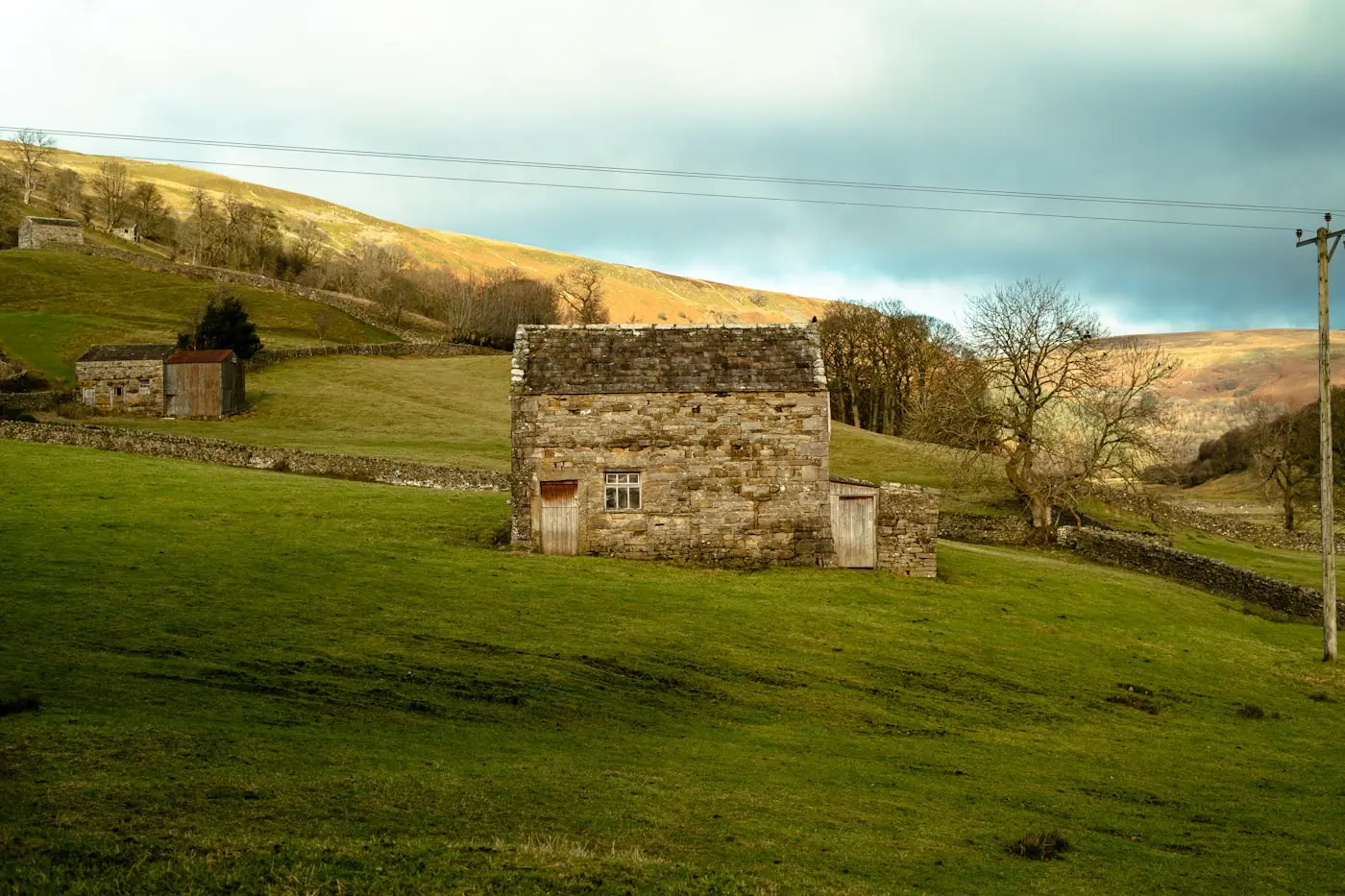
Horton-in-Ribblesdale sits at the top of Ribblesdale, compressed between the flanks of Pen-y-ghent and the wider Ingleborough massif, at an altitude that puts it firmly outside the comfortable growing conditions of the Yorkshire Dales valley towns. Settle is eight miles south down the valley and feels considerably warmer. Skipton, further down the Ribble, is in a different climatic world. Horton sits exposed to weather systems moving across the Pennines in a way that low-altitude Dales villages do not. Hard frosts well into May are not unusual. The growing season - the reliable period when plants can be expected to grow, flowers to perform, and vegetables to produce - runs from late May to early September in a typical year. That is roughly half the effective growing season of low-altitude Yorkshire, and it shapes everything about how you garden here.
What Horton-in-Ribblesdale Gardens Are Like
The housing in Horton is predominantly older stone-built properties - farm houses and cottages that have been in residential use for generations, with gardens that reflect that long history. Stone walls are the universal boundary feature, built from the same Great Scar Limestone that underlies the landscape and has been the building material of Ribblesdale for as long as people have lived here. Garden enclosures in Horton are typically walled rather than fenced or hedged, and the walls themselves are a garden feature as well as a boundary - their character is inseparable from the overall feel of the village.
Within the walled enclosures, the gardens range from the carefully maintained cottage garden - traditional perennials, shrubs, and the occasional feature tree - to the more basic enclosed lawn with minimal planting. Some properties have productive areas that reflect the historic self-sufficiency of Dales farming households. The gardens on the settlement's margins, closest to the open fellside, can feel exposed and windswept in a way that influences plant choice significantly: anything delicate or needing shelter will struggle in the exposed positions, while robust natives and near-natives thrive.
The Pen-y-ghent Cafe sits at the heart of the village and the surrounding area, and there is a consistent pattern of holiday and second home ownership in the area. Second homes create a specific pattern of garden maintenance requirements: infrequent but intensive visits to maintain the property between visits, rather than the consistent weekly or fortnightly schedule that suits primary residences. A gardener covering Horton needs to be able to handle both patterns - consistent season maintenance for permanent residents and periodic heavy maintenance for second homes that may go unvisited for weeks between owner stays.
Limestone Soil and What It Means
Horton-in-Ribblesdale sits directly on Great Scar Limestone, and the soil is thin rendzina overlying the carbonate rock. This is shallow, alkaline, and exceptionally free-draining soil - the antithesis of the heavy clay of the Vale of York or even the moderate clay loam of the Vale of Mowbray. Water moves through it rapidly; in dry spells it dries out quickly; in wet spells it drains almost immediately. The pH is high - typically 7.5 to 8.0 or above on the most directly limestone-influenced ground - which limits the availability of some nutrients and makes the soil definitively unsuitable for acid-loving plants without significant amendment.
For garden purposes, this means the plant palette is restricted by both pH and the shallow depth. Ericaceous plants - rhododendrons, azaleas, blueberries - are not at home here without imported acid compost in containers or raised beds. Many of the familiar garden perennials that are grown across Yorkshire will grow here, but they need to be tolerant of alkaline conditions, free drainage, and the dry periods that inevitably follow even moderate dry spells on thin limestone. The plants that are genuinely at home on Horton limestone soil are the ones that have evolved on it: wild thyme, harebells, rock roses, common spotted orchid, limestone ferns, native sedges. Designing a garden that works with this natural character rather than fighting it produces a result that fits the landscape and requires less intervention to maintain.
Lawn establishment and maintenance on thin limestone soil is challenging. The soil depth is often insufficient to support a dense grass sward without supplementation - in areas where the bedrock is very close to the surface, even a well-established lawn can look stressed in dry summers because the root zone is too shallow to access moisture at depth. Annual lawn treatment on Horton lawns focuses more on overseeding thin areas and applying appropriate alkaline-pH feeds than on the aeration and drainage work that characterises clay soil management elsewhere.
Dry stone walls: a garden feature that needs a specialist
Horton's dry stone walls are as much a garden feature as the plants within them. Walls that have developed ferns, mosses, and native plants in their crevices have a character that is irreplaceable. Maintaining these walls - pointing that has failed, coping stones that have shifted, sections that have settled unevenly - requires someone with dry stone walling knowledge rather than a general builder's approach. For significant wall repair in Horton, seek out a waller who is familiar with Ribblesdale limestone. The Dry Stone Walling Association (DSWA) maintains a register of qualified wallers. A gardener who also has dry stone walling experience is rare but valuable in this specific environment.
The Short Season: Managing a Horton Garden Through the Year
The compressed growing season in Horton-in-Ribblesdale requires thinking about the year differently from how you would plan garden work at lower altitude. The effective window for most garden activity runs from late May to early September - perhaps seventeen to twenty weeks in a good year. Everything that needs to happen in the garden has to happen within that window. Planning the season in advance rather than responding to each task as it arrives makes significantly better use of the limited growing time.
Late May to June: the season opens
The first reliable period for garden work begins in late May once the main frost risk has passed. A first lawn cut at high blade height, the first round of border weeding while the soil is still moist and weeds pull cleanly, and the planting out of any half-hardy plants that have been held back from the usual April timing. Bulb foliage will still be dying back on earlier-planted areas and should be left to complete the process naturally before cutting. The stone walls come alive with early-season growth from the crevice plants; this is when the native limestone flora is at its most spectacular.
July to August: the main season
July and August are the main summer months in Horton. The stone-enclosed gardens retain heat better than open ground, which can extend the effective growing period somewhat. Lawn mowing runs fortnightly through this period; borders need deadheading to extend the flowering season; productive areas need harvesting and replanting. Any significant planting projects should ideally be complete by mid-July so plants have the full summer to establish before the season closes. The limestone soil can go dry quickly in extended dry spells - any new planting will need consistent watering through its first summer until the root system is established enough to access water at depth.
September: closing the season
September is the transition month in Horton. The first autumn frosts can arrive any time after mid-September, and tender plants need to be protected or taken in before the end of the month. Late-season cutback of perennials, a final lawn cut at slightly higher height to protect the crown through winter, and clearing fallen material from the walled enclosures before it creates damp conditions. Any last planting - spring bulbs, hardy perennials going in for next year - should be complete by mid-September while the soil still has enough warmth to encourage root establishment before hard freezes arrive.
October to May: dormancy and planning
The Horton garden rests through the autumn and winter months. Structural pruning of deciduous shrubs and trees during dormancy - November to February when the plants are fully dormant and the soil is too cold and wet for meaningful ground work - is the main winter task. Planning the following season's planting, ordering bulbs for autumn planting (do this in October before the ground freezes), and assessing what worked and what needs changing from the previous summer are the productive activities of the quiet months.
Cottage Garden Planting for Horton Conditions
The cottage garden aesthetic - generous mixed planting of perennials, shrubs, annuals and bulbs in an informal, full-looking border - is entirely achievable in Horton-in-Ribblesdale but requires plant selection that respects the altitude, the short season, and the alkaline limestone soil. Border planting in Horton should start from what does well here rather than attempting to impose a planting scheme designed for warmer, lower-altitude conditions.
Plants that perform reliably in Horton cottage gardens include: hardy geraniums (Geranium pratense, Geranium x magnificum, and their relatives), Campanulas in variety, Achillea in warm colours, Alchemilla mollis (lady's mantle), Digitalis purpurea (foxglove, naturalising readily on limestone), Salvia nemorosa varieties, Sedum spectabile and allies, and most of the robust hardy shrubs including Buddleja, Weigela, Potentilla fruticosa, and Ribes sanguineum. Spring bulbs - daffodils, tulips, alliums - are excellent in Horton's well-draining soil and should be planted in October for the following spring. The stone walls, if allowed to host appropriate ferns and native plants in their crevices, provide a season-long feature that requires no maintenance and looks entirely right in this landscape.
What Gets Booked in Horton-in-Ribblesdale
Seasonal maintenance visits
The compressed season means garden maintenance visits concentrate heavily in June, July and August, with lighter work in May and September. Most Horton permanent households book four to eight seasonal visits rather than the fortnightly schedule typical in lower-altitude areas. The visits are typically longer per session than a standard suburban maintenance call - getting the most out of each visit to a remote location makes sense both for the gardener and the household.
One-off garden clearance and renovation
Second homes and properties returning to active management after a period of neglect generate garden clearance work in Horton. The short season and thin soil mean overgrown vegetation grows more slowly than in the valley, which is some consolation - a garden neglected for a season in Horton is less dramatically overgrown than the same period of neglect in Settle or Skipton. However, established perennial weeds in the thin limestone soil can be difficult to remove cleanly because the bedrock proximity makes thorough digging difficult in some areas.
Hedge and boundary management
The dry stone walls that form most Horton garden boundaries do not need cutting, but they do need monitoring and occasional repair. Hedge trimming applies where properties have hawthorn or mixed native hedging - less common here than dry stone walls, but present on some of the lower-altitude properties at the south end of the village. Any hedging in Horton that runs along the exposed northern or western boundary needs careful management because wind damage and die-back on the windward side can accelerate significantly if the hedge is not maintaining a dense, wind-resistant profile.
Lawn maintenance on thin limestone soil
Lawn mowing through the short summer season on Horton's thin limestone lawns requires understanding the soil conditions. Cutting too short in dry spells stresses the shallow-rooted turf significantly - a cutting height of around forty to fifty millimetres through summer, higher than the standard forty millimetre setting in lower-altitude areas, reduces heat and drought stress on the shallow root zone. Never cut when the soil is frozen or the turf is waterlogged - the thin soil over rock can be damaged more easily than deeper-soil lawns because there is no deep structure to absorb disturbance.
What Does a Gardener in Horton-in-Ribblesdale Cost?
| Service | Typical rate (BD24 Horton, 2026) | Notes |
|---|---|---|
| Hourly rate (maintenance) | £25-£38/hr | Higher than valley average to reflect travel component |
| Seasonal visit (half-day) | £80-£130 | Most Horton bookings are half-day or full-day to maximise travel efficiency |
| Seasonal visit (full day) | £160-£260 | Full working day; covers substantial garden work plus travel |
| One-off lawn cut | £30-£70 | Travel included; thin limestone lawns cut at higher setting |
| Garden clearance | £180-£450 | Site visit required; thin soil limits root clearance depth |
| Border planting renovation | £180-£450+ | Plant selection for limestone and short season is key |
What to Look for When Hiring in Horton
- Public liability insurance: Policy number and cover level. Non-negotiable even in a remote location.
- Waste Carrier's Licence: Required for any green waste removal.
- Upper Dales experience: Ask specifically whether they have worked in Ribblesdale, Wharfedale above Grassington, or comparable upper Dales locations. Knowledge of the short season and limestone soil conditions is specific.
- Understanding of travel costs: A gardener who quotes a standard hourly rate without discussing the travel component has not thought about the economics of working in a remote location. The travel element should be transparent in any quote.
- Knowledge of frost risk timing: Ask when they recommend planting out half-hardy plants in this location. The right answer is late May, not April. A gardener who says April has not worked at this altitude before.
- Willingness to discuss plant selection: Any planting redesign for a Horton garden requires a conversation about what grows well here, not an assumption that standard garden centre selections will perform as expected.
Frequently Asked Questions
How do I find a reliable gardener in Horton-in-Ribblesdale?
Word of mouth from a permanent village resident is the strongest starting point. A local introduction service that covers upper Ribblesdale and the Dales is more useful than a national platform. Ask for insurance, Waste Carrier's Licence, and specific upper Dales experience before committing. See the Horton-in-Ribblesdale gardeners page for local coverage.
How much does a gardener in Horton-in-Ribblesdale charge?
Higher than valley average - typically £25-£38 per hour plus a travel component that should be transparent in any quote. Full-day seasonal visits run £175-£300. For regional context, see the UK gardener costs guide.
What plants grow well in Horton-in-Ribblesdale?
Hardy limestone-tolerant perennials and shrubs: hardy geraniums, campanulas, achillea, sedums, foxgloves, alchemilla, buddleja, potentilla. Spring bulbs in well-draining walled enclosures. Native limestone flora in wall crevices. Avoid tender plants, acid-lovers, and anything requiring a long season to perform. See the borders and planting service for more on selection for challenging conditions.
What is the growing season in Horton-in-Ribblesdale?
Approximately late May to early September - around seventeen to twenty weeks in a typical year. Late frosts into May, early frosts from mid-September. Plan all planting and maintenance within this compressed window.
What work gets done most in Horton?
Seasonal maintenance visits through the compressed summer; lawn mowing on thin limestone turf; cottage garden border maintenance; garden clearance on second homes between owner visits; and walled boundary monitoring and minor repair.
What is the soil like in Horton-in-Ribblesdale?
Horton-in-Ribblesdale sits in the upper Ribble valley on Great Scar Limestone, the same geological formation that produces the limestone pavement features of Ribblehead and Ingleborough. Garden soils are shallow, alkaline, and exceptionally well-draining - in many cases there is only a thin layer of rendzina soil over bare rock, and in some garden areas the bedrock is very close to the surface. The thin limestone soil warms quickly in spring but dries rapidly in dry spells and freezes hard in late frosts. The altitude (around 260 metres above sea level for the village itself) means temperatures are consistently cooler than in the valley towns - Settle and Skipton are measurably warmer - and the risk of late frosts extends well into May.
What are the red flags when hiring a gardener in Horton-in-Ribblesdale?
Main warning signs: no proof of public liability insurance; quoting a standard hourly rate without acknowledging the travel component for a remote Dales village; proposing planting schemes without understanding the short season and hard frost risk; and contractors who clearly are not familiar with upper Dales conditions and are quoting off a general rate card rather than from experience of this specific environment. Ask how often they have worked in Ribblesdale or comparable upper Dales locations before committing.
Related reading
- How much does a gardener cost in the UK? (2026 prices)
- Cottage garden planting for Yorkshire
- Garden maintenance across Yorkshire
- Borders and planting across Yorkshire
- Garden clearance across Yorkshire
- Gardeners in Ingleton (nearby Dales village)
- Horton-in-Ribblesdale gardeners - town overview
Gardeners in nearby areas
We cover Horton-in-Ribblesdale and the surrounding upper Dales:
For structural landscaping or a full garden redesign in the Ribblesdale area, see our garden design Settle page.
Get a quote for your Horton-in-Ribblesdale garden.
60-second assessment. If a local gardener takes your enquiry, they call you with a price for your specific garden and job.
Start the assessment