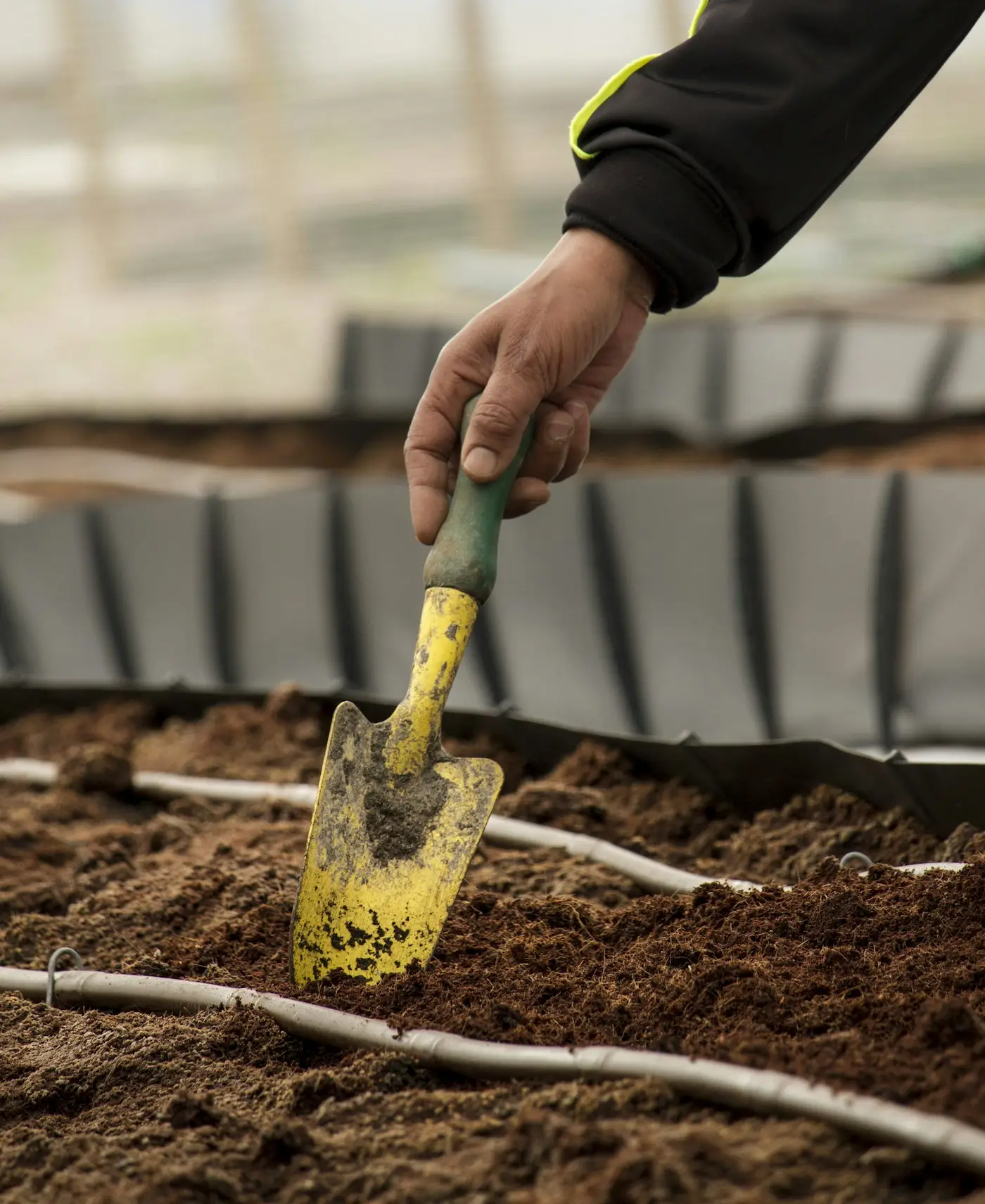
Riccall is the sort of Yorkshire village that does not make much noise about itself. It sits on the A19 south of York, surrounded by flat agricultural land with the River Ouse not far to the west, and most of its residents are either long-established locals or York commuters who moved out for the space and the quiet. The gardens here are typical of Vale of York village housing: medium-sized semi and detached plots, mostly flat, mostly on heavy clay, and mostly in need of more consistent attention than they usually get. That is not a criticism - it is just the reality of gardening in a village where most households have two working adults and limited time. The problem with clay gardens in particular is that neglect compounds. A clay lawn that goes unwatered in July, gets walked on heavily in August, and is not aerated in autumn arrives at the following spring in noticeably worse shape than a year before. A clay border that does not get weeded through the season will have ground elder, bindweed, and couch grass establishing at depth by October. Getting ahead of the clay means working with it consistently, not fighting it in a panic every few years.
What Riccall Gardens Are Like
Riccall's housing is a mix of older stone and brick terraces in the village centre, post-war council and ex-council semis on the surrounding streets, and more recent residential developments that have brought detached family houses with medium-sized enclosed rear gardens. The older properties often have narrower plots with well-established hedges and borders; the post-war semis typically have the standard format of a rear lawn, a fence-line hedge, and a border along one or both sides; the newer builds have younger gardens that are still being established.
What most Riccall gardens share is the flat topography and the clay soil. There are no slopes to worry about, no terracing, no particularly dramatic changes in level. The flat ground means water drains away from the garden slowly - clay holds water, and the flat profile gives it nowhere to run. After a wet winter or a heavy week of April rain, Riccall gardens can be genuinely waterlogged for days at a time. This is not unusual for the Vale of York - Selby, Barlby, Hemingbrough and the surrounding villages have identical conditions - but it does mean that the timing of garden work matters. You cannot get on a clay lawn with a mower or an aerator immediately after heavy rain without damaging it further. A gardener who understands clay working windows will plan visits around conditions rather than just showing up on their schedule regardless of what the soil is doing.
The gardens on the newer estates in Riccall often have topsoil issues. When houses are built, the original topsoil is frequently removed, stockpiled, and then redistributed at the end of construction - sometimes well, sometimes not. Gardens on newer Riccall developments can have inconsistent topsoil depth, areas of compacted subsoil near to the surface, and drainage patterns that do not quite reflect what you would expect. If your lawn has bare patches that keep coming back despite reseeding, or if borders dry out completely even in wet weather in one area, inconsistent topsoil depth is often the explanation.
Riccall's Soil: Alluvial Clay and What It Means
The Vale of York is one of the flattest areas in Yorkshire, and Riccall sits right in the middle of it. The soils here are predominantly heavy alluvial clay, deposited over centuries by the River Ouse and its tributaries. Alluvial clay is genuinely fertile - it holds nutrients well, retains moisture through dry spells, and supports strong plant growth when conditions are right. That is the good side. The less good side is that it compacts easily under foot traffic or machinery, drains slowly after rain, warms up late in spring, and can crack in dry summers in a way that damages plant roots.
For lawns, the clay character means several things in practice. Lawn scarification and aeration are more important here than in lighter-soil areas because the compaction and thatch buildup that reduces grass quality happens faster on clay. Moss establishes readily in the shaded, wet conditions that clay creates, and once it is in the lawn it takes consistent treatment to keep back. The grass growth on clay is uneven through the year - slow to start in April as the heavy soil warms, then vigorous through May and June when the soil is warm and moist, then potentially stressed in dry July and August if the clay dries hard, then recovering in September as autumn rains return moisture.
For borders, clay means you have real growing power available - but the soil needs improving before many plants will perform well. Working in organic matter over several seasons, choosing plants that are tolerant of winter waterlogging, and mulching borders in spring to retain moisture and suppress weeds are the main management approaches. A gardener who knows clay will not just dig borders and plant into them without improving the structure first.
Waterlogging and the clay lawn problem in Riccall
Riccall gardens that sit waterlogged through winter often develop bare patches, moss invasion, and compaction issues by spring. The most effective treatment sequence: aerate in September while the soil still has warmth (hollow tine or solid tine depending on severity), overseed bare areas at the same time, apply an autumn lawn feed to strengthen roots before winter, and consider a top dressing of sharp sand worked into the aeration holes to gradually improve drainage over time. This is a multi-year process, not a one-visit fix - but it produces steady measurable improvement in how the lawn performs. See the lawn treatment service for more detail on what a treatment programme involves.
What Gets Booked Most Often in Riccall
Regular lawn mowing and maintenance
The most consistently booked work in Riccall is straightforward lawn mowing and general garden maintenance through the growing season. Fortnightly visits from April to September keep the lawn in condition and the garden generally under control without requiring big catch-up sessions. The flat clay lawns of Riccall grow steadily through the summer months when conditions are good - mild temperatures and reliable moisture from the clay soil mean grass keeps going even in drier spells that would stress lighter soils. A fortnightly mow on a standard Riccall garden takes around forty-five minutes to an hour including edging.
Hedge trimming on boundary hedges
Riccall properties typically have at least one boundary hedge - privet, hawthorn, or mixed native hedging are common along road frontages and rear garden boundaries. Hedge trimming is most commonly booked twice a year: once in late spring after the main flush of growth, and again in late summer. A standard front garden privet hedge costs around £35-£70 to trim depending on height and length. Longer boundary hedges on corner plots or larger gardens run higher. Most Riccall hedges are manageable with powered tools, but hedges that have been left for several years and grown significantly wider or taller than their original shape may need a more careful approach over two or three seasons to bring back into proper condition without killing the outer growth.
Garden clearance on neglected plots
Riccall sees a reasonable amount of garden clearance work, driven by properties changing hands, rental properties where the garden has been neglected across tenancies, and established households where the garden has simply been allowed to grow on for a season or two. Clay soil clearances take more physical effort than lighter soil jobs because weeds - particularly established perennials like dock, bindweed and ground elder - root deeply into the sticky clay and do not come out cleanly. A proper clearance on a Riccall clay garden needs to go deep enough to remove root systems, otherwise the same weeds are back within weeks.
Lawn renovation after wet winters
After a particularly wet Yorkshire winter - which describes most of them - Riccall lawns often need renovation in spring. Lawn treatment covering aeration, moss treatment, overseeding of bare patches, and a spring feed gets the lawn back into a condition where regular mowing through summer can maintain it properly. Done in March or April when the soil has some warmth but before growth becomes too vigorous, a spring renovation makes a significant difference to how the lawn performs through the rest of the season. Lawns that do not receive this treatment tend to deteriorate gradually each year as compaction builds and bare patches expand.
Weed control in borders and on hard surfaces
Clay borders that have not been weeded consistently through the season can have serious weed problems by late summer. Weed control in Riccall gardens - particularly ground elder and bindweed, which establish readily in the moist, fertile clay - is most effectively managed through regular hoeing and hand-weeding through the season rather than periodic blitzes that deal with what is visible but leave the root systems intact. Hard surface weed control on paths, drives and patios is a more straightforward job and can be handled with appropriate treatment in one visit.
What Does a Gardener in Riccall Cost?
Riccall sits in the mid-range of the North Yorkshire pricing band. Rates here are broadly comparable with other A19 corridor villages - Barlby, Hemingbrough, Escrick - and somewhat lower than the York city rate given the shorter distance from major centres and the more rural character of the work.
| Service | Typical rate (YO19, 2026) | Notes |
|---|---|---|
| Hourly rate (maintenance) | £25-£32/hr | Contract rate at the lower end; one-off or specialist work higher |
| Lawn cut (one-off) | £25-£55 | Standard Riccall garden size; larger plots at the higher end |
| Fortnightly maintenance contract | £35-£70 per visit | Typically covers mowing, edging, basic border tidy |
| Hedge trimming | £35-£100 per visit | Depends on hedge length, height and species |
| Garden clearance | £180-£450 | Fixed quote after site visit; clay clearances are labour-intensive |
| Lawn aeration and overseeding | £80-£150 | Autumn timing recommended for clay soils |
| Full lawn treatment programme | £120-£250 per year | Spring feed, summer treatment, autumn aeration and overseed |
One practical note on Riccall rates: the flat, accessible nature of most village plots means jobs that would be slow and difficult on sloping or complex gardens in the Dales or the western towns are more straightforward here. That tends to keep rates at the accessible end of the regional range for standard work. Specialist jobs - significant garden redesigns, tree surgery, patio laying - are priced individually after a site visit.
The Riccall Growing Season: Working with Vale of York Clay
The Vale of York has a growing season that is shaped less by altitude or exposure than by the clay soil and the flat topography. Understanding when to work and when to leave things alone is the key to managing a Riccall garden well.
February to March: patience pays off
Clay needs more time to become workable in spring than lighter soils. A Yorkshire February in Riccall can see the ground frozen at depth or saturated from winter rain - either way, getting on the lawn or turning borders too early does more harm than good. Late March, when the clay has warmed enough to crumble rather than smear, is the practical start of the working season. A first cut at high blade height in late March, combined with the first round of border weeding while the ground is moist and weed roots pull cleanly, sets the garden up well for the growing season ahead.
April to June: the main growth flush
The main growing season in Riccall runs April through June. Clay that has warmed and has consistent moisture produces strong grass growth - expect to mow at least fortnightly through this period, and possibly weekly during May and early June when growth is at its peak. Borders need consistent attention as weeds take advantage of the same warm, moist conditions that are driving the grass. Hedges produce their main spring growth flush and will need their first trim of the year by late May or early June depending on species.
July to August: dry spells on clay
A dry summer hits clay gardens differently from free-draining soils. When Riccall clay dries in extended heat, the surface can crack, and grass roots in the upper layer of soil can be damaged. Lawns may go brown and dormant - this is a normal stress response, not death, and the lawn recovers once rainfall returns. Do not be tempted to water heavily: deep, infrequent watering encourages deeper roots and better drought tolerance. Regular mowing continues through summer at a slightly higher blade height than the spring setting to reduce heat stress on the grass. Border planting with mulch applied in spring retains moisture through summer and suppresses the annual weed seedlings that exploit bare soil in hot conditions.
September to October: the most important window
Autumn is the most valuable treatment window for Riccall clay lawns. September aeration while the soil still has warmth allows grass to recover and root deeply before winter. Overseeding bare patches in September gives new grass five to six weeks of growing time before cold sets in. A final border cutback and hedge trim closes the garden down properly. Working on the clay before it becomes saturated with autumn rain is the key - late September to mid-October is the window; leave it until November and conditions for aeration work rapidly become poor.
November to March: planning and light work
Through the colder months, the main garden tasks in Riccall are leaf clearance in November, structural pruning of deciduous shrubs and roses during dormancy, and planning for the following season. A gardener who keeps a consistent relationship with your garden will use this period to assess what needs changing - whether any trees need attention, whether any borders need replanting or redesigning, and what the spring treatment programme should focus on.
What to Look for in a Riccall Gardener
- Public liability insurance: Essential. Ask for the certificate with the policy number and cover level before any work starts. Standard minimum is £1m; £2m is more common. Without it, any damage to your property or injury on site is your problem.
- Waste Carrier's Licence: If any waste leaves your property, the person removing it must hold a Waste Carrier's Licence. Ask for the licence number. Without it, your garden waste could end up fly-tipped and traced back to your address.
- Experience with clay soils: Not every gardener has worked regularly in the Vale of York. Ask specifically whether they work regularly in YO19 and surrounding clay-soil villages. Knowledge of working windows on clay, the right timing for aeration, and how to handle weed removal from clay borders is specific experience that matters here.
- Willingness to assess in person: Any clearance, renovation or significant planting job needs a site visit before quoting. A gardener who quotes for clearance work without seeing the plot has not understood what clay clearance involves.
- Clear contract terms: What is included in the fortnightly rate, what is billed as an extra, what the cancellation terms are. Straightforward questions with straightforward answers. Vagueness about what is included is a reliable indicator that unexpected extras are coming.
Questions Worth Asking Before You Hire
- Do you hold public liability insurance? Policy number and insurer name.
- Do you hold a Waste Carrier's Licence? Licence number before any waste removal is agreed.
- Do you regularly work in Riccall and the surrounding YO19 villages? Local clay experience matters.
- What is included in your fortnightly maintenance visit? Mowing, edging, basic border tidy as standard? Hedge trimming billed separately?
- When do you recommend aeration for a clay lawn? The right answer is September. Early spring is acceptable; summer is too late in the season to be optimally effective on clay.
- Can I see examples of your work on clay-soil gardens in this area? Not a general portfolio - specific local examples.
Red Flags When Hiring in Riccall
- Refusing to show proof of insurance. Walk away.
- Quoting for clearance without seeing the garden. Clay clearance cannot be quoted without a site visit. A gardener who gives a clearance price over the phone has not thought about what the job involves.
- Treating clay like any other soil. A gardener who does not mention soil conditions when you discuss lawn renovation or border work has probably not worked much in the Vale of York.
- No Waste Carrier's Licence. If they are removing green waste, they must have one. No licence, no waste removal.
- Vague contract terms. If you cannot get a clear answer on what is included and what is extra before you sign up for a maintenance contract, those ambiguities will cost you money later.
Frequently Asked Questions
How do I find a reliable gardener in Riccall?
Word of mouth from a neighbour who has used the same person reliably across seasons is the best route. If you do not have that, a local introduction service connecting you to one local gardener for the YO19 postcode gives you a named person rather than multiple competing quotes from anonymous contractors. See the Riccall gardeners page for local coverage.
How much does a gardener in Riccall charge?
General garden maintenance in Riccall typically runs £25-£32 per hour in 2026. Fortnightly maintenance contracts cost £35-£70 per visit. For full regional pricing context, see the UK gardener costs guide.
What is the soil like in Riccall?
Heavy alluvial clay typical of the Vale of York - fertile and moisture-retentive but slow to drain, prone to compaction, and slow to warm in spring. Clay lawns need annual aeration and seasonal treatment to stay in good condition. See the clay soil garden guide for more on managing clay in Yorkshire.
What work gets done most often in Riccall?
Regular lawn mowing on medium flat plots; hedge trimming on boundary hedges twice a year; lawn treatment including aeration and overseeding; garden clearance on neglected plots; and weed control in clay borders.
Is Riccall covered by York-area gardeners?
Yes - the five-mile distance from York on the A19 means most gardeners covering York and the surrounding Vale of York villages will service YO19 postcodes. Confirm your specific postcode is covered when you make an enquiry.
Do Riccall gardeners offer regular maintenance contracts?
Yes. A regular fortnightly maintenance contract is the most practical approach for most Riccall gardens through the growing season. The flat clay soil produces steady, consistent grass growth from April through September, and a fortnightly mowing schedule keeps the lawn in condition without the dramatic catch-up sessions that result from leaving grass too long. Most Riccall contracts run April to October with an optional spring tidy in March and autumn clearance in November. Monthly billing is standard.
How much does lawn treatment cost in Riccall?
A standard lawn treatment programme for a typical Riccall garden - covering spring feed, summer maintenance treatment, and autumn aeration and overseeding - typically runs £120-£250 per year depending on lawn size. Clay lawns like those in Riccall benefit particularly from annual aeration, which relieves compaction and improves drainage. A single aeration visit costs £60-£120. Scarification to remove moss and thatch buildup typically costs £80-£160 for a standard Riccall garden size. The combination of aeration and overseeding in autumn is the most effective treatment for improving the long-term condition of a clay lawn.
What are the red flags when hiring a gardener in Riccall?
Key ones: a quote significantly below the YO19 local rate without explanation; no proof of public liability insurance when asked; a gardener who offers to clear garden waste without holding a Waste Carrier's Licence; unwillingness to assess the garden in person before quoting for clearance or renovation work; and vague answers when you ask what specifically is included in a maintenance contract. On clay soil specifically, a gardener who does not mention soil conditions, drainage, or the need for aeration when discussing lawn care has probably not worked much in the Vale of York.
Related reading
- How much does a gardener cost in the UK? (2026 prices)
- Managing clay soil in a Yorkshire garden
- Garden maintenance across Yorkshire
- Lawn treatment across Yorkshire
- Garden clearance across Yorkshire
- Hedge trimming across Yorkshire
- Riccall gardeners - town overview
Gardeners in nearby areas
We cover Riccall and the surrounding A19 corridor villages:
For structural landscaping or a full garden redesign, see our garden design Selby page.
Get a quote for your Riccall garden.
60-second assessment. If a local gardener takes your enquiry, they call you with a price for your specific garden and job.
Start the assessment