Thurnscoe sits between Goldthorpe and Grimethorpe in the Dearne Valley, and its history is written in coal. Houghton Main Colliery was the economic centre of the village for generations, and like every Dearne Valley pit village, Thurnscoe's post-mining identity is still being shaped. One thing that has not changed is the pride people take in their front and rear gardens. In a community where the house itself is often modest and the street is shared, the garden is yours - and you can see that in the way Thurnscoe streets look in summer, with well-kept lawns, trimmed hedges, and maintained front gardens that show real effort. The problem is the soil. Coal Measures clay is the ground condition that runs under almost every garden in Thurnscoe S63, and it makes some jobs considerably harder than they would be on lighter ground.
The Dearne Valley clay: what you are dealing with in S63
Coal Measures clay is heavy, slow-draining, and prone to compaction. In the Dearne Valley specifically, the flat topography between the valley sides means there is little natural fall to carry surface water away from your garden. A lawn on this ground in winter can sit in standing water for days after heavy rain, and the clay stays cold and waterlogged well into March even when air temperatures suggest spring has arrived. This affects everything: when you can first mow in spring, when borders become workable, and how often grass on compacted ground will thin and bare-patch through the year.
The good news is that Dearne Valley clay, once it has dried and warmed through summer, is productive ground. It holds moisture and nutrients well, which means properly established borders can perform well once you have addressed the drainage and compaction issues. Raised beds are a popular solution in Thurnscoe gardens - filling them with good topsoil gives you workable growing conditions without fighting the underlying clay. If you have been struggling with a border that never seems to do well, the drainage profile of the soil below is often the first thing worth investigating. The Yorkshire clay soil guide covers the options in detail.
Lawn drainage is the most common practical problem in S63 gardens. If your lawn has persistent bare patches in certain areas, or if it stays soft and squelchy well into April, hollow-tine aeration is the standard treatment. This is best done in autumn when the soil has moisture but is not yet saturated. A gardener who understands clay soil will not try to aerate a waterlogged lawn in February - the tines will compact rather than relieve. The garden drainage guide for Yorkshire explains when aeration is the right answer and when the problem needs something more structural.
What gets booked in Thurnscoe gardens
Thurnscoe's housing is predominantly terraced and semi-detached, with front gardens facing the street and rear gardens ranging from small paved yards to longer plots on the edges of the village. The work that comes up most consistently reflects that character.
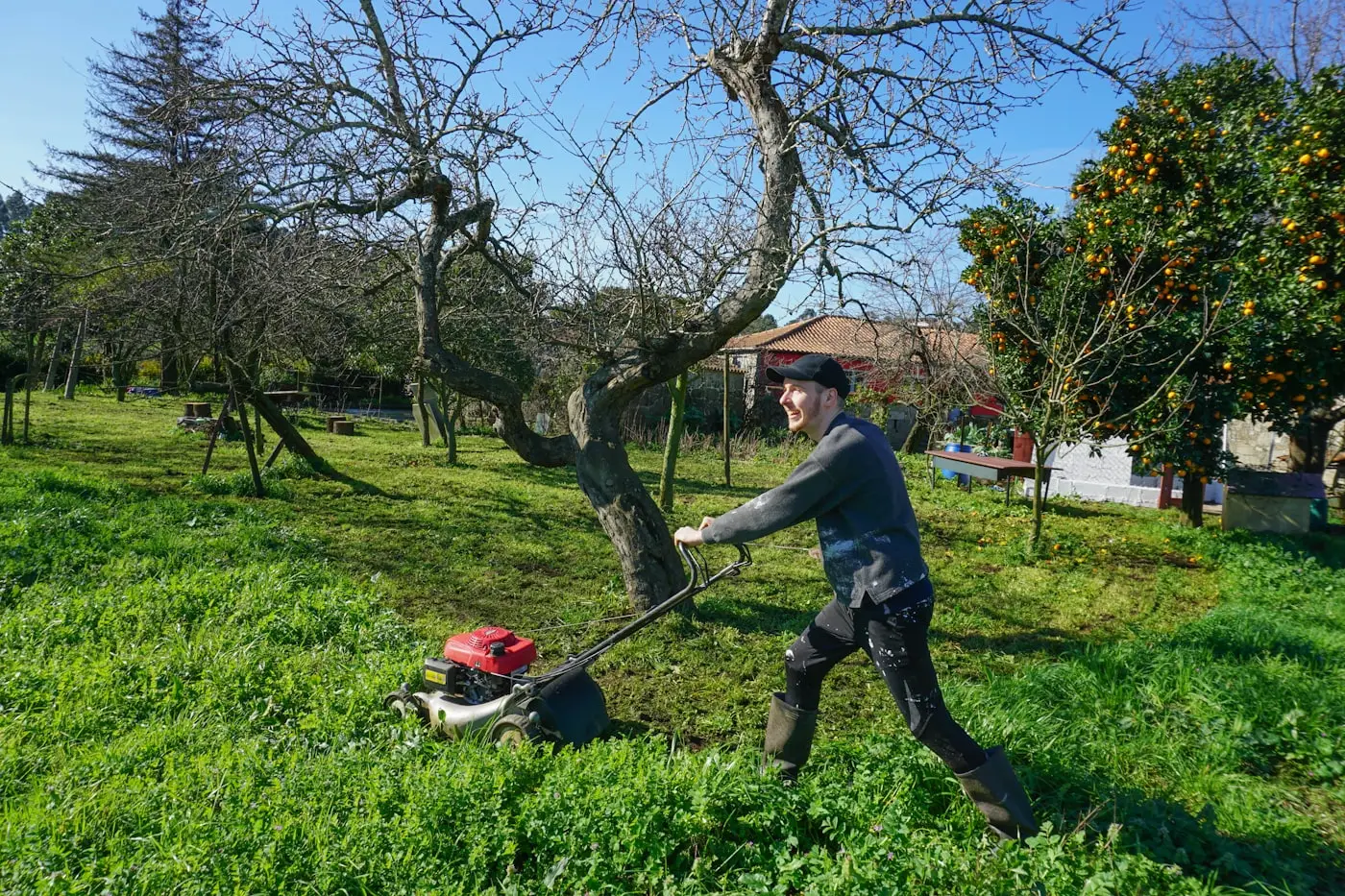
Regular lawn maintenance - mowing, edging, and keeping borders clear - is the most consistent ongoing job. Most Thurnscoe properties have a strip of front lawn and a rear garden of modest to medium size. Fortnightly mowing through spring and summer, with a spring tidy to start the season, is the typical pattern for households who want the garden maintained but do not have time to do it themselves. The Yorkshire lawn care guide covers the seasonal rhythm on heavy clay, which is slightly offset from lighter-soil areas in terms of when the season starts and ends.
Garden clearances are a consistent job in Thurnscoe, and they are heavier work on Dearne Valley clay than they would be elsewhere. An overgrown garden on clay soil tends to accumulate deep-rooted weeds - docks, nettles, and bramble are common - and removing them properly means getting the root systems out, not just cutting the tops back. A thorough clearance on a neglected S63 plot is a solid day's work at minimum, and on larger or heavily overgrown gardens, two days is not unusual. The clearance cost guide gives realistic figures for what to expect. The garden clearance service explains what a proper job involves.
Hedge trimming for privet front hedges and conifer rear boundaries comes up regularly. Privet in particular grows enthusiastically on Dearne Valley clay and will need cutting at least twice a year - once in late May or June and again in August - to stay looking tidy. A straight privet front hedge is one of the most visible signs of a well-kept Thurnscoe garden, and it is work that makes an immediate difference to the appearance of the property. The hedge trimming service page covers what to expect from a professional cut and what you should ask about before booking.
Weed control on paths, drives, and between paving slabs is a frequent request. The combination of clay soil, wet winters, and the cracks in older paving provides ideal conditions for weeds to establish. A good weed control treatment addresses both the visible weeds and the conditions that allow them to keep coming back. On clay-based surfaces, treating the source of moisture rather than just the weeds is the longer-term solution.
Clearance work: get the roots, not just the tops
On Dearne Valley clay, nettles, docks, and bindweed all have deep tap roots that regenerate quickly if the top growth is removed but the root is left in place. When getting quotes for clearance in Thurnscoe, ask specifically about how established weeds are dealt with - not just whether the garden will look clear on the day, but whether the treatment prevents regrowth. The difference between cutting back and properly clearing is significant on this soil type.
Some Thurnscoe householders invest in border planting and redesign to convert high-maintenance lawn areas into lower-maintenance planted spaces. On clay soil, the right plant selection makes a significant difference to how much ongoing work a border needs. Plants that tolerate or thrive in heavy, damp soil - astilbe, hostas, rudbeckia, and many shrub roses among them - will succeed where lavender and other Mediterranean plants will struggle and need constant replacement. A gardener with clay soil experience will be able to give you planting recommendations that suit S63 conditions rather than a generic list.
What gardeners charge in Thurnscoe
Thurnscoe S63 sits at the lower to mid end of South Yorkshire pricing. Rates here are comparable to Goldthorpe and Grimethorpe - the area does not command a premium over its near neighbours. The UK gardener cost guide gives the national context; the figures below are specific to Thurnscoe in 2026.
| Job type | Typical cost range | Notes |
|---|---|---|
| Hourly rate (regular maintenance) | £25-£34/hr | Regular fortnightly contracts at the lower end; one-off or specialist work higher |
| Fortnightly maintenance visit | £22-£40 | Standard terrace or semi-detached S63 garden; includes mowing and border tidying |
| Day rate (7-8 hrs) | £130-£175 | Garden clearances and heavier renovation; Dearne Valley clay makes this work harder |
| Spring tidy (one-off) | £75-£160 | Depends on plot size and how overgrown after winter |
| Privet hedge trim (front) | £18-£45 | Standard terrace front boundary; longer or taller runs higher |
| Garden clearance (neglected plot) | £200-£550 | Depends heavily on plot size and level of growth; multi-day on larger gardens |
| Lawn aeration and overseeding | £65-£150 | Hollow-tine treatment; autumn timing recommended on S63 clay |
For comparison across the Dearne Valley and wider South Yorkshire, the South Yorkshire gardeners guide covers typical pricing across the area. The hourly rate guide gives the national average for context.
How to find a local gardener in Thurnscoe
Word of mouth is the most reliable route in a close-knit community like Thurnscoe. If a garden on your street looks consistently well-maintained - neat edges, trimmed hedges, no weeds creeping over the path - asking who does it is the simplest starting point. The S63 and Dearne Valley Facebook groups are active and you will usually get several recommendations within a day of posting.
Gardeners who cover Goldthorpe to the east and Grimethorpe to the north include Thurnscoe naturally in their rounds. It is not a detour from the Dearne Valley circuit - it sits right on it. What fills up first is fortnightly regular slots from April onward. If you want a specific day, name it when you first make contact. Tuesdays and Wednesdays tend to fill before Fridays in this part of S63.
Before you book, confirm three things: public liability insurance (ask to see the certificate rather than just taking verbal confirmation), a Waste Carrier's Licence if any material will leave site, and whether the gardener has experience with heavy clay. The last point matters more than it might seem. A gardener who mainly works on the lighter soils further south may not be accustomed to the specific rhythms of Dearne Valley clay - when to aerate, when not to, and which plants will and will not succeed here.
Seasonal notes for Thurnscoe gardens
On Dearne Valley clay, spring arrives a few weeks later than the calendar suggests. The soil stays cold and waterlogged into late March, which means the first proper mow of the year is rarely before mid-April on most S63 plots. Trying to mow or work a clay lawn while it is still soft compacts the surface and damages the grass structure. A good gardener working on your soil will wait for the right conditions rather than working to a fixed calendar.
- February-March: Book your regular gardener; prune roses; do not mow until the ground has firmed
- April-May: First cuts begin; spring border tidy; first privet trim after mid-May
- June-August: Fortnightly maintenance; second hedge trim in August; weed treatment on drives
- September-October: Hollow-tine aeration on compacted lawns; overseeding; leaf clearance
- November-January: Reduce frequency; plan any clearance or hard landscaping work for spring
Frequently Asked Questions
What garden jobs are typical in Thurnscoe?
Lawn maintenance, privet hedge trimming, and garden clearances are the most common jobs in Thurnscoe S63. Weed control on drives and paths is a frequent one-off request. On heavier clay plots, aeration in autumn and raised bed installation are also regularly booked. The garden maintenance service covers what regular contracts include.
What do gardeners charge in Thurnscoe?
Hourly rates run from £25 to £34 in S63. Fortnightly visits for a standard plot cost £22-£40. Day rates for clearance work run £175-£300. The UK cost guide gives the national comparison.
How do I find a reliable gardener in Thurnscoe?
Ask a neighbour with a well-kept garden, or post in the S63 Facebook groups. Gardeners covering Goldthorpe and Grimethorpe include Thurnscoe naturally. Book early - February or March for an April start on regular slots.
When should I book a gardener in Thurnscoe?
February or March for regular season slots starting April. Spring tidy: book March for April. Hedge trimming: late May after nesting, or August. Lawn aeration: September-October on Dearne Valley clay for best results.
Related reading
- Gardeners across South Yorkshire
- Clay soil garden guide for Yorkshire
- Garden drainage in Yorkshire
- Garden clearance cost guide
- How much does a gardener cost in the UK? (2026)
- Yorkshire lawn care guide
- Garden clearance service
Gardeners in other nearby areas
We cover Thurnscoe and the surrounding Dearne Valley S63 postcode:
Get a quote for your Thurnscoe garden.
60-second assessment. If a local S63 gardener takes your enquiry, they call you with a price for your specific garden and job.
Start the assessment