Bolton-upon-Dearne is a Dearne Valley community with a clear identity shaped by its colliery heritage and its position in the lowland corridor between the Dearne tributaries. It sits between Goldthorpe to the west and Wath-upon-Dearne to the east, and the S63 postcode it shares with those communities reflects a common set of conditions: alluvial and Coal Measures clay soils near the Dearne river valley floor, post-war housing stock that makes up the majority of the residential area, and the practical, hands-on relationship with gardens that is characteristic of former pit communities across this part of South Yorkshire. If your garden in Bolton-upon-Dearne is giving you problems, the starting point for understanding why is the soil beneath it.
Alluvial clay and Coal Measures: the soils of the Dearne Valley
Bolton-upon-Dearne's soils are shaped by two geological inputs that interact across the valley. The Coal Measures clay - the formation that underlies most of the former colliery belt from Barnsley to Doncaster - is the dominant subsoil across the higher ground. Near the Dearne river itself, alluvial clay deposited by centuries of river activity creates an additional clay layer that is generally even heavier and slower-draining than the Coal Measures formation above. The practical result for your garden is that drainage is poor across nearly every plot in the village, and on the lower-lying streets closest to the Dearne it can be significantly more challenging than the drainage issues you would find on the higher S63 ground.
Both clay types share the same fundamental characteristics: slow drainage, poor aeration in the top layer, tendency to compact under foot or mower traffic, and strong seasonal contrasts between winter waterlogging and summer hardening. These are not unusual conditions in South Yorkshire - the Coal Measures clay belt covers a large area - but the additional alluvial layer near the Dearne means that some Bolton-upon-Dearne gardens have more persistent drainage challenges than equivalent plots in Goldthorpe or Thurnscoe on the higher ground. If your lawn stays saturated well into spring every year, the lower-valley alluvial influence may be a factor. The Yorkshire clay soil garden guide explains the management options, and the garden drainage guide covers the remediation choices for severely waterlogged plots.
On the positive side, the alluvial clay soils of river valleys are generally very fertile. Centuries of river deposition have built up nutrient-rich deposits, and the moisture-holding capacity of the clay means that once drainage is managed, plants grow vigorously. If your borders feel like they are going from nought to overgrown in a single season, the fertile alluvial soil is one reason why. Well-managed, these soils support excellent lawns and borders.
What Bolton-upon-Dearne gardens look like
The housing stock in Bolton-upon-Dearne is predominantly post-war - 1940s through to 1970s colliery-era semi-detached and terraced properties, with some newer development on the edges of the village. The typical plot is a front garden or lawn and a rear garden of moderate size, with boundary hedges or fences separating neighbouring properties. The privet and laurel hedges that are standard on this era of housing across the S63 corridor are the dominant boundary treatment, and their management is one of the most consistently booked jobs in the area.
Bolton-upon-Dearne has a distinct community identity. The Dearne Valley communities - Goldthorpe, Thurnscoe, Bolton-upon-Dearne, Wath-upon-Dearne - have strong local character that persists from the colliery era. Residents here know their neighbours, recommendations travel quickly, and a gardener who does good work in one property on a street often picks up several more from the same area by word of mouth. This is relevant if you are looking for a gardener: local referrals are more reliable than random searches, and a gardener who has worked on the Dearne Valley clay before will know the soil conditions you are dealing with.
The S63 corridor is well-served by gardeners who work across Goldthorpe, Bolton-upon-Dearne, Thurnscoe, and Wath-upon-Dearne as a natural route. Bolton-upon-Dearne is not an outlying location for any gardener already covering this part of the Rotherham district. The Rotherham gardeners guide covers the wider S63 and Rotherham area, and the South Yorkshire gardeners guide gives the full regional picture.
What gets booked in Bolton-upon-Dearne
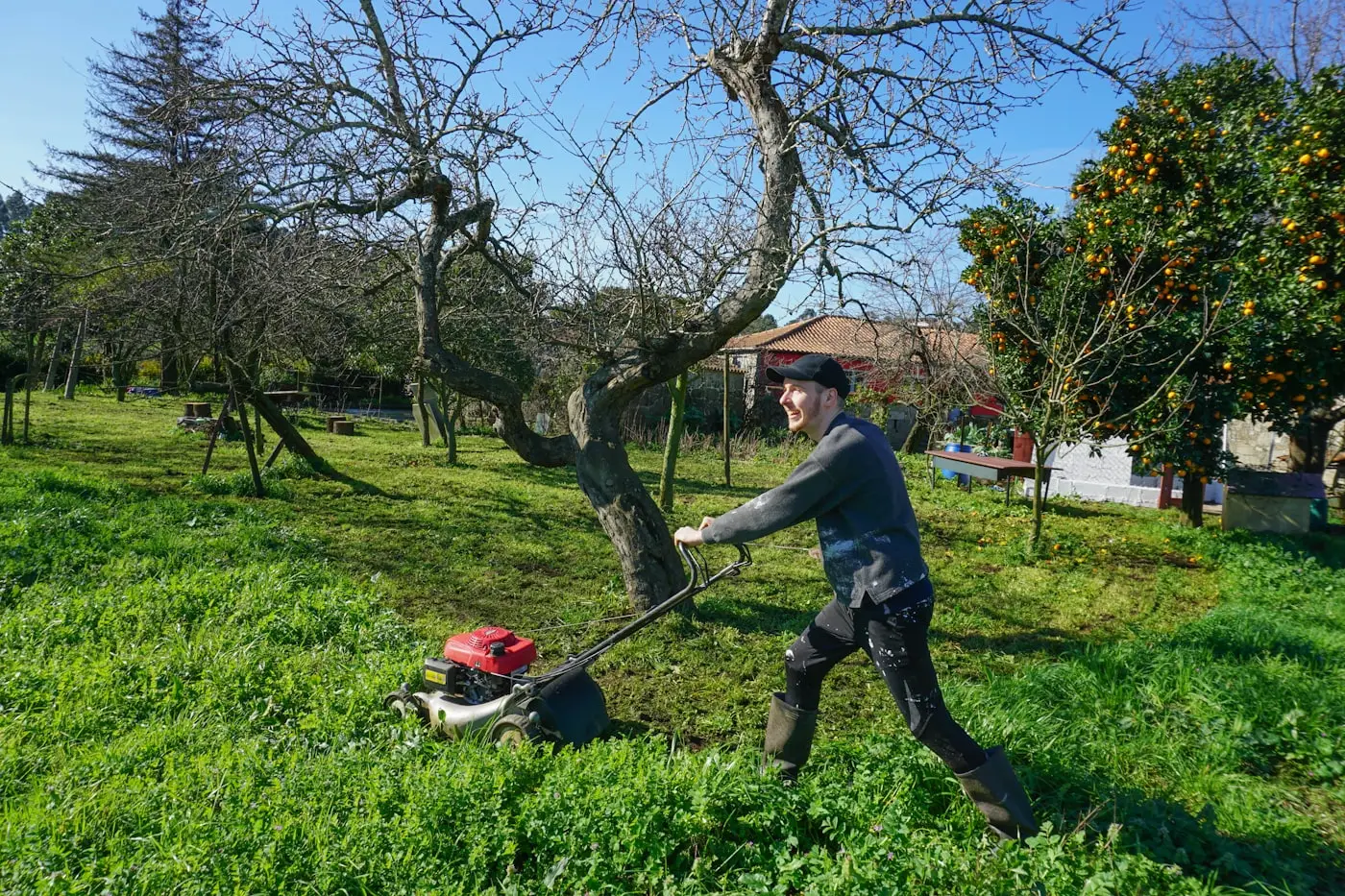
Regular garden maintenance - fortnightly mowing, edging, border weeding, and hedge trimming - is the consistent year-round work in Bolton-upon-Dearne. On the alluvial and Coal Measures clay here, mowing timing matters more than on lighter soils. Cutting a saturated clay lawn compresses the soil and creates ruts, particularly with heavier petrol mowers. A good local gardener will not mow when conditions are wrong, and will visit less frequently in dry spells when growth slows rather than cutting grass that does not need cutting.
Lawn care beyond the basic cut is significant in Bolton-upon-Dearne. The persistent waterlogging that the heavier alluvial clay creates means that compaction and moss are near-universal problems on untreated clay lawns. Hollow-tine aeration in September or October - removing small cores of soil to create channels for air, water, and roots - is the most effective treatment for compacted clay. Followed by a top-dressing of sharp sand and compost, and overseeding with a suitable grass mix, it can transform the appearance and performance of a clay lawn within one growing season. The Yorkshire lawn care guide explains the full seasonal treatment cycle and when each intervention is most effective on Dearne Valley soils.
Hedge trimming for the privet and laurel that is standard across Bolton-upon-Dearne's housing stock is booked twice a year in most households. The first cut is best done in late May or early June after nesting season, and a second cut in August keeps the hedge looking tidy through to autumn. Privet grows quickly on the fertile clay and can become significantly overgrown in a single growing season if not cut back promptly after the spring flush. If your privet hedge has grown much wider and taller than you want, a harder restoration cut in late February or early March (before nesting season) is the appropriate approach. The hedge trimming service covers what this includes, and the cost guide gives current S63 rates.
Near the Dearne river: extra drainage caution
If your property is close to the River Dearne, the alluvial clay on your plot may be more susceptible to temporary high water table in winter than properties on the higher ground. This does not necessarily mean flooding, but it can mean that your garden stays saturated for longer after heavy rain than gardens on the Coal Measures ground above the valley floor. If your lawn feels permanently boggy from October to April, discuss French drain options or perforated pipe under-lawn drainage with your gardener. It is a practical investment that pays for itself in the quality of your lawn over subsequent seasons. The garden drainage guide explains the options.
Garden clearances are booked in Bolton-upon-Dearne for the same reasons as across the wider S63 corridor. Properties change hands and the garden often needs a full clearance before new occupants can establish their own management plan. On the fertile alluvial clay, a season or two of neglect produces vigorous weed growth - particularly rank grass, nettles, brambles, and elder, all of which root deeply in clay and are much harder to remove than on lighter soils. The garden clearance service covers what a full clearance involves, and the cost guide gives current pricing.
Border maintenance - weeding, mulching, and seasonal cut-backs - is the other consistent category. Perennial weeds in alluvial clay can be particularly persistent. Ground elder, bindweed, and couch grass all establish deep root systems in the heavy soil and fragment when you try to remove them by hand. If your borders have these weeds, discuss a strategic approach with your gardener before the first visit. The weed control service covers the treatment options.
What it costs
Bolton-upon-Dearne sits in the standard S63 rate range. Rates are honest, practical, and consistent with the neighbouring Dearne Valley communities. The UK gardener cost guide gives national context; the table below is specific to Bolton-upon-Dearne in 2026.
| Rate type | Bolton-upon-Dearne S63, 2026 | Notes |
|---|---|---|
| Hourly rate (maintenance) | £25-£34/hr | Regular contracts at the lower end; one-off or specialist work higher |
| Day rate (7-8 hrs) | £140-£185 | Larger clearances, clay lawn renovation, or structural garden work |
| Fortnightly maintenance visit | £28-£50 per visit | Standard S63 Dearne Valley estate garden on a regular contract |
| One-off lawn cut | £24-£46 | Front and rear combined; varies by plot size |
| Spring tidy (one-off) | £78-£210 | Depends on size and condition after winter |
| Hedge trimming (privet, laurel) | £38-£115 per visit | Standard estate boundary hedges; longer runs at the higher end |
| Lawn aeration and overseeding | £66-£160 | Hollow-tine aeration plus seed and top-dressing on S63 clay |
| Garden clearance (full day) | £140-£185 | Excluding waste disposal and skip hire |
The gardener hourly rate guide gives the national picture for comparison. Gardeners working the Dearne corridor cover Bolton-upon-Dearne, Goldthorpe, Thurnscoe, and Wath-upon-Dearne as a natural working area - travel is not a significant factor within this S63 belt.
How to find a gardener in Bolton-upon-Dearne
Word of mouth is the most reliable starting point in Bolton-upon-Dearne. A well-maintained garden on your street in a community with this level of identity is an invitation to ask who does it - and you get a direct reference from someone on the same alluvial clay soil. Local S63 Facebook groups for the Dearne Valley regularly produce recommendations when you post asking for names. Specifying what you need (regular maintenance, hedge trimming, clearance) helps people point you to the right person.
Gardeners who cover the S63 Dearne Valley corridor work Bolton-upon-Dearne as part of an established route. You are not asking anyone to travel specially. What fills up first are the regular fortnightly maintenance slots for the April to October growing season. If you have a day preference, name it when you first make contact.
Before committing, confirm public liability insurance with the actual certificate, ask about a Waste Carrier's Licence if material will leave site, and check whether the gardener has experience with alluvial clay drainage challenges specifically. Not all gardeners understand the difference between standard Coal Measures clay management and the additional considerations that come with being close to the Dearne river. A gardener who has worked Bolton-upon-Dearne gardens before will know. The Rotherham gardeners guide and the South Yorkshire guide cover the wider S63 area.
Frequently Asked Questions
What garden jobs are typical in Bolton-upon-Dearne S63?
Lawn maintenance on alluvial and Coal Measures clay, hedge trimming for estate privet and laurel, garden clearances on changed properties, and seasonal tidies. Near the Dearne, additional drainage management is sometimes needed. The garden maintenance service page covers what a standard contract includes.
What do gardeners charge in Bolton-upon-Dearne?
Expect £25-£34 per hour for regular maintenance, with fortnightly visits running £28-£50. Day rates for larger jobs run £175-£300. The UK gardener cost guide gives the national picture.
How do I find a local gardener in Bolton-upon-Dearne?
Local S63 Dearne Valley Facebook groups and word of mouth from neighbours are the most reliable routes. Gardeners covering the Dearne corridor already include Bolton-upon-Dearne in their routes. A introduction service that has pre-verified insurance and local experience is faster than pursuing cold leads.
When should I book a gardener in Bolton-upon-Dearne?
For regular maintenance from April, contact in February or March before spring slots are taken. Spring tidy: book in March for an April slot. Hedge trimming: late May post-nesting, or August. Clay lawn aeration: September while soil is still warm enough for seed germination.
Related reading
- Gardeners in Rotherham
- Gardeners across South Yorkshire
- Clay soil gardening in Yorkshire
- Garden drainage solutions for Yorkshire
- Yorkshire lawn care - what to do and when
- How much does a gardener cost in the UK? (2026)
- Garden clearance cost guide
Gardeners in other nearby areas
We cover Bolton-upon-Dearne and the surrounding S63 Dearne Valley corridor:
Get a quote for your Bolton-upon-Dearne garden.
60-second assessment. If a local S63 gardener takes your enquiry, they call you with a price for your specific garden and job.
Start the assessment