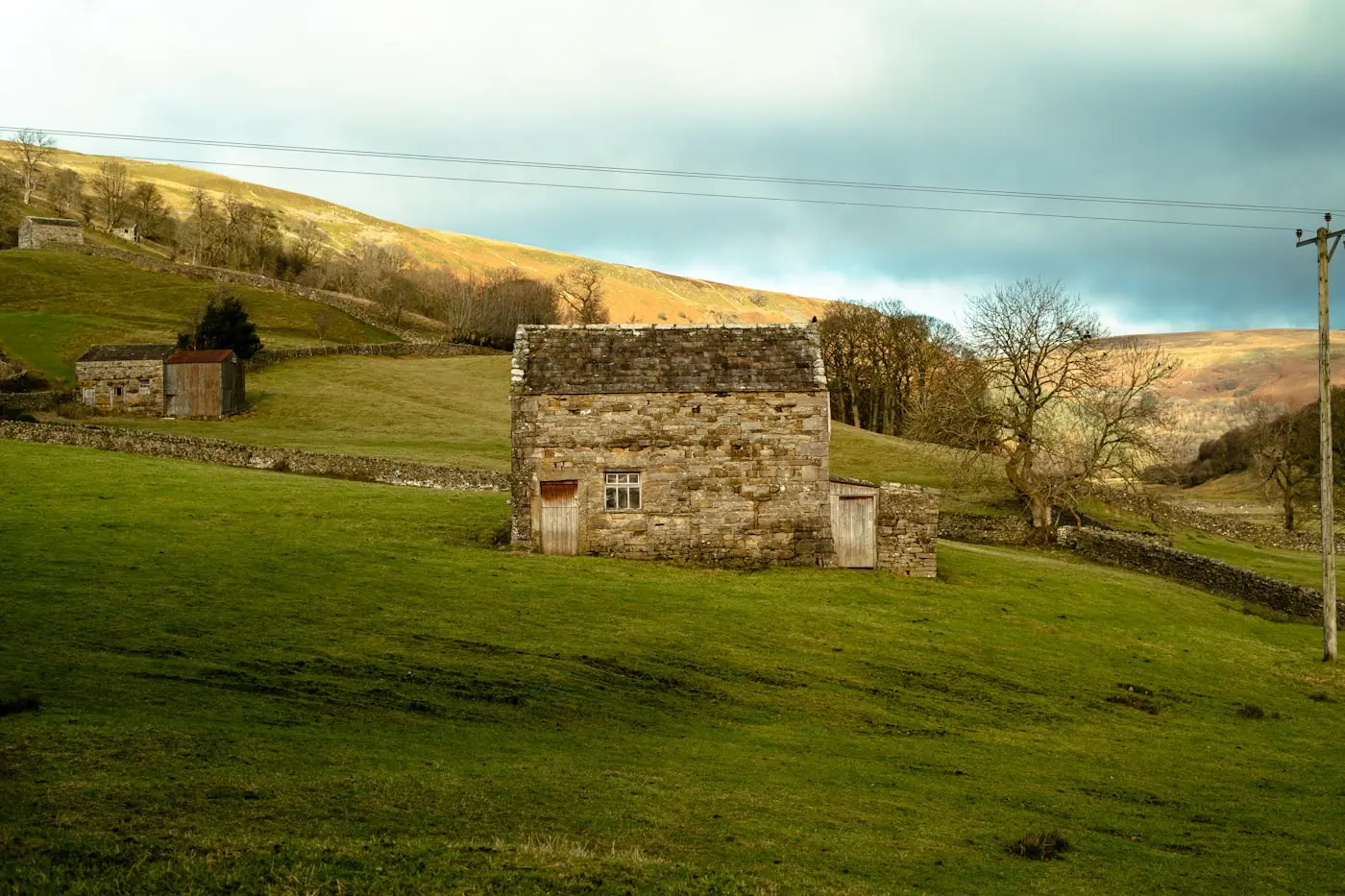
Sloping gardens are common across the Yorkshire Dales and the hills around Harrogate, Keighley, and Huddersfield, and local landscapers understand the drainage and soil conditions typical of these areas.
Sloping gardens are everywhere in Yorkshire — Pennine fringe, mill-town terraces, valley-edge properties. They offer views and drama, but they're harder to use and more expensive to landscape than flat plots. This guide explains design approaches, costs, drainage challenges, and plant palettes that work on Yorkshire slopes.
Where Yorkshire's sloping plots are
If you're in any of these areas, you probably have a slope:
- Pennine fringe towns: Halifax, Hebden Bridge, Holmfirth, Sowerby Bridge, Keighley, Todmorden, Brighouse. Built on valley sides, rear gardens slope steeply.
- Aire and Calder mill-town terraces: Dewsbury, Batley, Morley, Heckmondwike. Victorian terrace streets often follow hillside contours, back gardens drop away.
- Knaresborough / Harrogate north riverbank: properties overlooking the Nidd valley have dramatic slopes.
- Whitby cliff-top: gardens backing onto the cliff edge.
- Otley, Ilkley valley-edge: Wharfe valley slopes.
- Richmond: properties on Swale valley sides.
Flat plots dominate Vale of York lowlands (York, Selby, Northallerton, Thirsk). If your garden is flat, this guide isn't for you — see our main garden design service page instead.
What sloping does to costs
Sloping gardens cost 30-60% more to landscape than flat equivalents. Why:
- Retaining walls: £200-£800 per linear metre depending on material and height.
- Excavation and terracing labour: moving soil uphill or downhill by hand is slow.
- Drainage: French drains, soakaways, land drains to manage runoff.
- Access challenges: materials (aggregates, paving, soil) are harder to deliver and spread on slopes. Mini-diggers struggle on steep gradients.
- Plant establishment: erosion risk, watering challenges, more staking required.
A flat 60 sqm garden makeover might cost £5,000-£8,000. The same scope on a significant slope costs £7,000-£12,000 due to retaining walls and drainage.
Design approaches for sloping gardens
1. Full terracing (multiple retaining walls)
What it is: cut the slope into 2-4 flat levels with retaining walls between. Each level is usable flat space.
Best for: steep slopes (1:3 or more), families needing play space, entertaining areas, when you want maximum flat usable garden.
Cost: £12,000-£30,000+ for a typical 60-80 sqm terraced garden (depends on wall materials, number of levels, drainage complexity).
Pros: maximum usable space, visually striking, good for period stone houses (formal Yorkshire-stone terracing suits Dales cottages).
Cons: expensive, high maintenance (walls need pointing, weep-holes clearing, steps repairing), can look over-engineered on small suburban plots.
2. Single retaining wall + sloped garden
What it is: one retaining wall creates a flat patio or lawn area near the house, the rest of the garden stays sloped and planted.
Best for: moderate slopes (1:4 to 1:6), when you need one flat area for seating but can accept sloped planting beyond.
Cost: £5,000-£12,000 for a 30-40 sqm flat terrace plus planted slope.
Pros: cheaper than full terracing, still gives you a flat entertaining space, naturalistic beyond the terrace.
Cons: less usable area than full terracing, the slope beyond is still tricky to maintain.
3. Deck on the slope
What it is: build a raised deck cantilevered or on posts, creating a flat platform without excavating or building retaining walls.
Best for: steep slopes where terracing would be prohibitively expensive, contemporary aesthetic, when you want a flat area fast.
Cost: £3,000-£8,000 for a 15-25 sqm deck - see our decking installation service for a full breakdown (composite decking higher end, softwood lower).
Pros: cost-effective for steep slopes, quick to install (1-2 weeks), contemporary look, good views from raised platform.
Cons: timber or composite needs maintenance (cleaning, re-oiling for timber), doesn't integrate as naturally as stone terracing, can feel exposed without planting around it.
4. Naturalistic flowing planting (no walls)
What it is: plant the slope with ground-cover and deep-rooted perennials that follow the contours. No flat areas, no walls.
Best for: gentle to moderate slopes, wildlife-friendly gardens, low-intervention gardeners, when budget is tight.
Cost: £2,000-£5,000 for planting and drainage (no structural work).
Pros: cheapest option, naturalistic aesthetic, good for wildlife (varied microclimates on slope), low structural maintenance.
Cons: no flat usable space (can't put a table and chairs anywhere), harder to access for maintenance, erosion risk if plants fail.
Retaining wall materials and costs
| Material | Cost per metre (built) | Look | Lifespan |
|---|---|---|---|
| Drystone (Yorkshire stone) | £400-£800/m | Traditional, suits period houses, Dales aesthetic. | 50-100+ years if built properly. Needs occasional re-stacking. |
| Gabion baskets | £200-£400/m | Contemporary, industrial, fast to install. | 20-30 years (wire corrodes eventually). |
| Railway sleepers (oak or softwood) | £100-£250/m | Rustic, cottage aesthetic, budget option. | 15-25 years (oak longer, softwood rots faster). Needs replacing eventually. |
| Poured concrete (rendered) | £300-£600/m | Modern, clean lines, can be painted. | 50+ years. Low maintenance once built. |
| Engineered timber (treated softwood) | £250-£450/m | Neat, contemporary, vertical slats common. | 20-30 years with good treatment. |
Yorkshire preference: drystone walls suit period properties and rural plots. Railway sleepers are popular for suburban cottage gardens. Gabions and concrete work well for contemporary new-builds.
Drainage on sloping gardens
Sloping plots have twin drainage problems:
- Top of slope: dries out fast in summer (water runs downhill before soaking in). Plants struggle, soil erodes.
- Bottom of slope: waterlogged in winter (runoff collects at the base). Heavy clay becomes a swamp.
Drainage fixes
- French drain at the base: intercepts runoff before it waterlogs the bottom. Trench filled with gravel and perforated pipe, drains to soakaway or surface water drain. Cost: £400-£800 for a typical domestic garden run.
- Mid-slope soakaways: if the slope is long, install soakaways mid-way to slow runoff. Cost: £200-£400 per soakaway.
- Land drains (herringbone pattern): for persistently wet clay slopes, run perforated pipes in a herringbone up the slope, feeding into a main drain at the base. Cost: £800-£1,500 for a 60-80 sqm slope.
- Organic matter at the top: dig 10cm compost or well-rotted manure into the top third of the slope to retain moisture. Cheaper than irrigation.
On Yorkshire clay slopes, drainage work is usually mandatory. Skipping it means waterlogged planting at the base and dust-dry soil at the top.
Plant palette for slopes
Choose deep-rooted plants that hold soil and tolerate varied moisture (wet at base, dry at top).
Perennials and grasses
- Lavender (Lavandula): deep roots, drought-tolerant, good on free-draining slopes. Don't plant on heavy clay unless drainage is excellent.
- Salvias (Salvia nemorosa, 'Caradonna'): fibrous roots, tolerates clay, blue spikes, June-Sept.
- Hardy geraniums: knit the soil together, spread well, long flowering, tolerate part-shade.
- Rosemary (Rosmarinus): evergreen, deep roots, aromatic, good on alkaline slopes (Wolds, magnesian limestone belt).
- Ornamental grasses (Stipa, Miscanthus, Pennisetum): fibrous root systems hold soil, architectural, movement.
- Sedums (Sedum spectabile, 'Autumn Joy'): shallow but dense mat of roots, drought-tolerant, late-season interest.
- Alchemilla mollis (lady's mantle): ground cover, self-seeds, loves Yorkshire slopes, tolerates varied moisture.
Shrubs
- Prostrate junipers (Juniperus horizontalis): evergreen ground cover, hold soil on steep banks, drought-tolerant.
- Cotoneaster (horizontal types): spreading shrubs, white flowers, red berries, wildlife-friendly, hold soil well.
- Potentilla: tough deciduous shrub, yellow or white flowers, tolerates poor soil, good for steep banks.
- Rosa rugosa: deep roots, salt and wind tolerant (good for coastal slopes like Whitby, Scarborough), repeat-flowers.
- Heathers (Calluna, Erica): perfect for acidic Pennine slopes, evergreen, ground cover, year-round interest.
Ground cover (to knit soil together)
- Vinca minor (periwinkle): evergreen, spreads fast, blue flowers, shade-tolerant.
- Pachysandra terminalis: evergreen ground cover for shade, knits soil, low maintenance.
- Euonymus fortunei: evergreen, variegated forms available, ground-hugging, very tough.
- Alchemilla (already mentioned): self-seeds, fills gaps, soft green, tolerates foot traffic.
What NOT to plant on slopes
- Shallow-rooted annuals (bedding plants): wash out in heavy rain, no soil-holding ability.
- Large-leaved moisture-lovers (hostas, ligularia, astilbes): struggle at the dry top of slopes, only plant at the base where moisture collects.
- Top-heavy shrubs with shallow roots: topple in wind or heavy rain on steep slopes. Stake if unavoidable.
Can you have a lawn on a slope?
Gentle slopes (up to 1:5)
Yes. Turf or seed as normal. Mow parallel to the slope (never up-and-down — unstable and dangerous). Rotary mower is safer than cylinder. Keep grass slightly longer (4-5cm) to protect soil from erosion.
Moderate slopes (1:4 to 1:5)
Possible but awkward to mow. Turf is better than seed (holds better on slopes). Expect faster wear on high-traffic areas and erosion patches after heavy rain. Consider whether it's worth the maintenance hassle vs planting or terracing.
Steep slopes (1:3 or steeper)
Impractical and dangerous to mow. Better to terrace one flat area for lawn and plant the rest, or skip lawn entirely. Use gravel, deck, or naturalistic planting instead.
Cost ranges for sloping garden projects
| Project type | Cost range | What's included |
|---|---|---|
| Small slope refresh | £2,000-£5,000 | 10-30 sqm planted slope, drainage improvements (French drain or soakaway), ground-cover and perennials, mulch. No retaining walls. |
| Mid slope with one retaining wall | £5,000-£12,000 | 20-40 sqm, one retaining wall (3-6m length, 0.6-1.2m height), flat patio or deck behind wall, planted slope beyond, drainage. |
| Full terraced makeover (2-3 levels) | £12,000-£30,000+ | 60-100 sqm, multiple retaining walls, terraced levels with paving or gravel, steps between levels, comprehensive planting, drainage system, garden lighting if wanted. |
| Deck on slope | £3,000-£8,000 | 15-25 sqm raised deck (composite or timber), posts or cantilever, steps, balustrade if needed, minimal planting around base. |
Design fees: £650-£1,800 for slopes (higher than flat gardens due to complexity). See our garden designer cost guide for full breakdown.
Budget rule
If your garden has significant slope (1:4 or steeper) and you want flat usable space, budget at least £8,000-£12,000 for a professional job with retaining walls and drainage. Quick fixes (railway sleeper retaining wall DIY, planting without drainage) often fail within 2-3 years. Better to save and do it properly than patch and redo.
Do you need a designer for a sloping garden?
For significant slopes (1:3 or steeper) or multi-level terracing, yes. Mistakes are expensive and potentially dangerous:
- Retaining wall failure: walls over 1m height need proper foundations and drainage. Failures cause soil collapse, flooding, and injury risk.
- Erosion: poorly planted slopes wash out in Yorkshire's heavy rain.
- Waterlogging: inadequate drainage at the base ruins planting and makes the garden unusable in winter.
For gentle slopes, an experienced landscaper can handle it without formal design input. Budget rule: if retaining walls are involved, get professional design or at least a structural engineer's sign-off on wall height and drainage.
Towns where sloping garden expertise is common: Halifax, Hebden Bridge, Otley, Ilkley. Designers and landscapers in these areas see sloping plots every week.
Frequently asked questions
How much does it cost to landscape a sloping garden in Yorkshire?
Small slope refresh (10-30 sqm planting, minor drainage) costs £2,000-£5,000. Mid-size slope with one retaining wall (20-40 sqm) costs £5,000-£12,000. Full multi-level terraced makeover costs £12,000-£30,000+. Retaining walls add £200-£800 per linear metre depending on material (railway sleeper budget end, drystone Yorkshire stone premium end). Costs are higher than flat-garden equivalents due to excavation, drainage, and access challenges.
What's the best way to landscape a sloping garden?
It depends on budget and how you'll use the space. Terracing with retaining walls creates flat usable areas (best for entertaining, dining, play). Single retaining wall plus sloped planting is cheaper and works for most domestic plots. Deck on the slope is cost-effective and creates a level platform fast. Naturalistic flowing planting (no walls) is cheapest but you lose flat space. Most Yorkshire sloping gardens benefit from at least one level area near the house for seating.
Do sloping gardens have drainage problems?
Yes, typically. Water runs downhill and collects at the bottom, causing waterlogging. The top of the slope dries out fast in summer. Fix: French drains at the base to intercept runoff, soakaways mid-slope if needed, and organic matter dug into the top to retain moisture. On heavy Yorkshire clay slopes, drainage work is usually mandatory before planting or the bottom becomes a swamp.
What plants are best for sloping gardens?
Deep-rooted perennials and shrubs that hold soil: lavender, salvias, hardy geraniums, rosemary, ornamental grasses (Stipa, Miscanthus), prostrate junipers, cotoneaster, potentilla. Avoid shallow-rooted plants on steep slopes (they wash out in heavy rain). Ground-cover plants knit the soil together: Vinca, Pachysandra, Euonymus fortunei, Alchemilla. On Yorkshire clay slopes, choose plants that tolerate both winter wet (at the base) and summer dry (at the top).
Can you have a lawn on a sloping garden?
On gentle slopes (up to 1:5), yes. Turf or seed as normal, mow with a rotary mower parallel to the slope (never up-and-down - dangerous and unstable). On steeper slopes (1:3 or more), lawns are impractical and dangerous to mow. Better to terrace one flat area for lawn and plant the rest, or skip lawn entirely and use gravel, deck, or naturalistic planting.
Where in Yorkshire are sloping gardens common?
Pennine fringe towns (Halifax, Hebden Bridge, Holmfirth, Sowerby Bridge, Keighley, Todmorden), Aire and Calder valley mill-town terraces, Knaresborough and Harrogate north riverbank, Whitby cliff-top, Otley, Ilkley valley-edge properties, Richmond, and any properties backing onto valleys or built on hillsides. Flat plots are more common in the Vale of York lowlands (York, Selby, Northallerton, Thirsk).
Do I need a designer for a sloping garden?
For significant slopes (1:3 or steeper) or multi-level terracing, yes - mistakes are expensive and potentially dangerous (retaining wall failure, erosion, waterlogging). A designer or experienced landscaper will assess drainage, soil stability, wall heights, and planting. For gentle slopes, an experienced gardener or landscaper can handle it without formal design. Budget rule: if retaining walls are involved, get professional input.
Get your enquiry in front of a slope-specialist designer
Tell us about your sloping garden and we put your enquiry in front of local designers and landscapers who understand terracing, drainage, and Yorkshire slopes.
Start the assessment