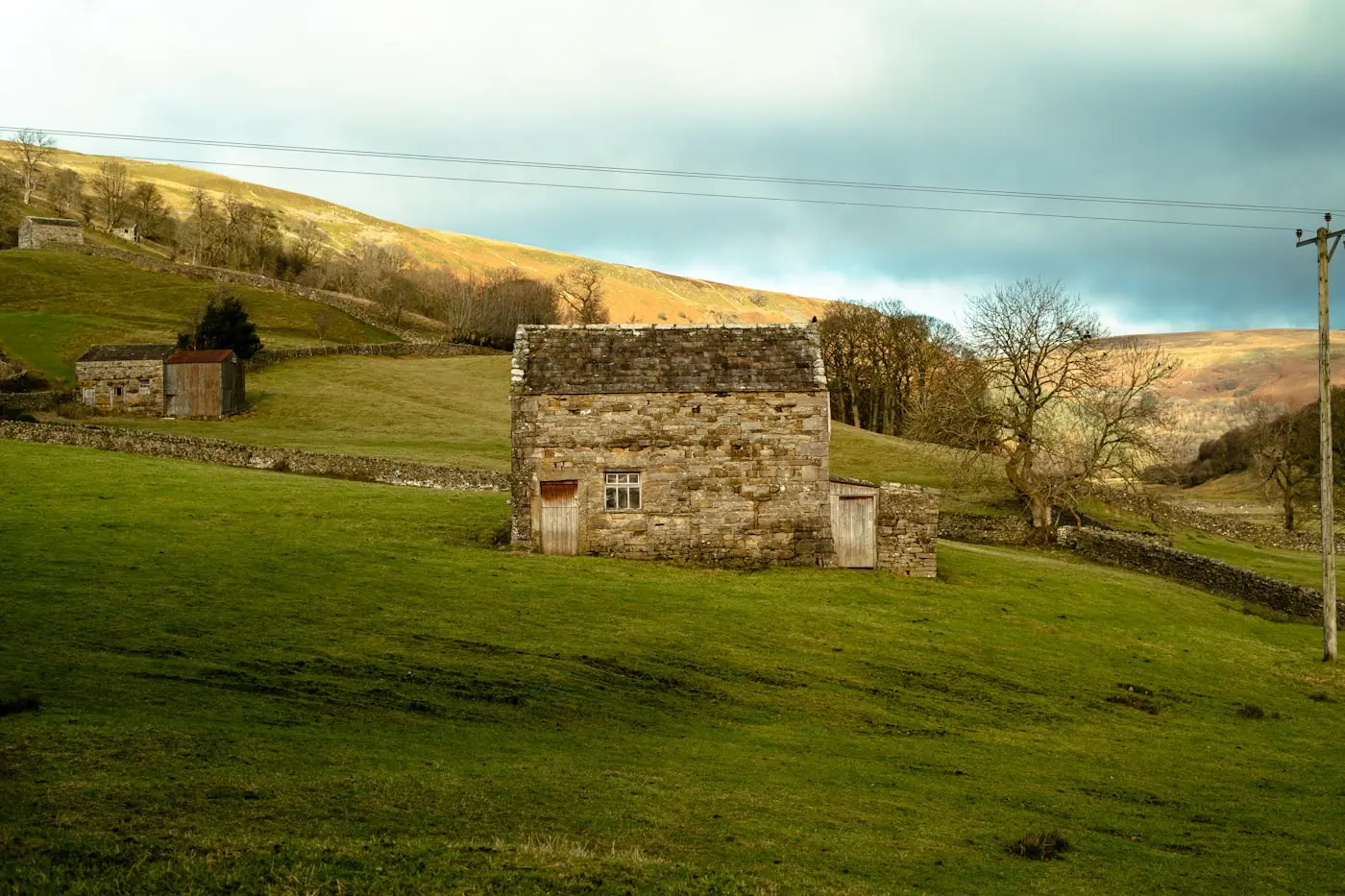
Crofton is a substantial suburban village to the south of Wakefield, and its character is shaped by two things that are immediately obvious if you drive through it: the 1960s and 70s housing estates that make up much of the residential area, and the Coal Measures clay subsoil that runs under all of them. Both matter enormously if you are trying to manage a garden here. The housing era determines the plot size, the garden layout, and the boundary treatments you are likely to have inherited. The geology determines how your soil behaves through every season - and on Coal Measures clay in WF4, that behaviour creates predictable, manageable challenges once you understand what you are working with.
Coal Measures clay south of Wakefield
The Coal Measures geology that underlies Crofton produces one of the heavier clay subsoils in the Wakefield district. It is the same geological formation that runs north through Wakefield itself and east towards Pontefract, and it creates consistent, recognisable gardening conditions across all of WF4. Water moves slowly through this clay - drainage is always the first challenge on any untreated plot. In winter and early spring, lawns stay waterlogged for extended periods after rain, which causes compaction, moss growth, and root stress in grass. Borders remain sticky and difficult to work for months. Frost can penetrate saturated clay and lift plant roots through frost heave.
In summer the picture reverses. The clay shrinks and hardens in dry weather, and while it retains more moisture at depth than light soils, the surface can bake hard enough to crack. Grass can go from looking reasonable in June to yellowing in July in a dry spell. For lawns, the cycle of winter waterlogging followed by summer hardening is what creates the persistent moss and compaction problems that are so common on WF4 clay plots. The good news is that these problems are solvable. Hollow-tine aeration in autumn breaks up the compaction layer and allows water and air to reach grass roots. Overseeding after aeration fills in bare or thin patches. Regular scarifying removes the dead thatch mat that moss hides in. None of these treatments is exotic - they are standard clay lawn management that any gardener experienced in WF4 soils will know.
The Clay soil garden guide for Yorkshire covers the full range of challenges and solutions that come with Coal Measures clay across the county. Crofton's conditions are typical of the south Wakefield belt that extends towards Royston, Shafton, and the WF4-S72 boundary. The Yorkshire garden drainage guide goes deeper on what the drainage options are for plots where the waterlogging is severe.
Crofton's gardens and what they need
The dominant housing type in Crofton is the 1960s and 70s semi-detached and detached estate property. These plots are typically larger than Victorian terraced gardens - a proper front lawn, a rear garden of reasonable size, and side passages are the standard layout. The original builders of these estates rarely prioritised garden soil quality, and the construction process often compacted and mixed the existing clay subsoil further. If your garden feels like it has never quite thrived despite reasonable effort, the underlying compaction from the original build is a likely contributing factor.
Boundary hedges on these estates are predominantly privet and laurel, both of which grow vigorously on the fertile clay. Privet needs at least two cuts per year - once in late May or early June after the first flush of growth, and again in August. Laurel can get away with one substantial cut per year if you prefer a less formal line, but a twice-yearly cut keeps it denser and more effective as a boundary. Both species can be cut back hard if they have been allowed to grow oversized - they regenerate well from old wood, unlike some hedge species that will not break from brown wood.
Crofton Pumping Station, the preserved Victorian beam engine site on the edge of the village, is a local landmark that says something about the district's heritage and community character. The village has a clear identity that persists despite the 1960s-70s development character - community groups are active, local knowledge travels by word of mouth, and a good gardener who covers WF4 regularly will already know the local ground conditions in detail. This is useful because conditions vary even within a single estate: a north-facing plot with little sun and a thick hedge will behave differently from an open south-facing garden just a few streets away, even on the same clay subsoil.
What gets booked in Crofton
Regular garden maintenance on a fortnightly basis through the growing season is the most consistent work in Crofton. Mowing, edging, border weeding, and hedge trimming when due make up the core of most maintenance visits. On the 1960s-70s estate plots, mowing a clay lawn requires judgment about timing - cutting when the ground is saturated causes rutting and compaction from the mower wheels, which makes the drainage problem worse. A gardener who knows WF4 clay will not mow in conditions that damage the lawn, and will adjust cut height and frequency as the season progresses.
Lawn renovation is a significant category of work in Crofton. Scarifying to remove thatch, hollow-tine aeration to break up compaction, and overseeding to restore thin or mossy patches is a treatment that Crofton clay lawns benefit from on a cycle of every two or three years. If your lawn has never had this done, the difference after the first treatment is usually noticeable. The best time on WF4 clay is late September or early October - the soil is still warm, there is still enough growing season for seed to germinate and establish before winter, and the autumn rains provide moisture for establishment without the risk of a late frost killing new seedlings. The Yorkshire lawn care seasonal guide explains the full cycle and when each treatment is most appropriate.
Garden clearances are a regular category in Crofton, for two main reasons. First, properties change hands and the incoming owner often inherits a garden that the previous occupant had stopped managing - sometimes for several years. On clay soil, rank growth establishes quickly and deeply in a short period of neglect, particularly brambles, nettles, and ground elder. Second, changing life circumstances - illness, increased work commitments, a household member who previously did the gardening - mean that manageable gardens occasionally get ahead of their owners over a period of one or two seasons. In both cases, a professional clearance followed by an ongoing maintenance contract is the most practical approach. The garden clearance service covers what a full clearance involves, and the clearance cost guide gives current price ranges.
What to ask before a first maintenance visit
Before a gardener visits Crofton for the first time, it is worth checking two practical things: whether they have experience with clay lawn care (not just basic mowing), and whether they hold a Waste Carrier's Licence if any material will be removed from site. Both come up frequently on WF4 clay plots and it is better to establish these before booking than to discover a gap after the first visit.
Hedge trimming for the privet and laurel boundaries that are standard on Crofton's estates is consistently booked work twice a year. The first cut is usually in late May or early June after nesting season is safely past. A second cut in August or September keeps the hedge looking tidy through autumn. If your hedge has grown significantly oversized over several years, a harder restoration cut in late winter (February or March, before nesting season starts) may be needed first. The hedge trimming service page covers what to expect, and the cost guide gives current rates.
Weed control in clay borders is a persistent need in Crofton. Perennial weeds - particularly ground elder, bindweed, and couch grass - root deeply in clay and are very difficult to remove by hand without leaving fragments that regrow. If your borders have established perennial weeds, it is worth discussing a treatment strategy with your gardener before the first visit rather than expecting hand-weeding alone to resolve the problem. The weed control service covers the options.
What it costs
Crofton sits in the practical mid-range of Wakefield district pricing. It is a Tier 2 area - well-served by gardeners working the south Wakefield corridor - and rates reflect that. The UK gardener cost guide gives national context; the table below is specific to Crofton in 2026.
| Rate type | Crofton WF4, 2026 | Notes |
|---|---|---|
| Hourly rate (maintenance) | £25-£34/hr | Regular contracts at the lower end; one-off or specialist work higher |
| Day rate (7-8 hrs) | £140-£185 | Clearances, larger renovation projects, structural garden work |
| Fortnightly maintenance visit | £28-£52 per visit | Standard 1960s-70s estate garden on a regular contract |
| One-off lawn cut | £25-£48 | Front and rear together; larger plots at the higher end |
| Spring tidy (one-off) | £80-£220 | Depends on size and extent of overgrowth |
| Hedge trimming (privet, laurel) | £40-£120 per visit | Boundary hedges; longer or taller runs at the higher end |
| Lawn aeration and overseeding | £70-£170 | Clay lawn renovation; hollow-tine plus seed and top-dressing |
| Garden clearance (full day) | £140-£185 | Excluding waste disposal; tip runs or skip hire add to this |
The gardener hourly rate guide gives the national picture for comparison. Gardeners covering WF4 regularly also serve Wakefield, Pontefract, Normanton, and the wider south Wakefield corridor, so travel time within Crofton is not normally a separate charge.
How to find a gardener in Crofton
Word of mouth is a reliable first step in a village with Crofton's community character. A garden that looks consistently well-maintained on your street or estate is an invitation to ask the owner who does it - and you get a reference from someone on the same clay soil. Local Facebook groups for Crofton and the south Wakefield area will typically produce several recommendations within a day of posting.
Gardeners covering WF4 work the south Wakefield corridor as a natural route. Crofton is not an outlying location for anyone already serving Wakefield, Normanton, or Royston. What fills up first are the regular fortnightly slots, particularly for households who want an April-to-October maintenance contract. If you have a preference for a specific day of the week, name it when you first make contact - this is much easier to accommodate before the season starts than once a gardener's route is set for the year.
Before committing, confirm public liability insurance with the certificate (not just a verbal confirmation), ask about a Waste Carrier's Licence if material will leave site, and discuss any specific clay soil challenges your garden has. A gardener who has worked WF4 clay before will ask the right questions. One who has not may underestimate how much extra time clay lawn work takes compared to lighter soils. The West Yorkshire gardeners guide covers the full area including neighbouring WF postcodes.
Frequently Asked Questions
What garden jobs are typical in Crofton WF4?
Regular lawn maintenance on clay, hedge trimming for estate privet and laurel boundaries, garden clearances on changed properties, and seasonal one-off tidies are the most common. The garden maintenance service page covers what a standard contract includes in practice.
What do gardeners charge in Crofton?
Expect £25-£34 per hour for regular maintenance, with fortnightly visits running £28-£52 per visit. Day rates for larger projects run £175-£300. The UK gardener cost guide gives the broader national picture.
How do I find a local gardener in Crofton?
Word of mouth via neighbours and the Crofton Facebook group is effective. Gardeners covering the south Wakefield corridor already pass through WF4 regularly. A introduction service that has verified insurance and availability ahead of time is faster and more reliable than cold-calling board or leaflet names.
When should I book a gardener in Crofton?
For regular maintenance from April, contact in February or early March. Spring tidy: book in March for an April slot. Hedge trimming: late May after nesting season, or August. Clay lawn aeration and overseeding: September is optimal for WF4 soils.
Related reading
- Gardeners across West Yorkshire
- Clay soil gardening in Yorkshire
- Garden drainage solutions for Yorkshire
- Yorkshire lawn care - what to do and when
- How much does a gardener cost in the UK? (2026)
- Hedge trimming cost guide
- Garden clearance cost guide
Gardeners in other nearby areas
We cover Crofton and the surrounding WF4 and south Wakefield area:
Get a quote for your Crofton garden.
60-second assessment. If a local WF4 gardener takes your enquiry, they call you with a price for your specific garden and job.
Start the assessment