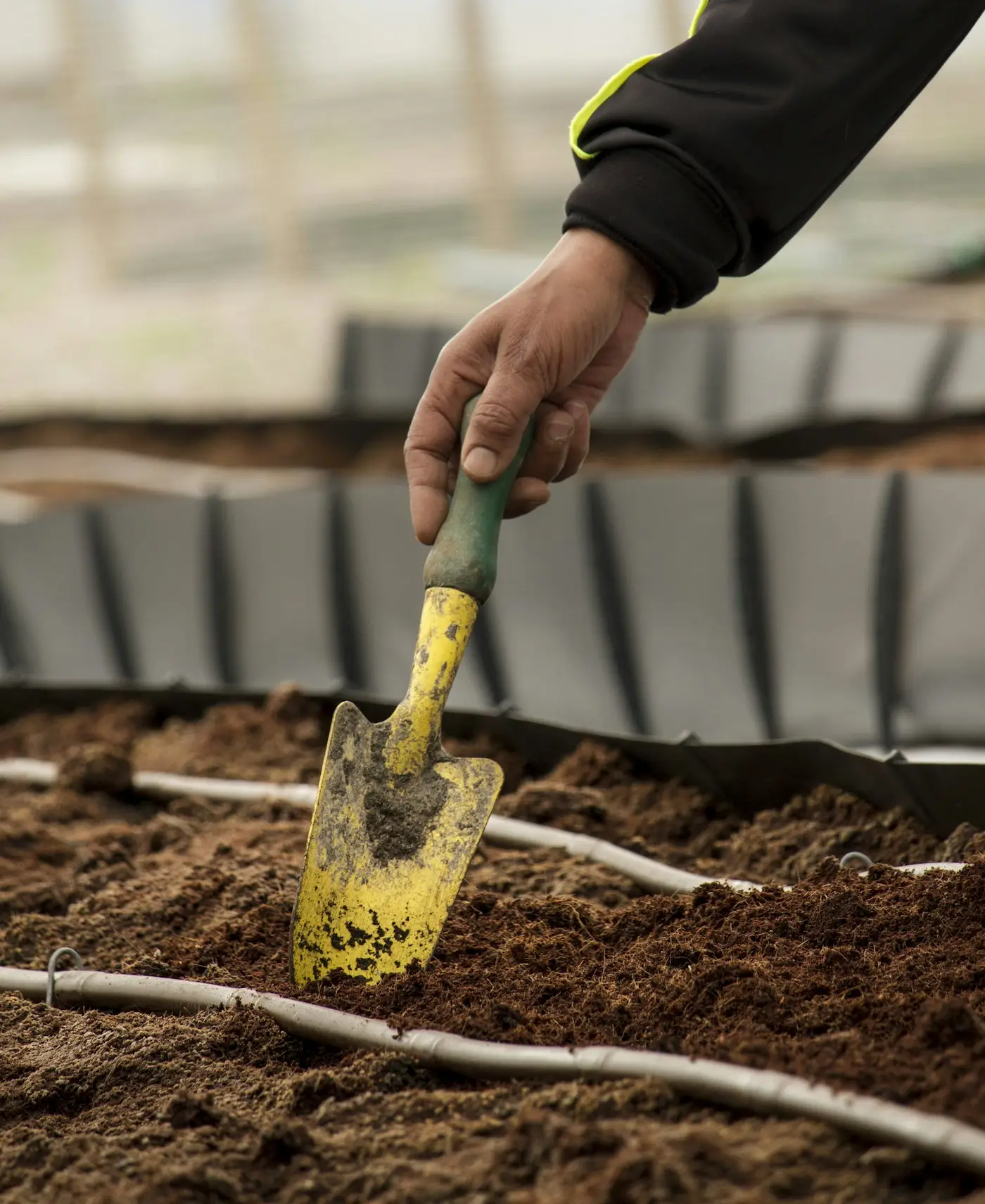
Professional gardeners serve homes and businesses throughout West Yorkshire, including in Leeds, Bradford and Huddersfield.
West Yorkshire is one of England's most geologically varied metropolitan counties. Within roughly 800 square miles, you go from the industrial clay heartlands of Leeds and Bradford through the steep-sided Pennine valleys of Calderdale and Kirklees, up to exposed gritstone moorland above Holmfirth and Marsden, and back down to the well-drained limestone corridor approaching Wetherby. That variety matters if you are looking for a gardener, because the work in a Bramley terrace is genuinely different from the work in a Hebden Bridge hillside cottage, and a gardener who knows one does not automatically know the other. This guide covers what to expect, zone by zone, across the whole of West Yorkshire.
West Yorkshire's gardening landscape
The Leeds-Bradford conurbation is the core: around 1.5 million people, most of them on or near the Coal Measures geology that underlies much of the central and southern West Riding. To the west, the land rises sharply into Pennine country - the Colne valley above Huddersfield, the Holme valley above Holmfirth, the Calder valley above Halifax. These upland towns and villages sit on Millstone Grit, thin acid soils, high rainfall, and a growing season that is measurably shorter than Leeds city centre. To the east and north-east, the county transitions towards the Magnesian Limestone belt - the corridor around Wetherby, Boston Spa, and the Harrogate fringe - where soils are alkaline, free-draining, and considerably more forgiving to garden.
The Aire and Calder river valleys cut west to east through the county, creating alluvial flood plain soils in the Bradford-Leeds-Wakefield corridor that are more fertile and better-draining than the raw Clay Measures above them. Wakefield district, often overlooked in discussions of West Yorkshire gardening, sits on similar geology to south Leeds and has its own character: large estate gardens from the county's industrial prosperity, a growing arts-influenced resident population since the Hepworth opened in 2011, and a renewed interest in garden improvement that has driven real demand for skilled local gardeners.
Understanding which zone you are in is the starting point for everything else - what your soil does, what your garden needs, what you should pay, and who is best placed to do the work.
The four geological zones of West Yorkshire
Coal Measures clay: Leeds, Bradford, Wakefield
The Coal Measures underlie the industrial heartland of West Yorkshire - a broad band running from the Bradford District through central Leeds south towards Wakefield and the Barnsley border. The soils derived from these measures are typically heavy clay: dense, slow-draining, prone to compaction under foot traffic, and capable of staying waterlogged from November through March. If your garden is in Armley, Churwell, Morley, Dewsbury, or much of Wakefield, you are almost certainly on this geology.
Clay lawns in this zone develop characteristic problems: moss in shaded or low-lying areas, bare patches in high-traffic zones, hard surface panning after dry spells, and the kind of waterlogging that makes spring gardening impossible until the soil has dried enough to work without smearing. These are not failures of maintenance - they are structural soil problems that require the right response. Hollow-tine aeration in September, followed by sharp sand top-dressing and overseeding with a moisture-tolerant grass mix, is the standard treatment. For clay soils specifically, the Yorkshire clay soil guide covers amendment strategies in detail.
The same clay that challenges lawn care does have advantages for borders: it retains nutrients well, does not dry out in summer, and supports the kind of moisture-loving perennials - astilbe, hostas, ligularia, persicaria - that struggle on thinner soils. Experienced Coal Measures gardeners lean into this rather than fighting it. The most common mistake on Clay Measures soil is trying to grow plants that want Mediterranean drainage when the soil simply will not provide it.
Drainage problems in low-lying parts of the Coal Measures zone can be significant enough to warrant dedicated garden drainage work. See the sloping garden Yorkshire guide for retaining and redirecting water on difficult plots.
Millstone Grit and Pennine edge: Holmfirth, Marsden, Hebden Bridge, Keighley uplands
Moving west from Bradford and Huddersfield, the geology changes sharply as you climb onto Millstone Grit - the coarse sandstone that forms the backbone of the Pennine hills. Soils in this zone are thin, acid, sandy-gritty in texture, and free-draining to the point of drying out rapidly in any warm spell. The contrast with Coal Measures clay is extreme. Where Leeds clay holds water for months, Marsden gritstone loses it within days.
High rainfall at altitude compensates somewhat - the Holme valley above Holmfirth and the Calder headwaters above Hebden Bridge receive significantly more annual rain than the Leeds plain below. But that rain falls faster and drains faster, without building the sustained moisture reservoir that clay provides. The growing season is measurably shorter: last frost dates in the upland Pennine villages can run three to four weeks behind Leeds city centre, and early frosts arrive correspondingly earlier in autumn. A gardener experienced in Pennine edge conditions will time their work differently to a Leeds-based gardener who has not worked above 200 metres before.
Moss and erosion are the dominant lawn problems at elevation. Acid soils encourage moss; slopes and thin turf encourage erosion. Regular scarification and lime application are standard treatments for Pennine edge lawns. Turf establishment on steep gritstone slopes is challenging and often better addressed with ground cover planting or terracing than with grass - a consideration that a locally experienced gardener will raise rather than default to conventional lawn solutions. For steep plot management, the sloping garden guide applies directly to these conditions.
Magnesian Limestone fringe: Wetherby, Boston Spa, Tadcaster area
The north-eastern corner of West Yorkshire - the corridor from Wetherby through Boston Spa towards Tadcaster - sits on the Magnesian Limestone belt, a formation that creates alkaline, well-drained soils quite unlike anything else in the county. This is, by a significant margin, the most garden-friendly geology in West Yorkshire: good natural drainage, a pH that suits the broadest range of ornamental plants, and none of the compaction or waterlogging problems of the Clay Measures to the south and west.
The trade-off is that alkaline limestone soils limit some plants. Rhododendrons, azaleas, and most ericaceous plants will fail unless grown in containers with specially prepared acid compost. Blueberries will not fruit reliably. But roses, peonies, clematis, wisteria, and most ornamental perennials thrive. The limestone fringe is affluent commuter country - the Harrogate-Leeds corridor brings professionals with good-sized gardens and a genuine interest in quality planting and design.
Aire and Calder valley floors: Bradford-Leeds-Wakefield corridor
Beneath the Coal Measures clay, along the actual river valleys, lie strips of alluvial soil that are substantially more fertile and better draining than the clay upslope. The Bradford Beck valley, the Aire corridor through Leeds, and the Calder floodplain through Wakefield all have this characteristic. Alluvial loam is the most forgiving garden soil in West Yorkshire: workable, moisture-retentive without being waterlogged, and naturally nutritious. Gardens in these valley-floor zones - typically lower-lying parts of suburbs like Kirkstall, Saltaire, Horbury, and Wakefield's riverside - often grow remarkably well with less intervention than the clay slopes above them.
The caveat is flood risk. The Aire flooded Leeds city centre in December 2015, and the Calder valley floods of the same period affected Hebden Bridge, Mytholmroyd, and Sowerby Bridge severely. Lower-lying alluvial gardens in flood-risk areas may have received silt deposits that altered soil structure. A gardener familiar with valley-floor conditions in post-flood West Yorkshire will know to check soil depth and texture before assuming standard alluvial conditions apply.
Sub-region guides
Leeds and suburbs
Leeds is West Yorkshire's largest city and has the deepest pool of local gardening supply. The dominant housing type across the inner and middle suburbs - Horsforth, Pudsey, Morley, Garforth, Rothwell, Bramley - is Victorian and Edwardian terraced or semi-detached, with rear gardens that range from compact yards to surprisingly generous plots on the larger pre-war semis. Coal Measures clay runs under virtually the whole of the inner city and most inner suburbs.
The most common work in Leeds gardens is lawn renovation on clay that has been neglected or compacted over years, combined with border clearances and spring tidies in the substantial rear plots of the Victorian terrace stock. Garden renovation projects - partial or full redesign after a period of neglect - are particularly common in Leeds, where the demographic churn of a university city means properties change hands and gardens start from scratch more often than in more static commuter towns. For Leeds-specific detail, see the Leeds gardeners guide. Related Leeds-area guides cover Horsforth, Pudsey, Morley, Garforth, and Rothwell.
Bradford and Airedale
Bradford sits on Coal Measures clay through most of its urban area, with the geology transitioning to Millstone Grit as you move up into the Bradford moors and towards Keighley and Ilkley. The housing stock is heavily Victorian terrace, particularly in the inner Bradford wards, mixed with later inter-war and post-war suburban development on the outer ring. Garden sizes vary significantly: compact back-to-back terraces have minimal plots, while the larger inter-war semis in the Bradford suburbs often have 50-70 foot rear gardens that have been maintained to varying standards over decades.
Ilkley and Keighley are distinct from Bradford city in character - both sit on the edge of the Pennine transition zone, with Ilkley's famous limestone outcrop at the Cow and Calf and Keighley's moorland edge giving gardens there a markedly different feel from the Bradford clay below. See the Bradford gardeners guide for the full district picture.
Huddersfield and Kirklees
Huddersfield and the Kirklees district contain some of the most varied garden conditions in West Yorkshire. The town centre sits in the Colne valley floor on relatively workable alluvial soils, but the suburbs climb steeply in every direction onto Millstone Grit. Almondbury, Lindley, Marsh, and the villages above Holmfirth - Holmfirth, Honley, Kirkburton, Meltham, and Denby Dale - are all on the Pennine edge geology, with thin acid soils and significant exposure.
The stone village character of Huddersfield's outer areas is one of the most distinctive in Yorkshire. Millstone Grit garden walls, flagged paths, and the integration of stone into garden design is natural and appropriate here in a way that it is not in the brick suburbs of Leeds. A gardener who understands that character - and who does not try to impose a southern English aesthetic onto a Holme valley hillside cottage - is valuable. See the Huddersfield gardeners guide and the Marsden guide for more detail on the Pennine fringe.
Halifax and Calderdale
Halifax and the Calderdale valley towns - Hebden Bridge, Sowerby Bridge, Elland, Mytholmroyd - have a garden character defined by steep valley topography, high rainfall, and the legacy of the Calder valley floods of December 2015. The 2015 floods were the most severe in living memory, reaching into gardens that had never flooded before and depositing silt over established planting. Several further flood events since have reinforced the pattern.
Lower valley gardens in Hebden Bridge, Mytholmroyd, and Sowerby Bridge have needed significant work in the years since: silt removal, soil structure restoration, and in some cases replanting of borders that were comprehensively smothered. Upper gardens on the valley sides - particularly the steep terraced cottage gardens that are characteristic of Calder valley towns - escaped the flooding but face different challenges: extreme slope, wind exposure from the moorland above, and acid gritstone soil. The Halifax gardeners guide covers the full Calderdale picture.
Batley and Dewsbury, on the eastern flank of Kirklees, are geologically closer to Coal Measures Leeds than to the Pennine valleys, and are covered in those guides.
Wakefield district
Wakefield is the southernmost of West Yorkshire's major towns, bordering South Yorkshire below and sitting firmly on the Coal Measures clay geology that characterises the region's industrial heart. The city has undergone a genuine cultural transformation since the Hepworth Wakefield gallery opened in 2011 and the Yorkshire Sculpture Park at Bretton reinforced Wakefield's arts profile. That transformation has brought a more design-conscious resident demographic to parts of the city, and with it a real uptick in garden improvement and design work.
Wakefield's housing stock includes a significant number of large Victorian villas and Edwardian semis in the more established residential areas, with correspondingly generous rear gardens that often have the bones of formal planting that has been maintained or left to develop over decades. These larger plots are well-suited to professional renovation rather than routine maintenance. Coal Measures clay behaviour here is the same as Leeds and Bradford: aeration, overseeding, and drainage management for lawns; organic matter and careful plant selection for borders. See the Wakefield gardeners guide and the Horbury guide for the Wakefield fringe.
Harrogate fringe (LS/HG border)
The north-eastern edge of West Yorkshire - Wetherby, Boston Spa, and the LS22-LS24 corridor towards Tadcaster - overlaps with the Harrogate commuter corridor and sits on fundamentally different geology from the rest of West Yorkshire. The Magnesian Limestone here creates well-drained, alkaline soils that are among the easiest in the county to garden. This is an affluent corridor of largely detached and executive housing with generous plots, and the demand for quality garden maintenance and planting design is consistently high.
Gardeners who cover this corridor tend to come from both the Leeds and Harrogate pools - it is accessible from both directions and attracts skilled practitioners because homeowners in this zone tend to value quality and pay accordingly. The limestone fringe zone has some of the best growing conditions in West Yorkshire and some of the most aesthetically ambitious garden projects as a result.
What gets booked across West Yorkshire
Fortnightly lawn maintenance from April to October is the single most common contract across all zones. The form it takes varies: on Coal Measures clay it typically includes more active edging and scarification to prevent moss; on Pennine edge gritstone the emphasis shifts to careful mowing height management (cutting too low on thin acid turf invites moss and erosion); on limestone it is often more straightforward. The garden maintenance service page covers the full range of what regular contracts typically include.
Garden clearances are heavily booked in the Victorian and Edwardian terrace belt of Leeds, Bradford, and Huddersfield, where property turnover, inheritance, and decades of accumulated growth create a consistent need for full plot clearances before renovation or sale. These are not small jobs: a typical full-clearance of a 60-foot Victorian rear garden in Bramley or Manningham involves significant cutting, digging, skip-filling, and ground preparation, and should be quoted as a project rather than booked as a day rate.
Hedge trimming is significant across all zones but particularly in the Calderdale and Colne valley towns, where hedges serve as windbreaks against Pennine weather and grow vigorously in the high rainfall. Mature boundary hedges in the valley towns are regularly 20 years old or more and require proper equipment to manage safely. Lawn edging work is also booked consistently across the county - the drop edge between lawn and border is one of those details that defines a maintained garden, and it is often the first thing that slips when a garden has gone unmanaged.
Garden design and redesign work is increasingly common across West Yorkshire, particularly in the Wakefield arts corridor, the Harrogate limestone fringe, and the inner-city Leeds and Bradford neighbourhoods where professionals are buying older properties with neglected gardens. For specialist planting design, cottage garden creation in Yorkshire and rockery installation for Pennine stone gardens represent two of the most popular design directions in the region.
Cost guide by zone
For a comprehensive UK context, see the full UK gardener cost guide. The table below gives West Yorkshire zone-specific rates for 2026.
| Zone | Hourly rate (maintenance) | Day rate | Fortnightly maintenance visit | Notes |
|---|---|---|---|---|
| Coal Measures clay Leeds, Bradford, Wakefield, Dewsbury |
£25-£35/hr | £145-£210 | £35-£65/visit | Deepest supply pool, most competitive rates; one-off visits higher end |
| Pennine edge Holmfirth, Marsden, Hebden Bridge, Keighley uplands |
£26-£42/hr | £160-£240 | £40-£75/visit | Higher rates reflect thinner supply and more demanding physical conditions |
| Magnesian Limestone fringe Wetherby, Boston Spa, Tadcaster area |
£25-£38/hr | £155-£225 | £38-£70/visit | Affluent corridor; quality premium applies; easier soil conditions offset some cost |
| Aire/Calder valley floors Bradford/Leeds/Wakefield alluvial corridor |
£25-£34/hr | £145-£205 | £34-£62/visit | Better soil conditions than upslope clay; rates broadly match Coal Measures zone |
| One-off spring tidy (any zone) | £90-£280 per visit (depends on plot size and accumulated growth) | Large Victorian plots at the top end; compact terrace yards at the lower | ||
| Lawn aeration and overseeding (Coal Measures clay) | £85-£200 (depends on lawn area) | Standard annual renovation treatment for clay lawns | ||
| Garden clearance (project) | £250-£900+ (depends on scale) | Full clearances of large neglected Victorian plots at the higher end | ||
How to find a gardener in West Yorkshire
The most reliable route in any West Yorkshire town is community-level recommendation. Local Facebook groups across the county - from the substantial Leeds suburb groups to the tightly-knit Hebden Bridge and Holmfirth groups - generate genuine recommendations from homeowners who share your soil type and your garden character. Posting in the relevant group and asking for personal recommendations from people whose gardens you have admired nearby is consistently the most effective starting point.
Word of mouth from neighbours and street-level community - asking the person whose garden you have been noticing who does it - is equally reliable and has the added advantage of giving you a direct reference from someone on the same street, same soil, and same microclimate. In the Pennine valley towns particularly, community recommendations carry more weight than anywhere else in West Yorkshire because the tight geography means a recommended gardener is highly likely to cover your specific road.
National lead platforms and aggregators are less reliable in West Yorkshire than the industry would have you believe. They forward enquiries to multiple contractors simultaneously, creating a competition dynamic that selects for responsiveness rather than quality. The most experienced West Yorkshire gardeners - those who have worked a particular zone for years and know the soil, the plants, and the conditions - fill their regular work through recommendation and are not buying leads on aggregator platforms. When you use an aggregator, you are by definition reaching the gardeners who are not already full through word of mouth.
When evaluating any gardener in West Yorkshire, ask three practical questions: Do they carry public liability insurance (ask for the certificate, not just confirmation)? Do they hold a Waste Carrier's Licence for any cuttings or clearance material they take away? And have they worked your specific geological zone? A gardener who has primarily worked Leeds clay and has not covered the Pennine edge is not the right choice for a Holmfirth hillside cottage, and vice versa.
A note on seasonal timing across zones
The growing season in West Yorkshire starts and ends at different times depending on altitude and aspect. Leeds city centre can have its first lawn cut of the year in mid-March in a mild year. Holmfirth and Marsden, at 200-250 metres, may not see the soil reliably workable until mid-April. If you are on the Pennine edge, build that delay into your expectations when planning for a spring start - and expect your gardener to start later than a Leeds-based reference point would suggest.
Frequently Asked Questions
How much does a gardener cost in West Yorkshire?
Rates vary by zone. On Coal Measures clay (Leeds, Bradford, Wakefield) expect £25-£35 per hour for regular maintenance work. On the Pennine edge (Holmfirth, Marsden, Hebden Bridge, Keighley uplands) rates run higher at £26-£42 per hour, reflecting thinner supply and more physically demanding conditions. The Magnesian Limestone fringe (Wetherby, Boston Spa, Tadcaster) sits in the middle at £25-£38 per hour. One-off visits run 15-25% higher than regular contract rates across all zones. For the full national context, see the UK gardener cost guide.
Why does West Yorkshire's geology affect gardening costs?
Three geological zones sit within West Yorkshire and each creates distinct gardening challenges. Coal Measures clay across Leeds, Bradford and Wakefield is heavy, compacts under foot traffic, drains slowly, and needs specific renovation treatments for lawns. Millstone Grit on the Pennine edge is thin, acid, free-draining but exposed to high rainfall and a shorter growing season. The Magnesian Limestone fringe near Wetherby and Boston Spa is alkaline, free-draining, and considerably easier to garden. Different soils require different inputs, different tools, and different timings, all of which feed into cost. See the clay soil Yorkshire guide for detail on the most common West Yorkshire soil type.
Can I get a gardener in a smaller West Yorkshire village?
Yes, though coverage thins out in the more remote Pennine valley settlements. Towns like Hebden Bridge, Holmfirth, Marsden, and Mytholmroyd have active local gardening supply. Smaller hamlets above the valley floors, particularly in the upper Calder and Holme valleys, may need a gardener willing to travel from one of the valley towns. Use a service that puts your enquiry in front of a single gardener who genuinely covers your specific area, rather than a national platform that may connect you with someone 30 miles away.
What are the main gardening jobs booked in West Yorkshire?
Fortnightly lawn maintenance from April to October is the single most common contract across all zones. On Coal Measures clay, lawn renovation - aeration, overseeding, top-dressing - is heavily booked because compacted clay lawns deteriorate noticeably without it. Garden clearances are consistently popular in the Victorian and Edwardian terrace belt of Leeds, Bradford and Huddersfield. Hedge trimming is significant across the Pennine valleys where boundary hedges grow vigorously in the high rainfall. In Calderdale, retaining wall work and tiered garden management appear more often than elsewhere in West Yorkshire, reflecting the steep topography.
When should I book a West Yorkshire gardener?
For regular fortnightly maintenance starting in April, contact gardeners in February or early March. On the Pennine edge, the season starts later - last frost in Holmfirth or Marsden can come a month behind Leeds city centre, so some gardeners in those areas do not start regular maintenance until late April. One-off tidies and clearances: book in March for an April start. Hedge trimming: after mid-May once nesting season ends, or August for a second cut. Lawn aeration and overseeding: August or September is the window across all zones.
Is it hard to find a gardener in the Calderdale valley towns?
No harder than elsewhere in West Yorkshire, but the nature of Calderdale gardens is specific and the best results come from gardeners who know the area. Steep terraced plots, stone retaining walls, heavy rainfall, and the legacy of the 2015 floods all need experience to handle well. Local community Facebook groups in Hebden Bridge, Sowerby Bridge, and Mytholmroyd are active and reliable for recommendations. Word of mouth through neighbours is also effective in the tight-knit Calder valley communities.
Find a gardener in your West Yorkshire area
Browse by town for local detail on soil conditions, typical jobs, and rates:
Related reading
- How much does a gardener cost in the UK? (2026)
- Gardening on Yorkshire clay soil - the complete guide
- Sloping garden Yorkshire - managing slopes and drainage
- Garden maintenance across Yorkshire
- Lawn edging and lawn care
- Garden clearance across Yorkshire
Get a quote for your West Yorkshire garden.
60-second assessment. One local gardener working your postcode and your zone, with a price before they arrive.
Start the assessment