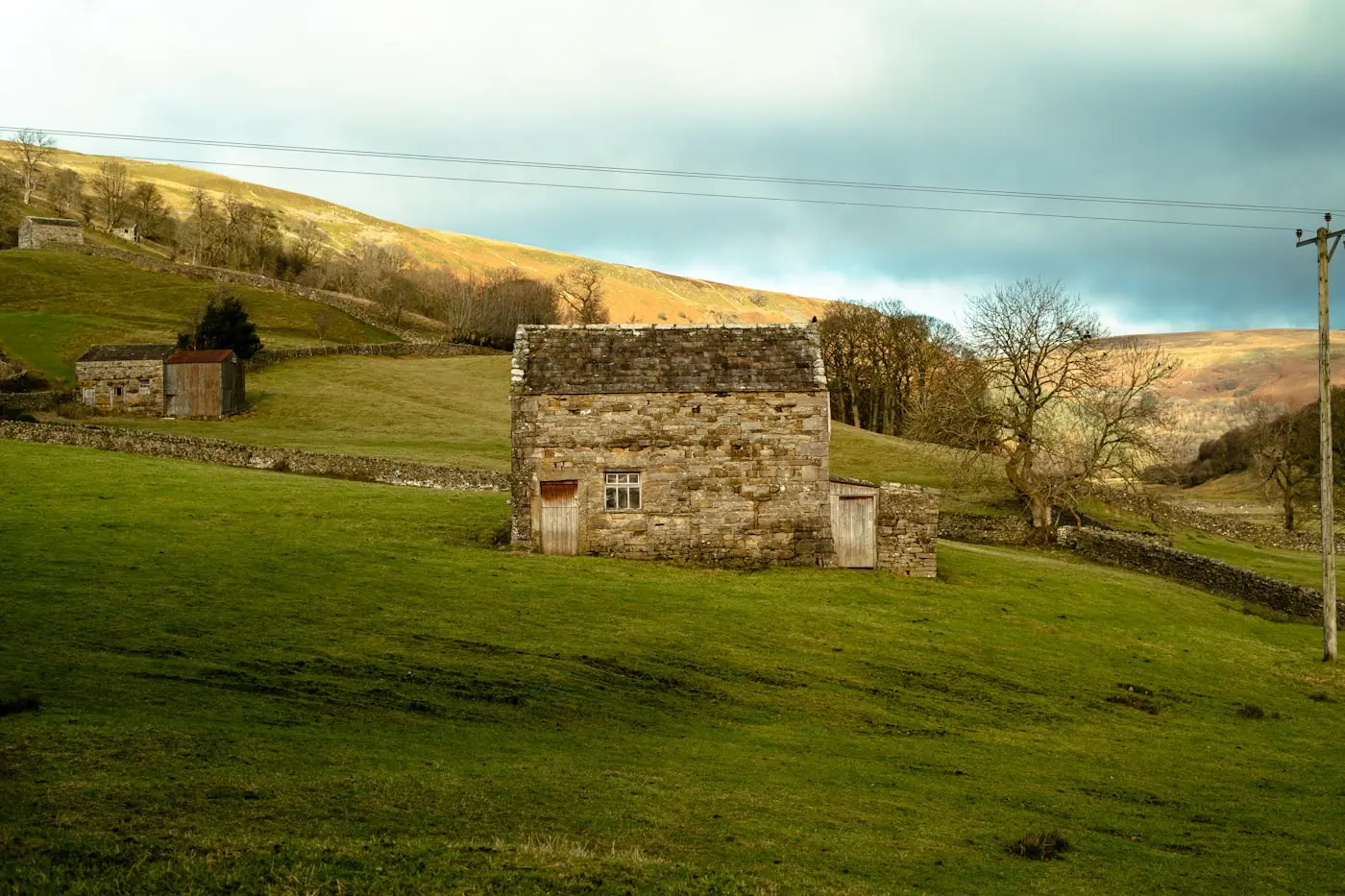
Castleford is a town that knows what it is. The Tigers run deep here, the community bonds are tight, and the streets that grew up around the pits have gardens that reflect decades of committed domestic pride. You can see it in the hanging baskets along the main streets in summer, in the allotments that are taken seriously, and in the way established gardens on the older estates have been managed and improved over generations. But the soil that underlies all of this - the coal-measures clay of the former South Yorkshire and West Yorkshire coalfield - presents the same challenges here that it does across the whole of this former mining belt. Heavy, slow-draining, acid, and prone to compaction: it is a soil that rewards consistent management and punishes neglect.
This guide is for Castleford homeowners in WF10: people who want to understand why their garden behaves as it does, what the right approach looks like for the specific soil and position they are on, what it costs, and how to find a gardener who understands the Aire Valley conditions rather than applying generic advice that works better in easier soil.
What Kind of Gardens Are in Castleford?
Castleford's housing stock tells the story of the town's twentieth century directly. Post-war semi-detached houses on the older estates to the west and south of the town centre carry the most established gardens - plots that have been worked and improved over sixty or seventy years, where the coal-measures clay has been modified by decades of organic matter additions, where the lawns have an established character, and where the borders contain plants that have been divided and moved and divided again by successive gardeners who knew what they were doing. These gardens are genuinely rewarding to manage, because the groundwork has already been done.
The Glasshoughton area, and other newer development zones around the Castleford ring road and the former industrial land between the town and the motorway, presents a different picture. Housing built on land that was previously used for industrial purposes - and much of the fringe land around Castleford has some history of industrial activity, whether from the pit itself, chemical processing, or associated uses - often sits on ground that has been engineered rather than naturally formed. This means the soil profile can be highly variable: thin topsoil over compacted clay subsoil, or topsoil over rubble and imported fill material. Gardens on these plots often have lawns that have never established properly, borders where plants fail without obvious cause, and drainage patterns that do not follow the natural topography.
If your garden is on a newer Castleford estate and your lawn has always been patchy and poor despite reseeding efforts, the subsoil history is worth investigating before spending more on surface-level treatment. A simple soil probe to check topsoil depth and subsoil character tells you more about what your garden needs than another bag of lawn seed applied to the same compacted ground.
There are also some waterfront and riverside properties near the Aire - the river corridor and the canal towpath areas have seen development in recent years, and gardens close to the water are on alluvial clay similar to the Calder Valley conditions in Dewsbury. These properties can experience the same seasonal waterlogging as their Calder Valley counterparts when the Aire is running high after winter rainfall.
The coal-measures clay character
The Coal Measures geology that runs through Castleford and the wider former coalfield belt of West Yorkshire produces a clay soil with a distinctive character: acid (typically pH 5.5-6.2), dense, slow-draining, and cold in spring. It compacts readily under foot traffic and machinery. The good news is that it retains moisture well in dry summers - Castleford gardens rarely suffer the drought stress that affects lighter sandy soils. The challenge is managing the drainage and compaction effectively enough that grass and border plants can root properly and not sit in anaerobic waterlogged conditions through wet periods.
What Gardeners Do in Castleford
The work that gets booked in WF10 reflects the coal-measures clay character of the area and the specific challenges of the different housing zones across the town. Here is what actually gets requested most often.
Lawn maintenance and moss management is the core of most arrangements across Castleford. The coal-measures clay creates conditions where moss establishes quickly in any lawn that is not actively managed through an annual renovation programme. Fortnightly mowing through the season, combined with autumn hollow-tine aeration and scarification, keeps most established Castleford lawns in genuinely good condition. Garden maintenance contracts that include seasonal lawn care are the most effective and economical way to manage this, rather than ad hoc reactive treatments each time the moss gets out of hand.
Lawn establishment on new estates is a specific category of work that comes up frequently in Castleford in a way it does not in older, more settled Yorkshire towns. If your lawn has never properly established since the house was built, and you are on a newer development, the cause is almost certainly in what is beneath the visible topsoil layer. Proper lawn establishment on this type of ground requires either deep-tine aeration to break up the compacted subsoil, or in more severe cases, removal of the existing thin topsoil, deep ripping of the compacted subsoil, and reinstating with adequate topsoil depth before reseeding or returfing. This is more expensive than a standard lawn renovation, but it addresses the actual problem rather than treating the symptoms indefinitely.
Hedge trimming across WF10 involves a mix of established boundary hedges on older properties and more recently planted dividing hedges on newer estates. Hedge trimming on older hawthorn, privet, and beech boundaries that have been allowed to grow wide and tall over several seasons is more labour-intensive than a simple annual trim - the initial reduction requires more time and more material removal. Getting a quote after an in-person visit rather than an hourly estimate is advisable for any hedge that has not been properly shaped in recent years.
Garden clearance is common in Castleford for properties changing hands, gardens on former industrial land where scrub has established, and older estate gardens that have been neglected following a change in the household's circumstances. Garden clearance on coal-measures clay with established root systems - particularly bramble, elder, and sycamore self-seeds, which thrive on disturbed heavy clay - is labour-intensive because the roots go deep and the soil holds them tightly. Allow more time and budget than you would for a clearance on lighter soil.
Border and planting work on the coal-measures clay requires plant selection that matches the soil's moisture and acidity character. Borders and planting in Castleford gardens that perform well typically use plants that tolerate moist, slightly acid conditions: astilbe, hemerocallis, hardy geraniums, crocosmia, persicaria, and ornamental grasses such as Miscanthus that develop strong enough root systems to cope with the clay's tendency to compact around them. Plants that need sharp drainage or alkaline soil will struggle without significant soil amendment.
Weed control on coal-measures clay is characterised by the dominance of creeping grasses, nettles, and dock in neglected areas. Couch grass in borders is a persistent problem and requires the same patient management as in the Spen Valley soils of Batley and Dewsbury. The weed control guide for Yorkshire covers the management approaches for persistent weeds in clay soil in detail.
How Much Does a Gardener Cost in Castleford?
Castleford rates are broadly in line with the West Yorkshire suburban band. For a full national and regional context, see the how much does a gardener cost guide and the garden maintenance prices Yorkshire guide.
| Rate type | Castleford (WF10), 2026 | Notes |
|---|---|---|
| Hourly rate (maintenance) | £25-£40/hr | Contract rates at lower end; one-off visits higher |
| Day rate (7-8 hrs) | £150-£200 | Full working day for clearance or renovation |
| Fortnightly maintenance visit | £40-£70 per visit | Medium garden; includes lawn, borders, edges |
| Lawn renovation (aeration, scarification, overseed) | £120-£280 | Standard renovation; new estate subsoil work additional |
| New lawn establishment (deeper subsoil issue) | £400-£1,200+ | Depends on depth of topsoil work required |
| Hedge trimming (standard domestic) | £45-£95 per visit | Established older hedges at higher end |
| Garden clearance (medium plot) | £200-£400 | Post-industrial ground or heavily overgrown: £400-£700 |
The new lawn establishment category is specific to Castleford in a way it is not to most other Yorkshire towns - the post-industrial subsoil on some Glasshoughton and newer estate properties creates a category of work that goes significantly beyond a standard renovation. A gardener who gives you the same quote for new estate lawn establishment as they would for renovating an established garden on proper soil is either underestimating the work or underestimating the problem. Get an assessment visit before committing.
Finding a Reliable Gardener in Castleford
Castleford is well-served by gardeners covering the WF10 postcode, with a reasonable number of experienced sole traders working across the town and the surrounding areas of Normanton, Featherstone, and Pontefract. The variation in quality is significant, and the specific challenges of the coal-measures soil and the post-industrial ground conditions on newer estates mean that experience in this specific area matters.
Personal recommendation in Castleford's close-knit communities is genuinely valuable - the town has a strong word-of-mouth culture, and if someone you know has found a reliable gardener, that is a strong signal. If you are new to the area or your immediate contacts cannot help, a local introduction service that has local gardeners covering WF10 specifically will serve you better than a national platform that sends details without local context.
Before booking, the standard questions apply: public liability insurance (see the certificate), Waste Carrier's Licence, local experience across WF10, willingness to visit before quoting on larger jobs. Add one specific to Castleford: if your garden is on a newer estate and you have lawn establishment problems, ask whether the gardener will assess the subsoil before recommending a treatment approach. A gardener who recommends the same standard renovation without looking at what is beneath the topsoil is not approaching the problem correctly.
For ongoing maintenance, see the garden maintenance near me Yorkshire guide for advice on what to look for in a long-term gardening relationship.
Seasonal Guide for Castleford Gardens
The Aire Valley has a slightly more sheltered character than the hillside towns of the West Yorkshire coalfield. Castleford sits at low elevation in the valley, which means it warms reasonably in spring and is protected from the worst of the Pennine winds. The coal-measures clay, however, is slow to warm in spring regardless of air temperature, which delays the effective start of the growing season compared to what the weather alone would suggest.
Spring (March to May)
March is planning and booking time. Spring work on the coal-measures clay starts effectively in mid-April - the soil is too cold and often too wet before then for productive lawn or border work. Border tidying of frost-damaged material and structural pruning of deciduous shrubs can happen from late March once the risk of hard frost has passed, but avoid working on a wet lawn or driving machinery across saturated clay in early spring.
April brings the first meaningful grass growth. The Aire Valley's relatively low elevation means growth may start a week earlier here than on the hillsides above Dewsbury or Batley, but the coal-measures clay's cold character partially offsets this. Weed control on paths and hard surfaces is best done in late April when herbicides are effective. Planting of hardy perennials and shrubs can start in April on days when the ground is workable.
May is the main spring month for Castleford gardens. Fortnightly grass cutting is established by mid-May for most lawns. Bedding plants and tender summer perennials can go out in late May once frost risk has genuinely passed - Castleford's valley position means late frosts are less common than in the hillside towns, but not impossible. May is also the last good month for spring border renovation before the summer growth season makes working between plants difficult.
Summer (June to August)
The Aire Valley growing season runs well from June through mid-September. Coal-measures clay's moisture retention means Castleford gardens hold up better through dry summers than lighter soils - the clay retains enough water at depth to support grass and border plants through moderate dry spells without irrigation. In an extended dry summer, the clay surface can crack and harden significantly, which makes mowing difficult on dry lawns. Our lawn treatment programme recommends keeping mowing height slightly higher in dry spells - 4cm rather than 3cm - to reduce drought stress on the grass.
Hedge trimming is best done in late June and July after the first flush of growth has hardened off. Birds are typically in their second nesting cycle in June, so checking hedges before cutting is important. Most domestic hedges can be trimmed once in late June/July and again if needed in late August without disturbing nesting birds.
August is the month for booking autumn renovation work. September slots for hollow-tine aeration, scarification, and overseeding fill quickly, and the best results come from getting these treatments done in early to mid-September while soil temperature is still warm enough to support new grass establishment.
Autumn (September to November)
Autumn is the most important maintenance season for Castleford lawns. Hollow-tine aeration in early September opens channels in the coal-measures clay that allow drainage and air circulation through the root zone. Scarification removes the moss mat that has accumulated through the season. Overseeding with a good coal-measures-appropriate grass mix - shade and moisture tolerant varieties - fills bare patches before growth slows. Top-dressing with grit-amended compost maintains the channels from aeration and slowly improves the clay's structure over multiple seasons.
October brings the planning season for next year's border work. Any structural changes - raised beds, new paths, drainage improvements - are easier to implement in autumn when borders are largely dormant and the work will have time to settle before spring planting. Bulbs go in through October for spring colour. Leaves from mature trees need collecting from lawns - leaving them on coal-measures clay through winter creates poor conditions for the grass underneath.
Winter (December to February)
Castleford gardens in winter are largely dormant but not entirely neglected. Structural pruning of fruit trees and roses is best done in January or February when growth has fully stopped. Any fencing, wall repair, or hard landscaping work is easier and cheaper in winter when contractors are less busy. February is the right month to make gardening bookings for the season - gardeners covering WF10 fill their regular rounds early, and enquiring in February gives you the best access to available capacity before the spring rush.
Common Garden Problems in Castleford
Lawn failure on post-industrial ground
This is the most distinctively Castleford garden problem. On former industrial land or heavily engineered new-build sites, the soil profile beneath the visible topsoil can be compacted clay subsoil, rubble, or fill material that restricts root growth and dramatically alters drainage patterns. Symptoms: the lawn browns and dies in dry spells while the neighbours' lawns stay green; the lawn stays wet and soft long after rain while nearby lawns dry out; reseeding never properly takes despite repeated attempts; the lawn has never grown strongly since the house was built. If any of these match your experience, the issue is below the topsoil and standard surface renovation will not fix it permanently. The correct first step is a soil probe assessment to understand what is beneath the surface before deciding on the treatment approach.
Moss in established lawns
Coal-measures clay soils across the Aire Valley are naturally prone to moss because the acid pH, poor drainage, and tendency to compact create exactly the conditions moss prefers. On established estate gardens, consistent annual treatment - aeration, scarification, overseeding, and lime application every two to three years to maintain a pH around 6.0-6.5 - keeps moss at a manageable level. The clay soil gardening Yorkshire guide covers the full range of management approaches for this soil type.
Self-seeded scrub on disturbed ground
Coal-measures clay is excellent growing medium for sycamore, elder, ash, and hawthorn self-seeds, and any disturbed or neglected ground in Castleford will develop scrubby woody growth quickly. On cleared plots, converted gardens, or any ground that has been left for two or more seasons, the woody self-seeders can establish to a point where removal requires significant effort. Bramble in particular roots deeply in clay and regrows vigorously from any root fragment left in the soil. Managing this early - when the seedlings are small and the roots are shallow - is far less work than dealing with established scrub.
Frequently Asked Questions
How do I find a reliable gardener in Castleford?
Personal recommendation in WF10's community-minded neighbourhoods is a strong signal. A local introduction service covering the postcode specifically is more useful than a national platform. Ask about experience with coal-measures soil, and specifically about subsoil assessment if you are on a newer estate with persistent lawn problems. See the garden maintenance near me Yorkshire guide for vetting principles.
How much does a gardener in Castleford charge?
Hourly rates run £25-£40 for garden maintenance in 2026. Fortnightly visits for a medium garden are £40-£70. Standard lawn renovation runs £120-£280. New estate lawn establishment with subsoil work can run £400-£1,200 depending on the depth of intervention required. See the gardener cost Yorkshire guide for broader context.
What soil do Castleford gardens have?
Mostly coal-measures clay - acid, heavy, slow-draining, prone to compaction. Newer Glasshoughton and post-industrial estate gardens may have shallow topsoil over compacted subsoil or fill material, creating additional challenges. Aire Valley-floor gardens near the river have alluvial clay with flood-risk characteristics similar to the Calder Valley in Dewsbury.
Why has my lawn never established properly on a Glasshoughton estate?
Most likely a shallow topsoil over compacted subsoil or fill material. Standard lawn renovation - seed on top - will give the same poor result because the root restriction problem is below the visible surface. A soil probe to assess topsoil depth and subsoil character before deciding on a treatment is the correct first step. In severe cases, deep ripping and topsoil depth improvement is needed before any seed or turf work.
Can I get a garden clearance in Castleford?
Yes. Garden clearance runs £200-£400 for a standard medium garden. Post-industrial ground with established scrub, bramble, and deep clay root systems can run £400-£700. Fixed quote after in-person assessment is essential.
When is the best time to book a gardener in Castleford for spring work?
February or March. Growing season on coal-measures clay starts from mid-April, but gardeners covering WF10 fill their regular rounds from late winter. Waiting until April or May means competing for limited slots, especially for one-off renovation and clearance work.
Do Castleford gardeners cover Pontefract and Normanton?
Most gardeners covering WF10 also work in Pontefract (WF8), Normanton (WF6), and Featherstone. The soil conditions across this former coalfield belt are broadly consistent, so local expertise transfers well across these postcodes. Confirm your postcode when enquiring.
Related reading
- How much does a gardener cost in the UK? (2026 prices)
- Garden maintenance prices in Yorkshire
- Gardening on clay soil in Yorkshire
- Weed control in Yorkshire gardens
- Garden maintenance near me - Yorkshire
- Garden maintenance across Yorkshire
- Garden clearance across Yorkshire
- Hedge trimming across Yorkshire
Gardeners in other nearby areas
We cover West Yorkshire and beyond:
For structural landscaping or a full redesign, see our garden design Castleford page.
Get a quote for your Castleford garden.
60-second assessment. If a local gardener takes your enquiry, they call you with a price for your specific garden and job.
Start the assessment